Best Muscat City Tours
Muscat city tours cover the Grand Mosque, Mutrah, and forts in 3.5-8 hours. Private tours ($50-$120) offer the best experience - your guide matters most.
Last updated: April 12, 2026
Start by choosing half-day or full-day. The private four-hour route covers a city introduction; the longer option below adds time for a museum stop. See the private four-hour route ↗
Muscat City Tours: Quick Reference
| Half-day private | 3.5-5 hours | $45-$75 | Short stays, cruise passengers, first-timers |
| Full-day private | 7-9 hours | $80-$130 | Anyone wanting depth; includes lunch and museums |
| Group (shared) tour | 4-5 hours | $25-$50 | Solo travelers; budget-conscious visitors |
| Night city tour | 3-4 hours | $40-$70 | Seeing Muscat lit up; those arriving late |
| Free walking tour (tip-based) | 2-3 hours | Tip only (~5-10 OMR suggested) | Mutrah only; budget travelers |
| Self-guided | Full day | Transport + entrance fees only | Independent travelers; second visits |
Prices reflect mid-season rates for 2 adults. Prices verified March 2026
What Do Muscat City Tours Actually Include?
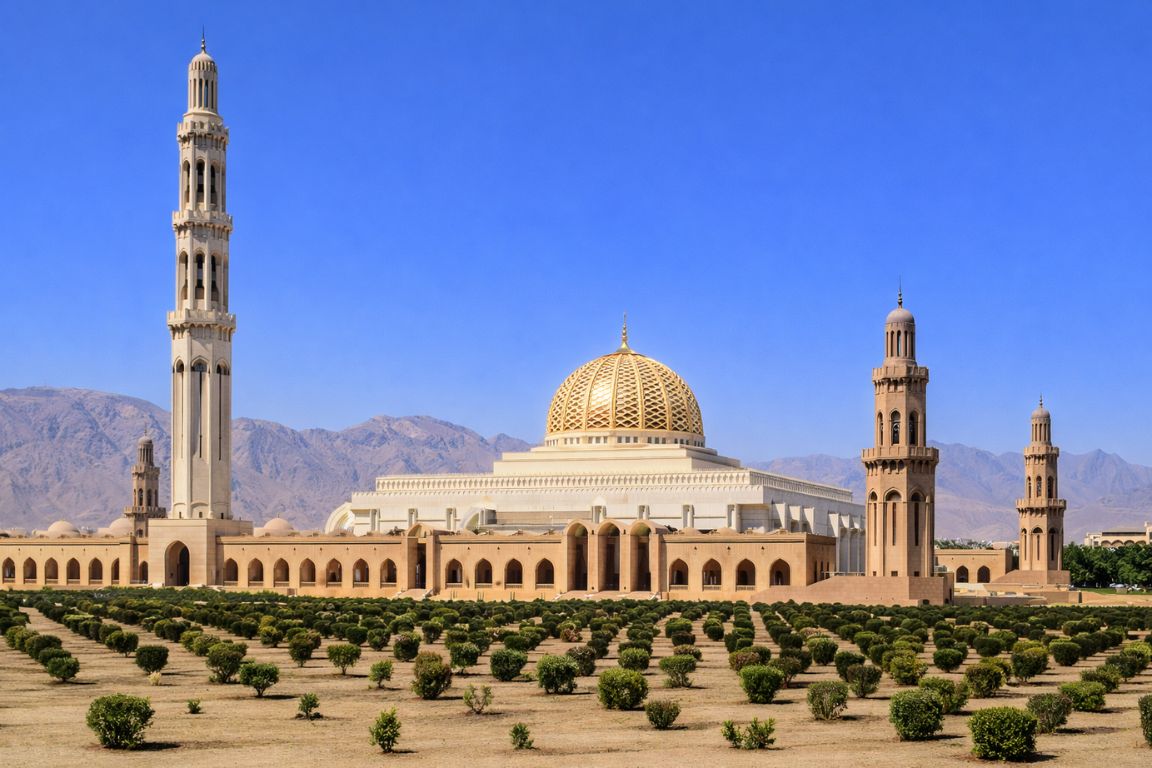 Almost every Muscat city tour covers the same six-stop core: the Sultan Qaboos Grand Mosque, the Royal Opera House, the Mutrah Fish Market and Corniche, Mutrah Souq, Al Alam Palace, and the twin Portuguese forts of Al Jalali and Al Mirani. What separates tours is the time spent at each stop, whether museums are included, whether lunch is part of it, and above all, who the guide is.
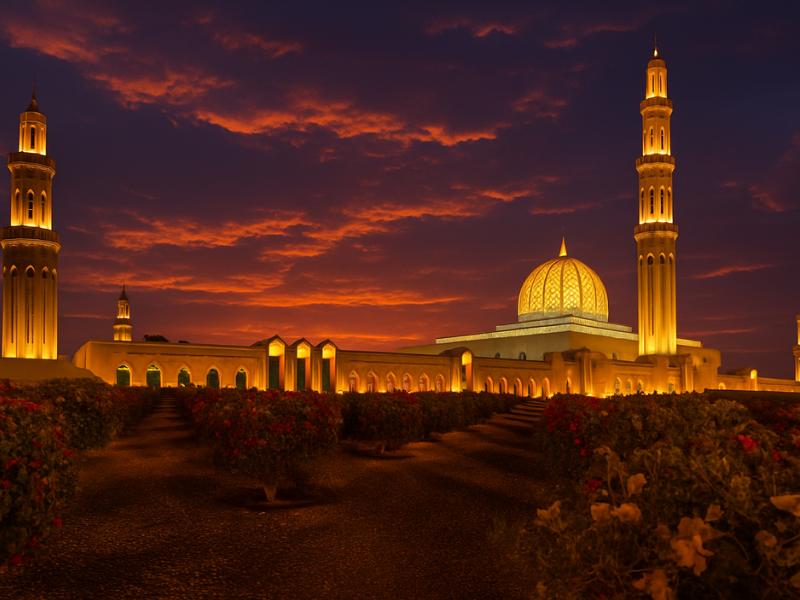
The Grand Mosque comes first for a reason. It opens to non-Muslim visitors from 8am until 11am Saturday through Thursday, closed to visitors on Friday mornings. That window shapes every half-day tour itinerary in the city – you need to be there before 10am to have proper time inside. The mosque is free to enter. The chandelier weighs 8.5 tons. The carpet took 600 women four years to weave. Those are the numbers, but no amount of reading prepares you for the scale of the prayer hall when you walk in.
From there, most tours run a coastal drive through the Shatti Al Qurum and Qurum districts before arriving at the Royal Opera House. The Opera House itself is open for tours from 8am to 4pm, and unlike most of the sights on the standard route, the interior guided tour – run by the opera’s own team – adds real depth to the visit. The auditorium seats 1,100 and has hosted some of the world’s most significant opera and classical music performances.
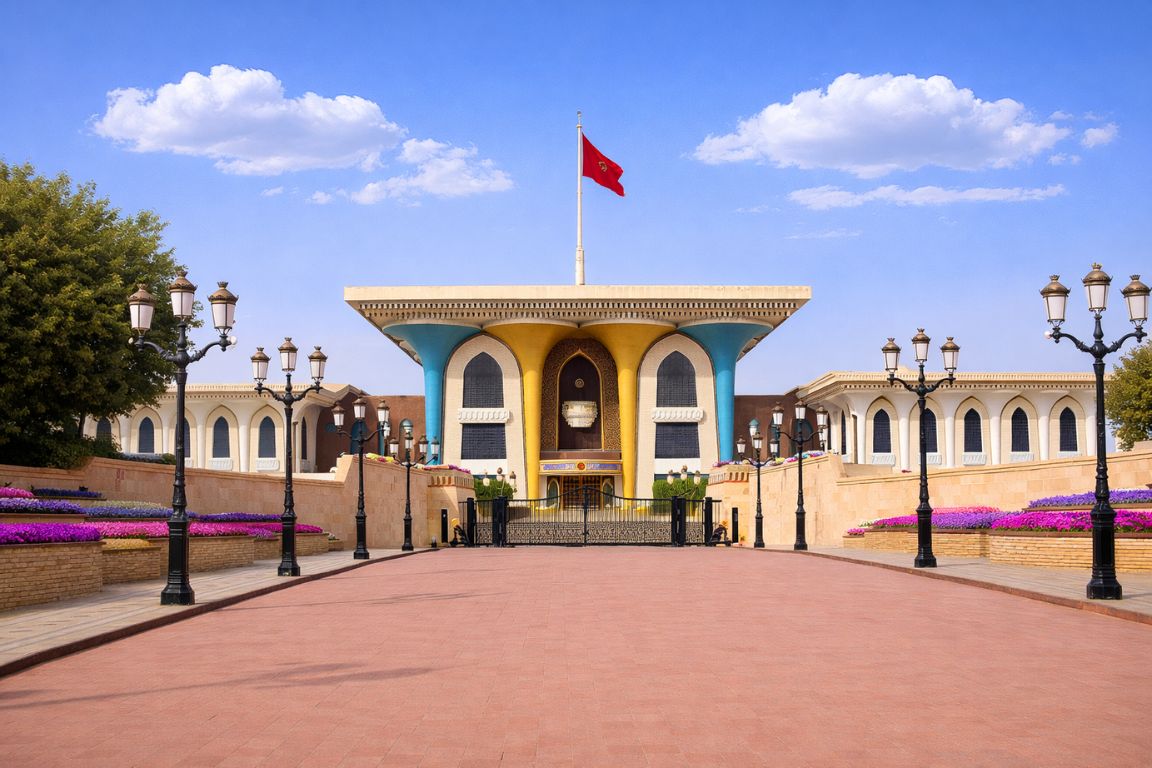
Mutrah comes in the afternoon when most visitors have gotten their bearings. The fish market is best in the morning when the catch is fresh and the vendors are active – tour operators who sequence the route well know to hit the market before 10am rather than after lunch. The souq is always open and always atmospheric, regardless of hour. Al Alam Palace is a photo stop only – no public access to the interior – but the view of the striped facade framed by the Portuguese forts behind it is one of Muscat’s most photographed scenes.
Full-day tours add the National Museum (one of the best modern museums in the Gulf, housed in a striking new building in Old Muscat), the Bait Al Zubair Museum (a private collection in a restored traditional house), and a proper sit-down lunch at a local Omani restaurant. The difference between doing the city in five hours and doing it in eight is mainly whether you rush the souq and skip the museums – or whether you have time to actually stop, eat something, and let the city sink in.
Not sure about visiting logistics? Check out our Sultan Qaboos Grand Mosque guide – it covers everything from proper attire to when non-Muslims can actually enter.
What Is the Best Half-Day City Tour in Muscat?
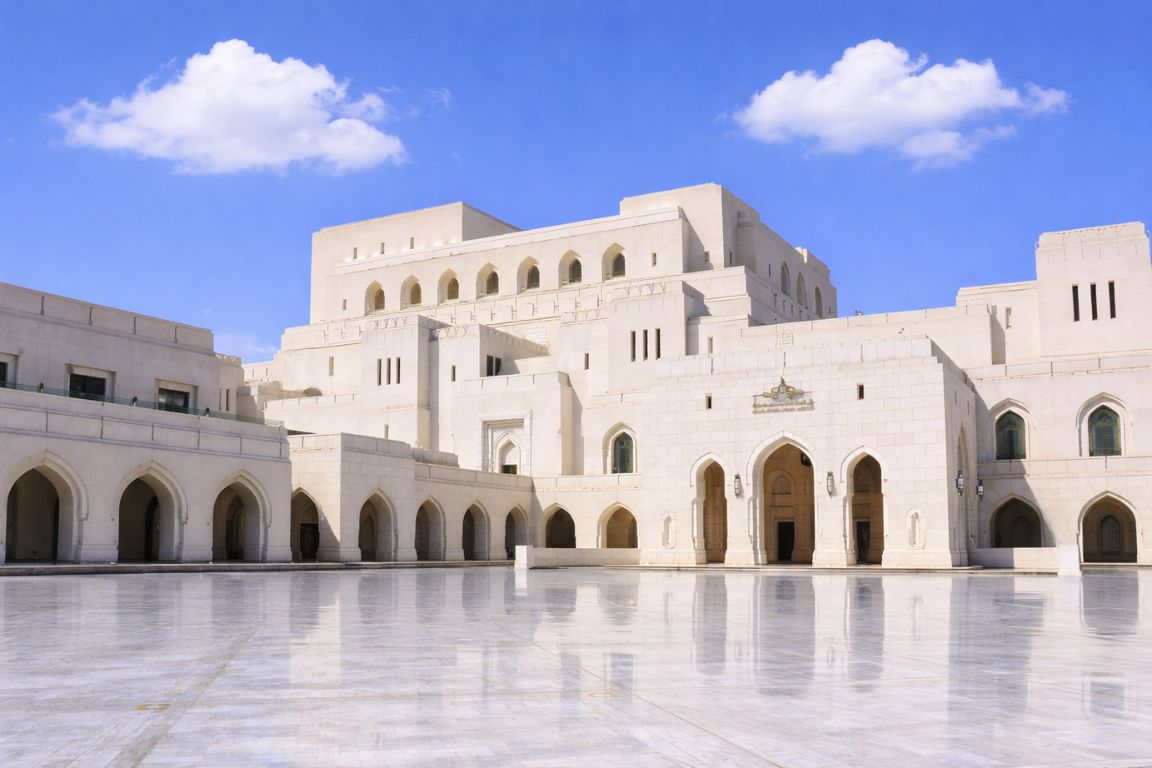 A good half-day Muscat city tour runs 4 to 5 hours, covers the Grand Mosque, Royal Opera House, Mutrah Corniche, souq, and the palace and forts photo stop, includes hotel pickup and drop-off, and gives you a guide who speaks the language fluently and actually knows things beyond what’s written on the placard. Prices for private half-day tours run $45-$75 per person depending on group size.
The morning half-day format is optimal for most visitors. Departure between 8 and 8:30am gets you to the Grand Mosque before the cruise ship groups arrive. The mosque is at its best in the early morning light anyway – the white sandstone catches the sun differently than at midday, and the gardens are cool and fragrant. After the mosque, a coastal drive through the ministries area gives context for the city’s layout before arriving at the Opera House. Most good half-day tours include the Opera House interior tour, not just a photo stop outside.
The afternoon half-day is a different experience. You skip the Grand Mosque’s visitor window but get the Corniche and souq when they’re busiest and most alive. Some operators run night city tours that cover the palace area when it’s illuminated – the blue and gold facade of Al Alam Palace lit up against the dark harbor is genuinely spectacular and worth the separate tour for anyone who has already done the daytime route.
What to look for when comparing half-day options: check whether the Grand Mosque entrance fee is included or paid separately at the gate (it should be included or noted clearly), confirm hotel pickup is part of the price rather than an add-on, and read the guide reviews specifically rather than just the overall rating. The guides are not interchangeable. A guide who grew up in Oman and can answer your questions about the country, its politics, its food, and its customs will produce a completely different experience than someone running a script.
What Is the Best Full-Day City Tour in Muscat?
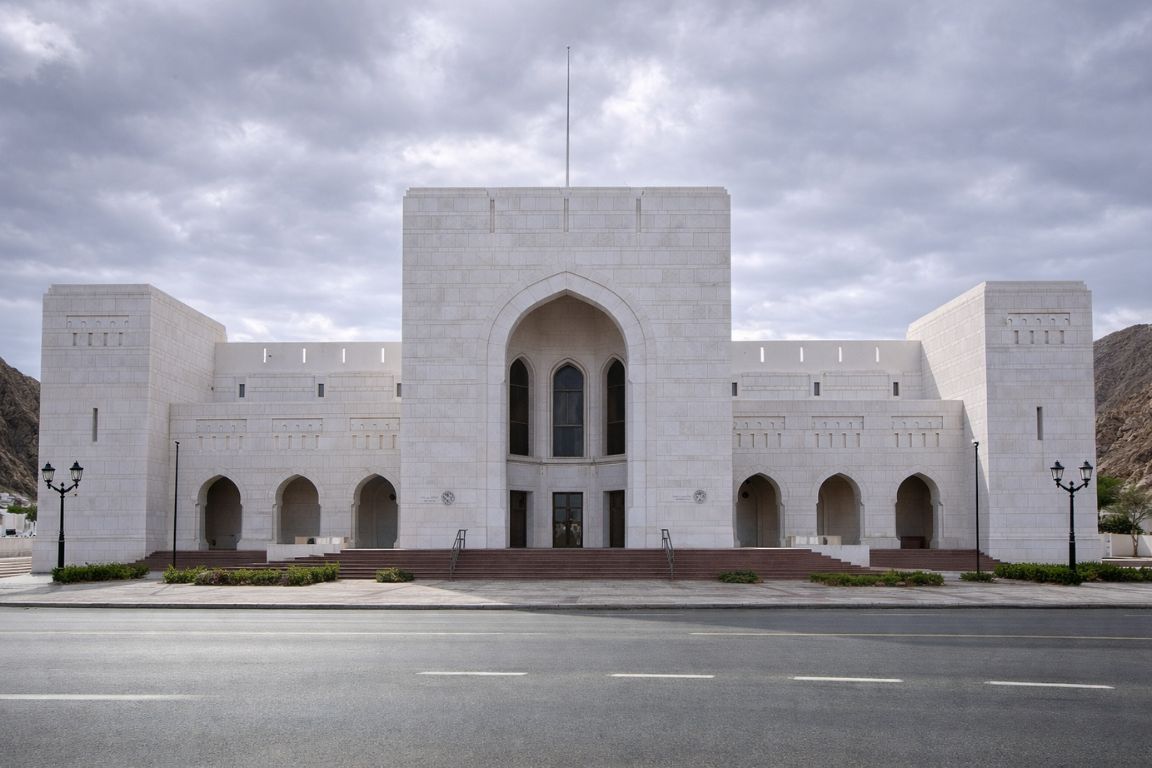 The best full-day Muscat city tour runs 7 to 9 hours and adds the National Museum or Bait Al Zubair Museum, a stop at the fish market timed for the morning catch, and lunch at a proper Omani restaurant rather than a hotel buffet. Expect to pay $80-$130 per person for a private tour. This format is worth the extra time and cost for anyone with at least two days in the city.
The full day unlocks the museums, and the National Museum alone justifies it. Built in 2016 in Old Muscat directly opposite Al Alam Palace, the National Museum is the most comprehensive presentation of Oman’s history and culture anywhere in the country. The maritime galleries trace the country’s trading history from the ancient frankincense routes to the era of the great Omani Empire, which once controlled Zanzibar. The map collection is extraordinary. Most visitors who arrive skeptical leave calling it a highlight of the trip.
The fish market is the full-day’s other advantage. Half-day tours starting before 8am can make it work; full-day tours that sequence the Corniche and market in the morning do this properly. Walking the market when vendors are negotiating with restaurant buyers, when the catch from the night boats is being iced and sorted, when the smell and the noise are at full intensity – this is the Muscat that guidebooks describe but casual visitors often miss. A good guide knows which stalls are worth stopping at and which local restaurants serve the fish bought here an hour later.
Lunch should be Omani. Any guide worth their rate knows where to find the real thing within five minutes of the souq. The full-day tour format that includes a sit-down meal of shuwa or majboos at a local restaurant is a meaningfully better day than the version where lunch is a 20-minute stop at a hotel coffee shop between photo stops. The food experience is part of the cultural experience.
Want to get the planning right? This breakdown of how to plan a trip to Oman Muscat tours covers all the details most visitors only figure out after they’ve already arrived and realized the country is way more spread out than they thought.
Half-Day vs Full-Day City Tour: What You Actually Get
| Sultan Qaboos Grand Mosque | Full visit (45-60 min) | Full visit (45-60 min) |
| Royal Opera House | Interior tour (30 min) | Interior tour (30 min) |
| Mutrah Fish Market | Brief stop or photo only | Full visit (30 min) |
| Mutrah Corniche walk | Short walk | Leisurely walk |
| Mutrah Souq | 30-40 min | 60-90 min |
| Al Alam Palace photo stop | Yes | Yes |
| Portuguese forts viewpoint | Yes | Yes |
| National Museum | Usually no | Yes (60-75 min) |
| Bait Al Zubair Museum | Usually no | Some tours include |
| Omani lunch at local restaurant | Usually no | Best tours include it |
| Qurum Beach / coastal drive | Drive-by | Stop for photos |
| Hotel pickup included | Yes (most operators) | Yes |
Based on standard operator itineraries. Prices verified March 2026
What Are the Best Private City Tours in Muscat?
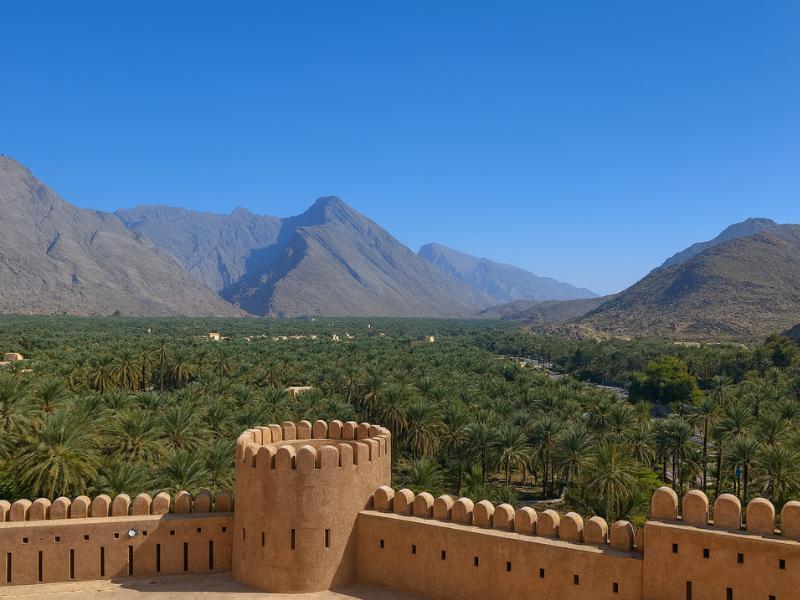
Private city tours in Muscat give you your own vehicle, your own guide, and control over the pace. You stop longer at what interests you, skip what doesn’t, and can ask the questions that a group format doesn’t accommodate. For two or more people traveling together, private tours often cost the same or less per person than group tours. For families or anyone with specific interests, private is the clear choice.
The private tour experience in Muscat is defined by the guide more than anything else. What traveler reviews consistently report, across dozens of operators and hundreds of recent tours, is that the guide determines whether the trip is memorable or forgettable. A guide who has driven this route five hundred times and grown up in Oman can answer the question you actually want answered: why did Sultan Qaboos build the Grand Mosque where he did, what does the frankincense burning in the souq actually mean in Omani social life, why are the forts still standing when most of Muscat has been rebuilt. These are not trivia questions. They’re the texture that turns a sightseeing loop into an actual understanding of a place.
The best private tours from Muscat operate with licensed Omani guides who are actually from the city or the surrounding region. Several operators on Viator, GetYourGuide, and ToursByLocals have guides with consistent five-star reviews across hundreds of tours – names like Musab, Saif, Louay, and Mahmood appear repeatedly in recent reviews with specific praise for English fluency, depth of knowledge, flexibility, and the willingness to take visitors to a traditional sweet shop or a local restaurant outside the standard itinerary.
For groups of two to four people, a private half-day tour typically runs $90-$150 total, making the per-person cost $45-$75. Full-day private tours run $160-$260 total for two people, or $80-$130 per person. Luxury operators running vehicles like a Lexus LS 460 charge more – typically $120-$180 per person for a full day – and the vehicle quality is part of the experience for some travelers. Standard tours use clean, comfortable SUVs or minivans that are perfectly adequate for the heat.
Worried about costs? I’ve put together a complete Oman Muscat tours travel budget so you know exactly what you’ll spend on rental cars, desert camps, hotels, and those surprisingly affordable Omani meals.
What Are the Best Group City Tours in Muscat?

Group city tours in Muscat run $25-$50 per person for a shared vehicle of 6-16 passengers. They cover the same core route as private tours but move faster and allow less flexibility. They’re the right choice for solo travelers who want to reduce cost and don’t mind a fixed pace. The Gray Line half-day tour is the most established group option; several smaller operators offer small-group departures with better guide-to-passenger ratios.
Group tours in Muscat work differently from many cities. Most are not large coach operations with audio headsets and 40 passengers. The most common format is a minivan with 6-12 passengers and a single guide-driver. The route covers the same stops as a private tour, just with less flexibility at each one. If you want to spend 90 minutes in the souq rather than 45, you can’t. If you want to take a detour to the fish market at 7:30am rather than as an afterthought, the group schedule doesn’t accommodate it.
The practical advantage of group tours is cost. At $30-$45 per person including hotel pickup, they represent genuine value for solo travelers or couples on a tighter budget. The Gray Line Muscat half-day tour is the most widely reviewed group option and provides audio commentary in five languages (English, French, German, Italian, Spanish) alongside the driver, which is a useful feature for non-English speaking travelers. Departure is typically at 9am with hotel pickup 30-60 minutes before.
Small-group private tours sit between the two: 4-8 passengers who all booked together or found each other through the same platform, splitting a private tour cost. For solo travelers who find a partner through a travel forum or hotel, this is often the most economical way to get a private guide experience. The Tripadvisor forum for Muscat regularly has travelers seeking others to share tour costs.
One thing group tours consistently don’t do well: Omani lunch. The time pressure of moving a group means lunch is usually at a tourist-oriented spot with an international menu, or skipped entirely. If authentic food is part of why you’re there, the group format compromises it.
What Should You Look for When Booking a Muscat City Tour?
Five things separate a genuinely good Muscat city tour from a mediocre one: a guide who is Omani (or has deep local knowledge), clear timing around the Grand Mosque’s visitor window, hotel pickup included without extra charges, lunch at a real Omani restaurant on full-day tours, and flexibility to adjust the itinerary based on your interests. Reviews mentioning the guide by name are the most reliable signal of quality.
The Grand Mosque timing issue trips up more tours than any other single factor. The mosque accepts non-Muslim visitors from 8am to 11am Saturday through Thursday only. Any tour that doesn’t specifically address this timing in its description is a tour that may arrive after 11am and offer a photo stop outside instead of a visit inside. Always confirm that your tour starts early enough to be inside the mosque by 10am at the latest. This means hotel pickup no later than 8:30am, departure by 8:45am at the absolute latest for most hotel locations.
Read the specific guide reviews, not just the star average. On Viator, GetYourGuide, and Tripadvisor, you can filter by most recent reviews and read the actual text. If a tour has 200 five-star reviews and the most recent 20 all mention the same guide by name with the same quality of experience, that’s a reliable signal. If recent reviews mention different guides and inconsistent experiences, the operator’s quality is dependent on who you get assigned.
Check what the entrance fees cover. Some operators advertise inclusive pricing and then note in small print that Grand Mosque entrance, museum admission, or Opera House tour fees are extra. The Grand Mosque itself is free. The Opera House guided tour has a small fee. The National Museum charges 5 OMR per adult. A transparent operator lists these clearly; a less transparent one leaves them vague.
For full-day tours: ask directly whether lunch at an Omani restaurant is included or whether the tour simply stops at a hotel restaurant. The difference in experience is significant and the difference in cost to the operator is not large – operators who include a real local lunch do so because they understand this matters to their customers.
Questions to Ask Before Booking a Muscat City Tour
| What time does the tour start? | 8:00-8:30am pickup; arrive mosque by 9am | 9:30am or later start |
| Is Grand Mosque entry included? | “Yes, entry included” or “mosque is free, we take you inside” | Vague answer or extra fee |
| Is the guide Omani or local? | Yes, born and raised in Oman / long-term Muscat resident | Non-answer or “experienced guide” |
| Is hotel pickup included? | Yes, from any hotel in Muscat city limits | Surcharge for pickup from certain areas |
| (Full-day) Is lunch at an Omani restaurant included? | Yes, traditional Omani lunch included | “Lunch break at your own expense” or hotel buffet |
| Can we adjust the itinerary? | Yes, we can add/skip stops based on your interests | “Fixed route, no changes possible” |
Based on Oman Muscat Tours booking experience and traveler feedback patterns. Prices verified March 2026
Can You Do a Muscat City Tour on Your Own?
 Yes, but with a few important caveats. Muscat is not a walkable city between its major attractions – they’re spread across 70 kilometers of coastline. Self-guided touring requires either a rental car or app-based taxis for every leg. It works well for experienced independent travelers who’ve done some research. It works poorly for first-timers who arrive expecting a compact city they can navigate intuitively.
The core case for self-guiding Muscat: it’s cheaper, you move at your own pace, and several of the sights genuinely don’t need a guide to appreciate. The Grand Mosque is well-signed in English, free to enter, and the experience speaks for itself. Mutrah Souq is meant to be explored without direction. Al Alam Palace is a photo stop regardless of who’s with you. The Portuguese forts can be viewed from the harbor road without a ticket.
The case against: the city doesn’t explain itself well without context. Standing in front of Al Alam Palace knowing only that it’s the Sultan’s official residence is a different experience from understanding how Sultan Qaboos transformed Oman from an isolated, underdeveloped country in 1970 to what it became over his fifty-year reign – and what that palace represents in Omani political and cultural life. The souq sells frankincense at every stall; knowing what frankincense actually means in Omani social and religious practice changes how you experience it. The fish market is more interesting when you know which fish are local and how they’re prepared. This isn’t information you can easily absorb from a phone screen while standing in the middle of it.
For travelers doing a second visit, or those who are confident independent explorers, self-guiding works well. The standard sequence: book the Grand Mosque first (arrive by 9am), Uber to the Corniche and fish market, walk the souq, Uber to Old Muscat for the palace and forts, then the National Museum. Total travel time with apps: roughly 8 hours including a lunch break at a Corniche restaurant. Total cost: transport ($15-$25), Grand Mosque free, Mutrah Fort 3.3 OMR, National Museum 5 OMR, lunch 4-6 OMR per person. The GurWalk and Strawberry Tours free walking tours of Mutrah are a good addition for budget travelers – tip-based, Corniche and souq focused, and the best guides there get genuine five-star reviews from hundreds of travelers.
One practical note: the Grand Mosque is closed to non-Muslim visitors on Friday mornings. If your only free day in Muscat is a Friday, structure your morning around Mutrah and the National Museum instead, and visit the Mosque on another day or afternoon.
What Our Travelers Say About Muscat City Tours: 2025 Client Data
| % who booked a city tour on arrival (vs. self-guided) | 71% |
| Most requested tour format | Full-day private with Omani lunch |
| Top-rated stop on city tour (by traveler vote) | Sultan Qaboos Grand Mosque (consistently #1) |
| % who said the guide was the highlight of the experience | 64% |
| Most common complaint on city tours (across all operators) | Too rushed at the souq; not enough time to explore |
| % who added a day trip after completing city tour | 58% |
| Average rating for private Oman Muscat Tours city tours | 4.9 / 5.0 |
Based on Oman Muscat Tours client groups from 2025. Omar Al-Kalbani and team have guided 7,700+ travelers since founding in 2013.
What Goes Wrong on Muscat City Tours (and How to Avoid It)
After guiding thousands of travelers through this city, the patterns that derail city tours are consistent and almost entirely avoidable with a few minutes of pre-booking research.
The most common is the late-start mosque problem. Tours that begin at 9:30am or later, or that pick up from distant hotels after 9am, arrive at the Grand Mosque with 20-30 minutes of visitor time remaining before the 11am cutoff. The mosque deserves 45-60 minutes minimum to see the prayer hall, the chandeliers, the carpet, and the gardens. Travelers who get only a rushed visit routinely call it their biggest regret from the tour. The fix: confirm your tour starts with hotel pickup no later than 8:30am.
The second is the souq rush. Half-day tours that are over-packed with stops tend to give the souq 20-25 minutes, which is enough to take a few photos but not enough to walk the covered lanes, price a piece of silver jewelry, or drink a coffee and watch the vendors negotiate. The souq is not a photo stop. It’s an Arab market that has been running for over two hundred years and deserves more time than the mosque. Ask operators explicitly how long they allocate at the souq before booking.
The third is the guide lottery on multi-guide operators. Some of the highest-rated city tours on booking platforms are high-rated because of specific guides who’ve accumulated reviews over years. Those same operators also assign other guides who haven’t accumulated the same reputation. When a tour listing has 400 five-star reviews but the most recent 15 don’t mention a specific guide name, that’s a signal worth investigating before committing.
Frequently Asked Questions
How much does a Muscat city tour cost?
Group tours run $25-$50 per person for a half-day. Private half-day tours cost $45-$75 per person (less per person for larger groups). Private full-day tours run $80-$130 per person. Luxury vehicle tours with premium guides start around $120 per person. Free tip-based walking tours of Mutrah are available through operators like GuruWalk and Strawberry Tours, with a suggested tip of 5-10 OMR.
How long is a typical Muscat city tour?
Half-day tours run 3.5-5 hours. Full-day tours run 7-9 hours including lunch. Night tours cover 3-4 hours. Free walking tours in Mutrah take about 2-3 hours on foot.
Can you visit the Grand Mosque on a Friday?
The Grand Mosque is closed to non-Muslim visitors on Friday mornings due to the main weekly prayer. If your tour falls on a Friday, a good operator will restructure the itinerary to start with Mutrah and add the mosque in the afternoon if it reopens, or schedule the mosque for another day. Always confirm this when booking if your tour date is a Friday.
Is a guide necessary in Muscat?
Not strictly necessary, but a local Omani guide transforms the experience. Muscat’s sites are accessible independently via app-based taxis, and the attractions are all navigable in English. The difference a knowledgeable guide makes is context – the history behind the Grand Mosque, the significance of the Omanization policy visible in the city’s staffing, the stories of the Portuguese forts. These layers are what make a visit memorable rather than just a series of photos. For first-time visitors and shorter stays, a guide is strongly worth it.
What should you wear on a Muscat city tour?
At the Grand Mosque: women need to cover arms, legs, and hair; men should wear long trousers and covered shoulders. An abaya and headscarf can be hired at the mosque gift shop for 2.5 OMR if needed. For the rest of the tour, modest dress covering shoulders and knees is appropriate and appreciated throughout the city. Comfortable walking shoes are important for the souq’s uneven stone floors.
Are Muscat city tours suitable for cruise ship passengers?
Yes. Many Muscat city tour operators specifically cater to cruise passengers from Sultan Qaboos Port in Mutrah, with flexible timing tied to ship departure schedules. Confirm the operator knows your ship’s departure time and builds the itinerary around it. Half-day tours of 4-5 hours work well for most cruise port calls.
Written by Omar Jackson Al-Kalbani
Omani tour guide since 2013 · Founder, Oman Muscat Tours
Omar has guided over 7,700 travelers through Muscat, the wadis, and the deserts of Oman since founding the agency.
Choose the outing, then check your date
Half-Day Private Muscat City Tour - Top Landmarks in Just 4 Hours
Set your sightseeing date before arranging other outings. Choose the private four-hour route for a shorter introduction, or compare the full-day option in the controls below.
4.0 hours · Bottled water; Omani Tour Guide English Speaking
Choose a date to view the published schedule checked 9 September 2026. Final availability and price are confirmed on Viator.
Compare options and match my plans
Wheelchair accessible; Public transportation options are available nearby; Transportation options are wheelchair accessible; Suitable for all physical fitness levels; Please be aware that every Friday, both the Sultan Qaboos Grand Mosque and the Royal Opera House are closed. As a result, we will only be able to make a photo stop outside, along with a brief explanation.; Children under 5 years old can join the tour free of charge.; The Grand Mosque is open daily from 8:00 AM to 11:00 AM, and it is closed on Fridays. If your booking is between 11:00 AM and 4:00 PM, we will only be able to make a photo stop outside, along with a brief explanation. Extras: Lunch; Gratuities; Royal Opera House Fee 3 OMR or 8 USD per person. Pickup: (we do pick up and drop off anywhere in Muscat Area) We use a signboard with the name of our clients for Port and Airport
- Experience Muscat City Tour-Omani Guide and Traditional Food-5h · 5.0 hours. Pick up and drop off (around Muscat); Car parking fees
- Evening Muscat Group Tour · 3.0 hours. Bottled water; Air-conditioned vehicle
- Private Full Day Muscat City Tour · 9.0 hours. Water; Omani Tour Guide English Speaking
Compare your group costs
Enter complete quotes in the same currency, including transport, tickets and extras. These are your estimates, not live prices.