How to Plan a Trip to Muscat
Best time for Muscat? October-April offers ideal weather. Plan 4-6 days, use taxis or a car, and don’t miss authentic Omani food.
Last updated: April 12, 2026
Build the trip around the time you have: a private four-hour city introduction can connect the headline landmarks before you head farther afield. Explore the four-hour city route ↗
Muscat Quick Facts
| Best time to visit | October to April |
| Peak season temps | 18°C to 30°C (64°F to 86°F) |
| Summer temps (Jun-Aug) | 38°C to 45°C+ (100°F to 113°F+) |
| Currency | Omani Rial (OMR) – 1 OMR ≈ USD 2.60 |
| Visa (most nationalities) | 14 days visa-free or eVisa online (20 OMR / ~$52 for 30 days) |
| Passport validity required | 6 months minimum |
| Language | Arabic (English widely spoken in tourism/business) |
| City geography | Linear, stretches ~70 km along coastline; not walkable between districts |
| Budget per day (mid-range) | $100-$200 USD per person |
| Alcohol | Available at licensed hotels and some restaurants; not sold in local shops |
| Friday closures | Grand Mosque, Opera House, and most museums closed Friday morning |
Prices verified March 2026
What Is the Best Time of Year to Visit Muscat?
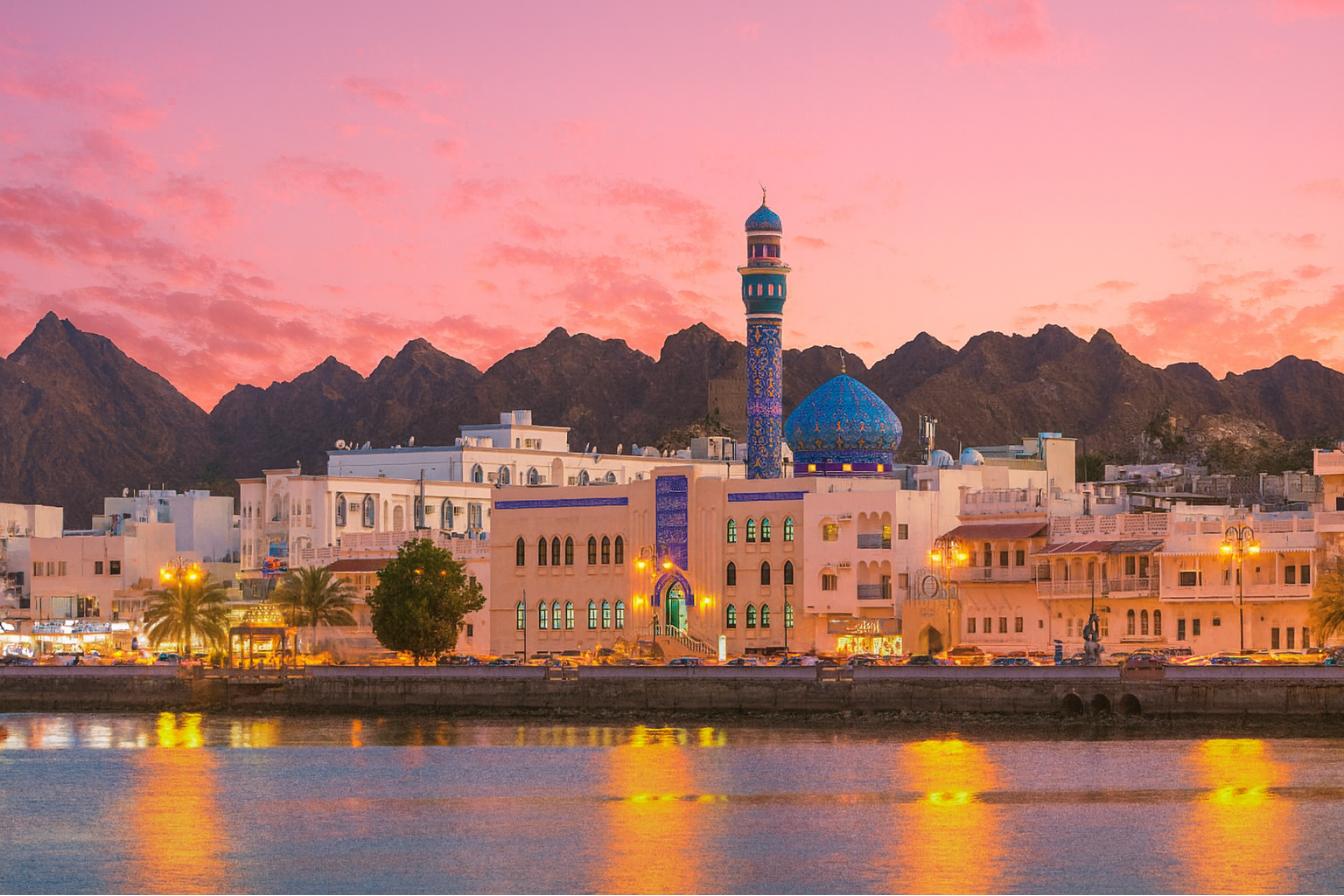 October through April is the only window most travelers should seriously consider. Daytime temperatures stay between 18°C and 30°C, evenings are genuinely cool, and you can spend a full day outside without negotiating with the heat. July and August can hit 45°C with coastal humidity layered on top. By late morning, the souqs empty out and sensible people retreat indoors until around 5pm.
The sweet spot within that October-April window is November through February. January averages around 21°C in Muscat, which is comfortable enough for wadi hikes, city walks, and long evenings at the Corniche. There’s the occasional short rain shower in January and February, sharp and fast, rarely a problem for a full day’s plans.
December through early January is peak season. Hotels fill up, prices go up, and the city is genuinely busy. If you want the good weather without the crowds, aim for late October or early November. The heat has just broken and you’ll have popular sites almost to yourself. March is also excellent, a little warmer than February but still manageable, and hotels aren’t yet in full high-season mode.
Need month-specific planning? I’ve put together the best month to visit Oman Muscat tours so you know exactly what heat, events, and conditions to expect throughout the year.
Ramadan is worth thinking about before you book. The date shifts each year. Eating, drinking, and smoking in public during daylight hours is restricted, and many restaurants operate on reduced hours or are closed entirely until sundown. For travelers who want full access to restaurants and a relaxed daytime pace, it’s worth checking the calendar before you commit to dates.
If you’re flexible on dates, here’s the best time to visit Oman Muscat tours based on heat levels, desert camping season, and when you can actually hike without risking heatstroke.
Muscat Month-by-Month: Conditions at a Glance
| Oct | 34 | 24 | Warm, low humidity, clear | ★★★★ |
| Nov | 29 | 20 | Pleasant, ideal outdoor weather | ★★★★★ |
| Dec | 25 | 17 | Coolest month, very pleasant | ★★★★★ |
| Jan | 24 | 16 | Cool, some brief rain possible | ★★★★★ |
| Feb | 25 | 17 | Still cool; Muscat Festival often runs | ★★★★★ |
| Mar | 29 | 20 | Warming up, lower crowds than Jan/Feb | ★★★★ |
| Apr | 35 | 24 | Hot, but dry – manageable with planning | ★★★ |
| May-Sep | 38-45+ | 28-32 | Extreme heat and humidity | ★ |
Climate data sourced from official Oman meteorological records. Prices verified March 2026
How Many Days Do You Need in Muscat?
 Four days is the practical minimum for Muscat with any depth. Two days covers the headline attractions but you’ll feel rushed and miss the city’s slower, more interesting rhythms. Five to six days lets you add a day trip or two outside the city, which is where Oman starts revealing its best material.
Here’s the thing about Muscat that catches first-timers off guard: it’s not a compact city. It stretches roughly 70 kilometers along the coastline, organized into distinct neighborhoods rather than a single center you can walk between. The Grand Mosque is in a different zone from Mutrah Souq, which is a different zone from the Royal Opera House. Getting between them takes time even with a car.
Day one is almost always the Grand Mosque, then Mutrah Corniche and the souq in the afternoon. Day two works well for Old Muscat, the forts, and the National Museum. By day three, you’ve earned a slower morning and a drive out to the Daymaniyat Islands or up toward the Hajar Mountains for perspective. If you’re here six days, you build in a proper overnight desert camp or a full-day wadi hike. That’s the trip people come back from talking about.
Where Should You Stay in Muscat?
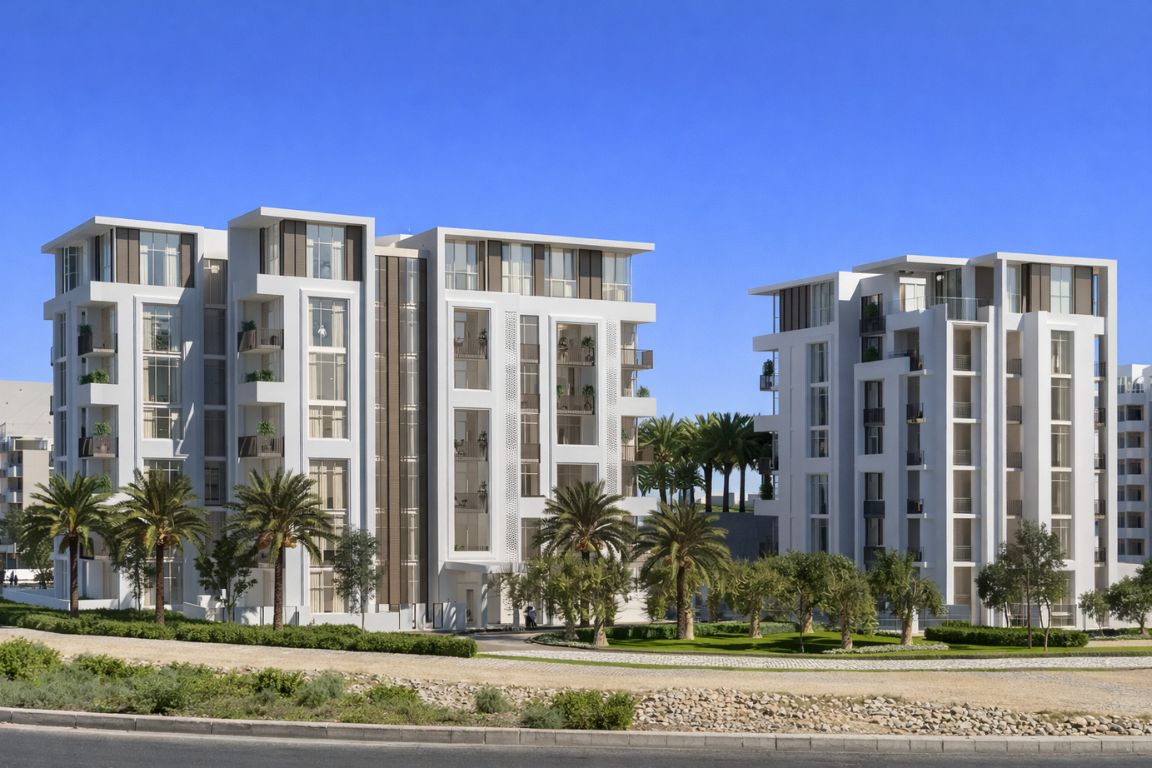 Muscat has five main neighborhoods for visitors, each with a different feel. Mutrah is historic and central, Shatti Al Qurum is where the beach hotels and restaurants cluster, and Qurum is a good mid-range residential area. Your choice depends almost entirely on whether you want walkability, beach access, or proximity to the Old City.
Mutrah is the most atmospheric option. You’re walking distance from the Corniche, the souq, and the old harbor. Hotels here tend to be older and the area is noisier, but you get that street-level texture that newer hotel zones can’t manufacture. Bait Al Luban restaurant and the fish market are right there. If your trip is primarily about culture and history, staying in Mutrah puts you in the middle of it.
Shatti Al Qurum is the expat and tourist hub. It has the better beach hotels, the most reliable restaurant strip, and easy access to the Royal Opera House area. More polished, less gritty. The Chedi Muscat is here, one of the best-designed luxury hotels in the region. If you want a hotel pool, beach access, and reliable infrastructure, this is the right base.
Qurum sits between the two and gives you access to both without committing to either. Several solid 3- and 4-star options here at prices that make more sense for longer stays.
Need help choosing your bases? Our guide on where to stay in Oman Muscat tours covers Muscat neighborhoods, strategic stopover towns, and which desert camps are actually worth the money.
Muscat Neighborhoods: Where to Base Yourself
| Mutrah | Culture, history, souq access | $40-$120 USD | Noisier; older properties |
| Shatti Al Qurum | Beach, dining, luxury hotels | $120-$500+ USD | Pricier; less local atmosphere |
| Qurum | Mid-range, residential feel | $60-$160 USD | Requires car to most sights |
| Ruwi / CBD | Budget travelers; transit hub | $30-$80 USD | Less scenic; commercial area |
| Ghubrah | Near Grand Mosque; longer stays | $50-$150 USD | Spread out; needs car |
Hotel rates based on mid-season availability. Prices verified March 2026
What Are the Must-See Attractions in Muscat?
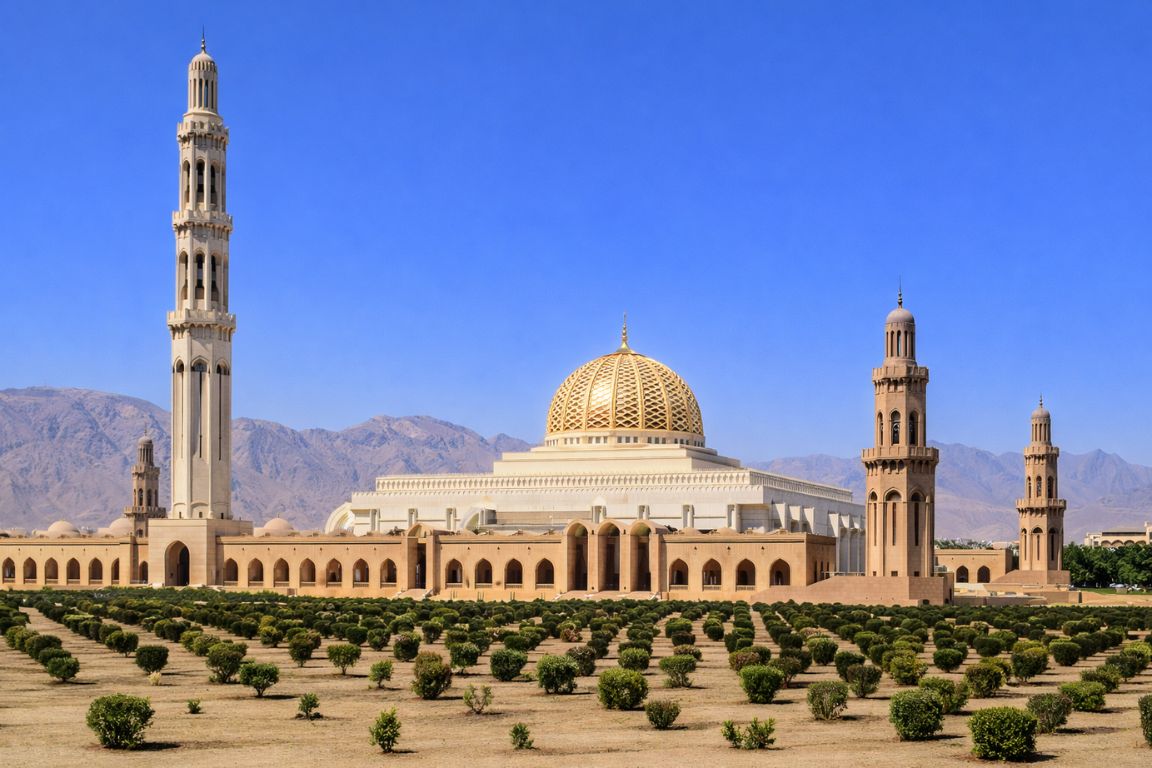 The Sultan Qaboos Grand Mosque, Mutrah Souq and Corniche, the Royal Opera House, and the forts of Old Muscat form the core of any first visit. None of them require more than half a day each. The real depth comes from how you move between them and what you notice along the way.
The Grand Mosque stops most visitors the same way. You smell the incense before you see the dome. The courtyard opens suddenly in a way that makes you pause, not exactly from reverence, but from the sheer scale of the thing. The marble underfoot stays cool even at midday. Inside the prayer hall, the carpet alone measures 70 by 60 meters and took 600 women four years to weave. It’s one of the largest hand-loomed carpets in existence. Non-Muslims can visit Saturday through Thursday from 8am to 11am, free of charge. Women need to cover hair and wear full sleeves; abayas can be hired at the mosque’s gift shop for 2.5 OMR. Friday mornings are closed to visitors. Arrive early, before the cruise ship groups, and the experience is genuinely quiet.
Planning to visit Muscat’s most iconic landmark? I’ve put together a complete Sultan Qaboos Grand Mosque guide covering dress code, timing restrictions, and what non-Muslims need to know before showing up.
Mutrah is a different register entirely. The Corniche at dusk, when the light catches the water and the old buildings go gold, is one of those moments that earns its place in your memory. The souq behind it is a genuine Arab market, not a tourist reconstruction, with narrow alleys, incense smoke, silver jewelry, and vendors who’ve been there for decades. Mutrah Fort above the harbor charges 3.3 OMR and gives you the best view of the old port.
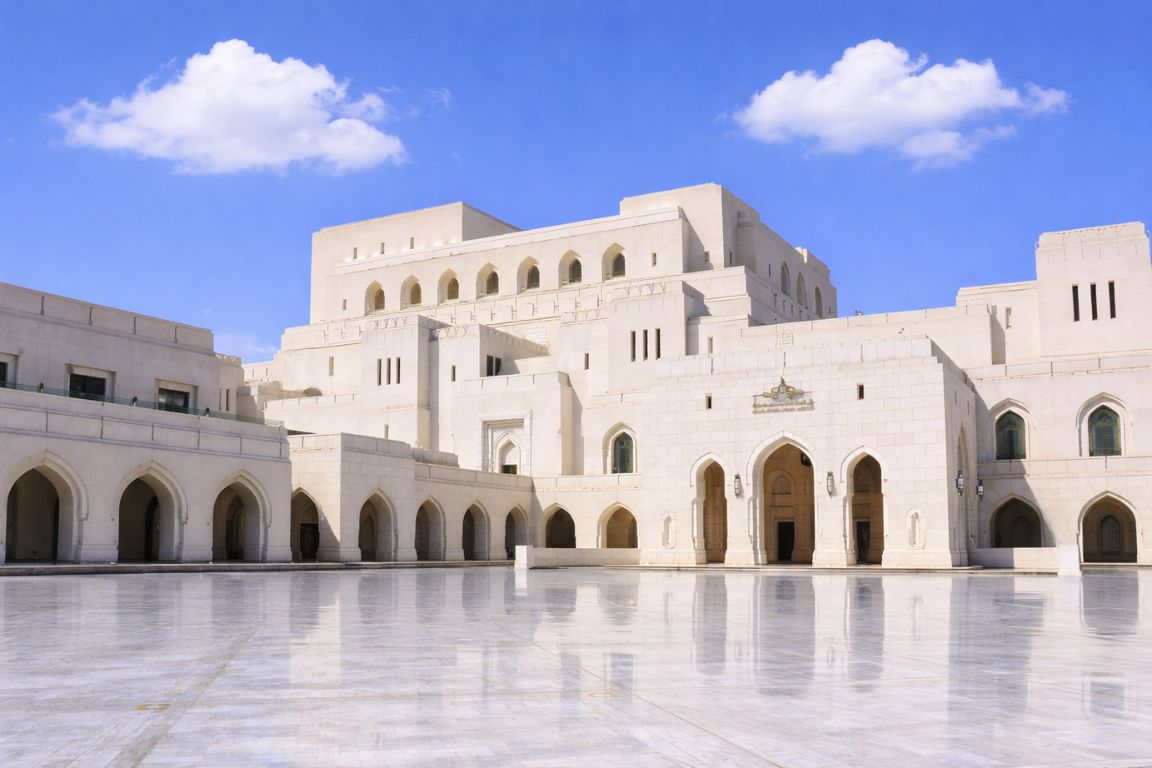
The Royal Opera House is worth a visit even if there’s no performance. The architecture is extraordinary, and Al Angham restaurant inside it serves traditional Omani food in one of the most beautifully designed rooms in the country. Check the performance schedule before you arrive; catching a production here is a legitimate highlight.
Need a solid recommendation? Here are the best Oman Muscat city tours that consistently get it right – from souq walks to fort visits to cultural insights.
What Should You Eat in Muscat (and Where)?
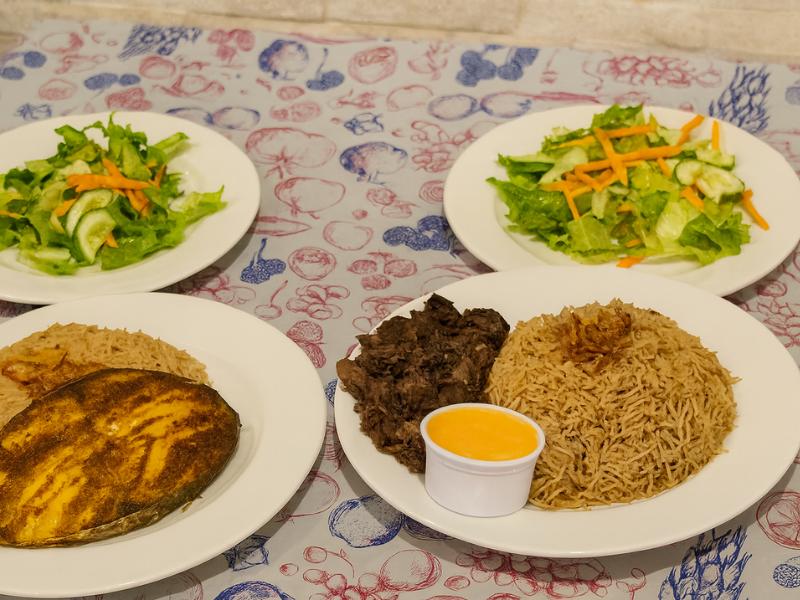
Omani food is built around slow cooking, fragrant spice blends, and communal eating. The dishes you’ll encounter most often are shuwa (lamb slow-cooked underground for up to 48 hours), majboos (spiced rice with meat or fish), and harees (a wheat and meat porridge). They’re unfamiliar to most Western visitors and immediately, obviously good.
Shuwa is considered the national dish. The meat is marinated in a dry spice blend, wrapped in banana or palm leaves, and cooked in an underground pit for anywhere from 24 to 48 hours. What comes out is impossibly tender with a faint smokiness that you can’t fake with an oven. It’s traditionally served at celebrations, which means it’s not on every menu every day. When you see it, order it.
Majboos is the everyday powerhouse. Basmati rice cooked with the meat until it absorbs the broth, layered with saffron, cardamom, dried lime, and often a scattering of fried onions and raisins on top. It’s served on a shared platter at family tables across the country, and the versions at local Omani restaurants are genuinely excellent. Don’t confuse it with the more familiar Gulf versions you may have had elsewhere; Omani majboos has a flavor profile of its own.
For where to eat: Bait Al Luban on the Mutrah Corniche is the right first Omani restaurant for most visitors. It’s in a 140-year-old guesthouse, the water comes infused with frankincense, and the balcony tables overlook the harbor. The shuwa is reliably good and the Omani coffee at the end is reason enough to stay. Bin Ateeq, with multiple city locations, is where you eat the way locals actually eat, sitting on the floor from shared platters. Rozna near the Grand Mosque has exceptional shuwa and a genuinely beautiful traditional interior worth the extra planning a reservation requires.
One thing travelers miss: karak chai. It’s a small cup of spiced milk tea served everywhere, cardamom-forward and sweet. Locals drink it constantly, at all hours. A cup costs almost nothing. If you want one local ritual to adopt for the week, make it this.
How Do You Get Around Muscat?
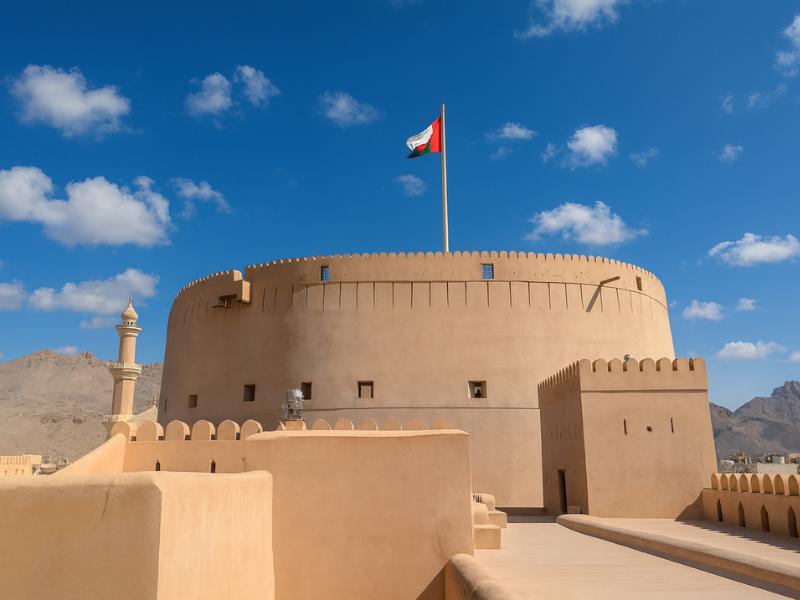
Muscat is not walkable in any meaningful sense. The city runs 70 kilometers along the coast in a loose chain of neighborhoods with wide roads and few sidewalks between them. Getting around efficiently means using taxis, Uber/Careem, or renting a car. Public buses exist but don’t connect to most tourist sites in any useful way.
For the city itself, Uber and Careem work well and are generally cheaper and more transparent than negotiating with street taxis. Traditional white-and-orange taxis don’t use meters, which means fares need to be agreed before you get in. Foreigners reliably pay more than locals when negotiating. The apps sidestep this entirely and are available throughout Muscat.
For anything outside the city, a rental car is the right answer. Wadis, Nizwa, Jebel Akhdar, the desert, the Daymaniyat Islands boat launch, all of these require a car. Roads in Oman are well-maintained and driving is straightforward. Most rental companies operate out of the airport; expect to pay around $40-$70 USD per day for a standard sedan, more for a 4WD. You don’t need a 4WD for most tourist sites, including Wadi Shab, which is fully paved to the parking area. Jebel Akhdar is the exception; the police checkpoint at the mountain base requires a 4WD to proceed, though you can sometimes hire one on-site.
One pattern we see repeatedly from our traveler groups: people assume they can manage without a car and spend half their days waiting for taxis that don’t arrive quickly in outer neighborhoods. If you’re planning any day trips, sort the car rental first.
Wondering about getting around Muscat? Check out our Muscat transportation guide – the city is spread out with limited public transit, so your transport choices matter more than in most capitals.
What Day Trips From Muscat Are Worth It?
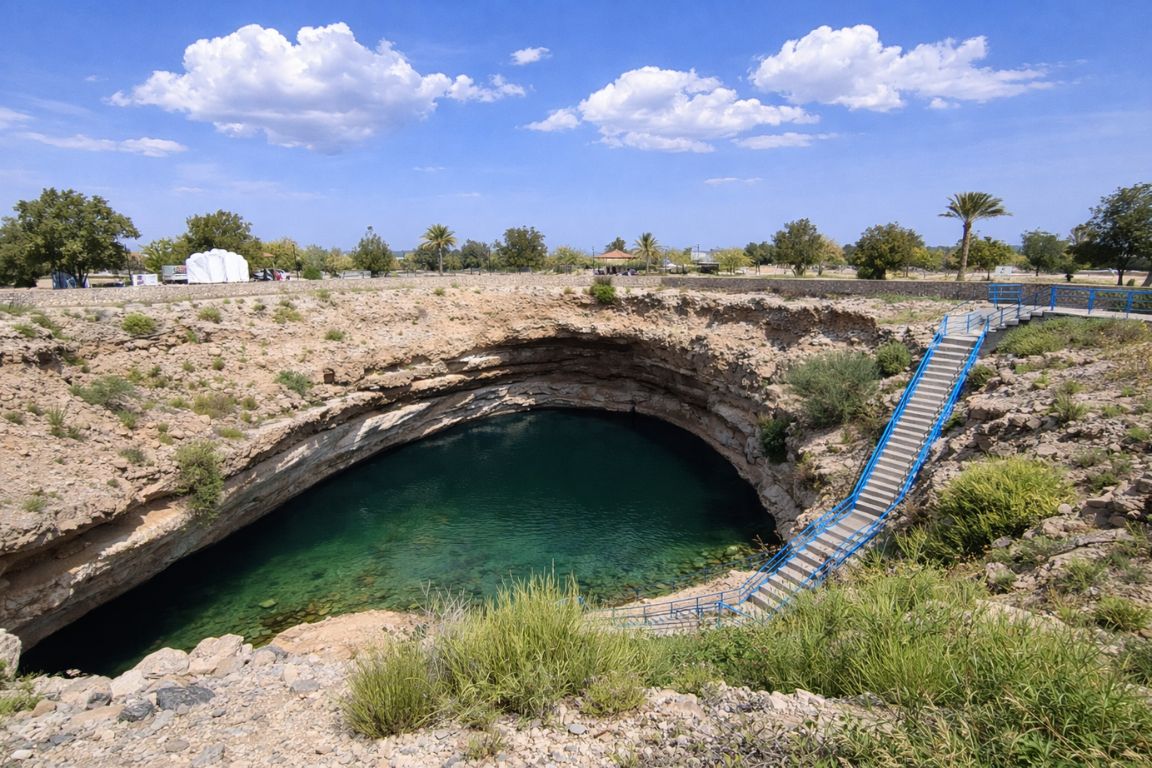 The three strongest day trips from Muscat are Wadi Shab and Bimmah Sinkhole (1.5 hours south), Nizwa Fort and Jebel Akhdar (1.75 hours inland), and Wahiba Sands Desert (3 hours east). Each one belongs to a different category of Oman, and together they show you why this country’s reputation has grown so fast.
Wadi Shab is the one people talk about most. You start with a short boat crossing, then a 40-minute hike through a canyon of orange rock and emerald pools. At the end, you swim through a narrow keyhole into a cave with a waterfall inside it. The pools are 5-8 meters deep. The light that comes through the cave ceiling is the kind of thing that feels unrepeatable. Pair it with the Bimmah Sinkhole 32 kilometers before it on the drive out, a turquoise limestone pool that looks like a movie set, and you have a full day that doesn’t feel like it should have fit into a single trip.
Nizwa was once the capital of Oman and still carries the weight of it. The 17th-century fort is genuinely impressive and the Friday morning goat market is one of those experiences you can only partially prepare for. Combine Nizwa with Jebel Akhdar, the Green Mountain, where rose farmers have been growing the Damask rose on terraced hillsides for centuries and the air smells different when the blooms are out in March and April.
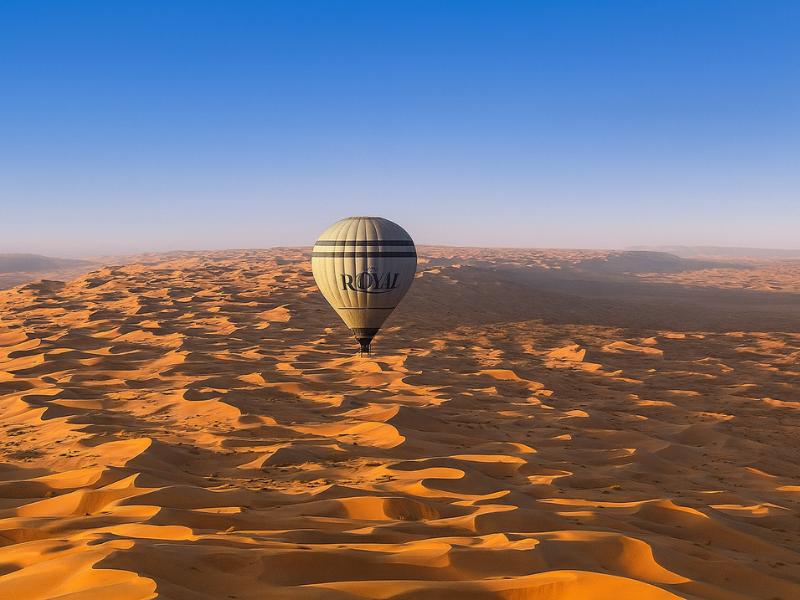
Wahiba Sands is where you go for the desert. The dunes change color through the day, from pale gold at noon to deep amber at sunset. If you can stay overnight in a desert camp and watch the stars from the dunes, do it. The drive alone from Muscat, through the Hajar Mountains and into the open sand, is worth the day.
We’ve rounded up the best day trips from Oman Muscat tours so you’re not stuck wondering what’s genuinely reachable in a day versus what requires leaving at 5am and getting back exhausted.
Day Trips From Muscat: Distances and Highlights
| Bimmah Sinkhole | 120 km | 1.5 hrs | Swimming, photography | No |
| Wadi Shab | 140 km | 1.5 hrs | Hiking, swimming, caves | No |
| Nizwa Fort | 150 km | 1.75 hrs | History, souq, culture | No |
| Jebel Akhdar | 180 km | 2.5 hrs | Mountain scenery, roses | Yes (police checkpoint) |
| Wadi Bani Khalid | 220 km | 2.5 hrs | Swimming, easy access | No |
| Wahiba Sands | 250 km | 3 hrs | Desert, dunes, Bedouin camps | Yes (inside dunes) |
| Daymaniyat Islands | 30 km offshore | 1 hr by boat | Snorkeling, coral reef, turtles | Boat tour required |
Drive times based on normal road conditions. Prices verified March 2026
What Should You Know Before You Go (Visas, Dress Code, Local Rules)?
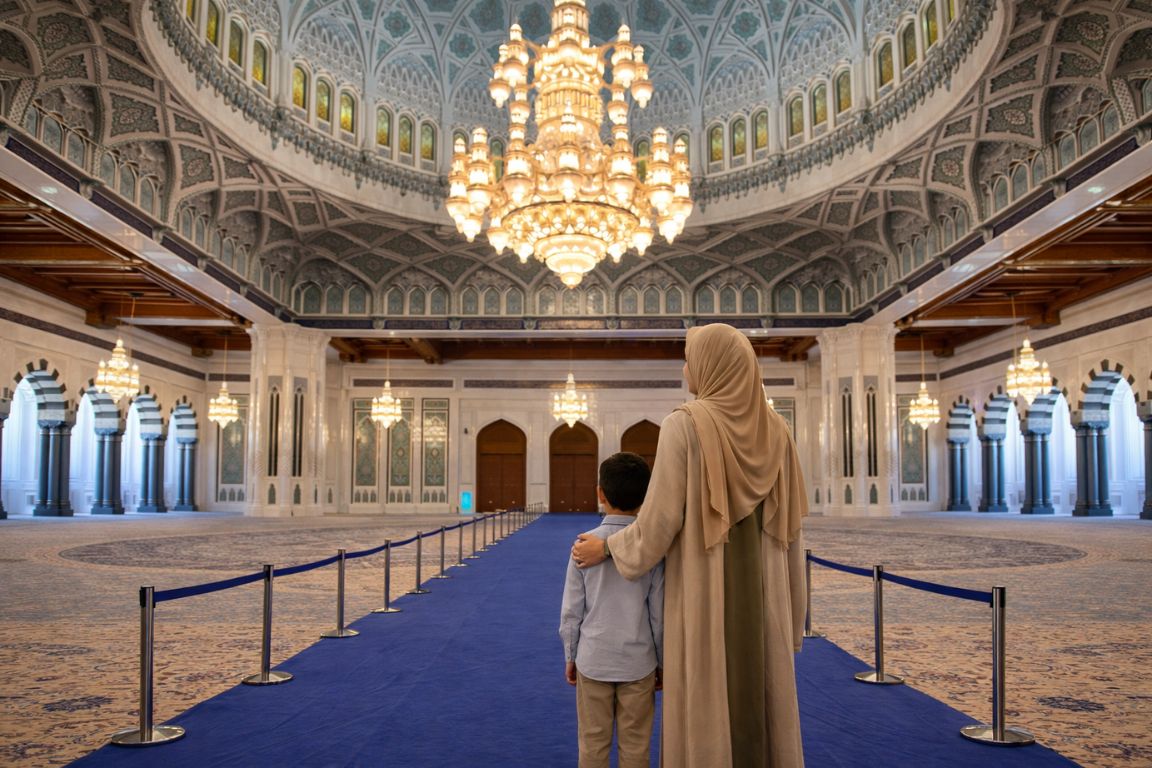 Oman is straightforward and genuinely welcoming for international visitors, but there are real rules you need to respect. Citizens of over 100 countries get 14 days visa-free. For stays up to 30 days, a 20 OMR eVisa is applied for online before departure. Dress modestly in public, don’t drink alcohol outside licensed venues, and don’t photograph people without asking. The rest is largely common sense.
On visas: GCC nationals enter freely. Citizens of Russia and Turkey get 30 days visa-free. Most Western, European, Japanese, Australian, and Canadian travelers get 14 days visa-free with proof of a return ticket, confirmed accommodation, health insurance, and sufficient funds. For longer stays, apply through the Royal Oman Police eVisa portal at evisa.rop.gov.om before you travel. A single-entry 30-day visa costs 20 OMR (approximately $52 USD). A one-year multiple-entry visa, allowing 30 days per visit, costs 50 OMR. Your passport must be valid for at least six months beyond your arrival date. Overstaying your visa carries fines of up to 10 OMR per day.
On dress: the standard outside of beach resorts is covered shoulders and knees for both men and women. At the Grand Mosque, women need full sleeves and a headscarf. In practice, Muscat is more relaxed than many Gulf cities, but respecting the local standard is not optional at religious sites and is genuinely appreciated everywhere else. Public displays of affection are not appropriate. You will see signs at malls and parks explicitly stating this.
Curious about dress expectations in Oman? Here’s our complete Oman dress code guide – what works for men and women, mosque requirements, and how flexible Omanis are with tourist clothing.
A few things that catch travelers off guard: Friday is the first day of the weekend in Oman. The Grand Mosque, the Royal Opera House, and most museums close Friday morning for prayers. The afternoon often reopens but hours are shorter. If your one free day in Muscat falls on a Friday, plan around this. Alcohol is available at licensed hotel bars and some restaurants, but you cannot buy it in supermarkets or local shops. Non-Muslim travelers can bring up to two liters in duty-free on arrival.
Don’t photograph people without permission. Omanis are hospitable and often genuinely welcoming to visitors. That warmth shifts noticeably if you point a lens at someone without asking. Ask first, and most people will be gracious about it.
Wondering about cultural expectations? Check out our Oman Muscat tours cultural etiquette guide – it covers everything from photography rules to Ramadan behavior to how to interact with locals respectfully.
How Much Does a Trip to Muscat Cost?
Muscat is not a cheap city by Middle Eastern standards, but it’s significantly more affordable than Dubai or Doha. A realistic mid-range budget for a couple runs $150-$250 USD per person per day, covering a 3- to 4-star hotel, restaurant meals, taxis, and entry to paid sites. Budget travelers in guesthouses and eating local can do it for $80-$100. Luxury is available from $300+ per person per day.
The biggest cost variable is accommodation. Mid-range hotels in Shatti Al Qurum or Qurum run $80-$160 per night for a double. Luxury beach hotels like The Chedi or the Grand Hyatt start at $250 and climb sharply during peak season. Budget guesthouses in Mutrah and Ruwi start around $40-$60. There are almost no proper hostels in Muscat, which is a genuine gap for solo budget travelers.
Food costs are one of the pleasant surprises. A full meal of shuwa or majboos at a local Omani restaurant runs 3-6 OMR ($8-$16) per person. Street food like mishkak (grilled meat skewers) or shawarma costs under 1 OMR. Even a meal at a well-regarded Omani restaurant like Bait Al Luban won’t typically exceed 15 OMR per person with drinks. Hotel restaurant buffets are the expensive end, often 15-25 OMR per person.
Car rental adds $40-$70 USD per day for a standard car. Fuel is extremely cheap, under $0.70 USD per liter. Entry fees for major sites are low: the Grand Mosque is free, most forts charge 2-5 OMR, and wadi access is free. Day tours for organized groups run $60-$120 USD per person depending on destination and group size.
Worried about costs? I’ve put together a complete Oman Muscat tours travel budget so you know exactly what you’ll spend on rental cars, desert camps, hotels, and those surprisingly affordable Omani meals.
Sample Daily Budgets for Muscat (Per Person)
| Accommodation | $20-$40 | $50-$100 | $150-$300+ |
| Food | $15-$25 | $30-$60 | $80-$150+ |
| Transport | $5-$15 (apps) | $20-$40 (car share) | $50-$100 (private) |
| Activities/Entry | $5-$15 | $20-$40 | $80-$200+ |
| Daily Total (USD) | ~$50-$90 | ~$130-$240 | ~$360-$750+ |
Estimates based on 2025-2026 pricing data. Prices verified March 2026
Should You Book a Tour or Explore Muscat Independently?
For the city itself, experienced travelers can do well independently with a rental car and some advance research. For day trips outside Muscat – particularly Wahiba Sands, Jebel Akhdar, and Wadi Shab – a guided tour pays for itself in time saved, logistics avoided, and things you’d otherwise miss entirely.
Here’s the honest assessment from 12 years of running travelers through this city: independent exploration of Muscat’s urban sites is perfectly manageable. The Grand Mosque, Mutrah, Old Muscat, the Opera House, these can be done by anyone with Uber and an offline map. But the moment you leave the city, the calculation shifts.
Wahiba Sands without a guide means self-driving into loose sand in a 4WD you may have rented that morning and have never driven off-road before. Wadi Shab without local knowledge means missing the cave at the end because most independent visitors turn back too early. Jebel Akhdar without context means driving past the rose farms without knowing what season they run or where to stop. These aren’t insurmountable problems, but a guide who has done the route 500 times doesn’t just save logistics. They change what you actually see and understand.
From our 7,700+ traveler groups, the pattern is consistent: people who do the city independently and book a guide for their day trips come back saying they got the best of both. People who try to do everything independently in 4 days often wish they’d had support for at least the desert portion. People who book everything through a tour and never spend unstructured time wandering Mutrah alone miss something real about how this city actually works.
What Our Travelers Actually Do in Muscat: 2025 Client Data
| Average trip length in Muscat (city only) | 3.8 days |
| % who added at least one day trip outside the city | 78% |
| Most booked day trip destination | Wadi Shab + Bimmah Sinkhole (combined) |
| % who visited Grand Mosque | 94% |
| % who rated Omani food as trip highlight | 67% |
| Top regret reported post-trip | Not allocating enough time outside the city |
| Best months chosen by our clients | November, February, March (in that order) |
Based on Oman Muscat Tours client groups from 2025. Omar Al-Kalbani and team have guided 7,700+ travelers since founding in 2013.
What Trips Up First-Time Visitors to Muscat
After guiding thousands of travelers through Muscat, the patterns that derail trips are remarkably consistent. Not disasters, just friction that compounds into a less satisfying experience.
The first is underestimating the distances. People arrive thinking Muscat is like any other capital city, compact and walkable. It isn’t. Attractions you think are “nearby” on a map might be 25 kilometers apart. Schedule half a day for each major area, not an hour. Build in transit time and it won’t feel rushed.
The second is arriving in summer by mistake. Not accident, but miscalculation. Someone reads “Muscat” on a cheap flight deal in July, doesn’t check the temperature, and lands into 43°C heat. The city functions in summer, locals adapt, but outdoor sightseeing from 10am to 5pm simply doesn’t happen. Everything moves to early morning and after sunset. If you can’t avoid summer, the itinerary needs to reflect that.
The third is planning too much for a Friday. The Grand Mosque closes Friday morning. Most museums close or reduce hours. Restaurants often open later. A Friday in Muscat can be a quiet, beautiful day along the Corniche with fewer people, but only if you’re not trying to hit five attractions on the same morning you’d normally be at the mosque.
The fourth is skipping the day trips entirely to “see more of the city.” After two full days in Muscat, the city reveals diminishing returns. One day at Wadi Shab or one afternoon in Nizwa will be the thing you talk about when you get home. The city is the context; the country outside it is the content.
Frequently Asked Questions
Is Muscat safe for tourists?
Oman has one of the lowest crime rates in the Middle East and Muscat is generally considered very safe for all types of travelers, including solo women. The usual travel cautions apply: don’t leave valuables unattended, avoid dark streets alone at night, and be aware of your surroundings. Residents and the broader expat community consistently describe the city as relaxed and low-threat. Current regional tensions in the broader Middle East are worth monitoring before departure; check your government’s travel advisory for the latest status.
Do I need a 4WD in Muscat?
For city use and most day trips including Wadi Shab and Nizwa, a standard 2WD sedan is adequate. Roads are well paved. You will need a 4WD for Jebel Akhdar (there is a police checkpoint) and for driving into the actual dunes of Wahiba Sands. For the desert, a guided tour handles the vehicle; for Jebel Akhdar, you can sometimes hire a 4WD at the checkpoint if you arrive in a 2WD.
Can I drink alcohol in Muscat?
Yes, at licensed hotel bars and some licensed restaurants. You cannot purchase alcohol in supermarkets or regular shops. Non-Muslim travelers may bring up to two liters of alcohol through airport duty-free on arrival. Drinking in public outside licensed venues is not permitted.
What is the dress code for Muscat?
Outside of beach resorts, covered shoulders and knees are the standard for both men and women. At the Grand Mosque, women must also cover their hair and wear full sleeves. At beach hotels, swimwear is appropriate in and around the pool and beach area. In the souq, at restaurants, and while sightseeing, modest dress is expected and genuinely appreciated by local residents.
How far in advance should I book a Muscat trip?
For travel between December and February (peak season), book accommodation and tours at least two to three months in advance, especially around New Year’s Eve when Muscat’s hotels impose compulsory gala dinners and prices spike. For shoulder season (October-November, March-April), four to six weeks advance booking is generally sufficient, though popular day tours can fill up faster than expected.
Is Muscat expensive compared to other Middle Eastern destinations?
More expensive than Egypt or Jordan, less expensive than Dubai or Doha. A comfortable mid-range trip runs $130–$240 USD per person per day including accommodation, food, and transportation. Compared to European destinations, Muscat is notably affordable for its quality of experience.
Written by Omar Jackson Al-Kalbani
Omani tour guide since 2013 · Founder, Oman Muscat Tours
Omar has guided over 7,700 travelers through Muscat, the wadis, and the deserts of Oman since founding the agency.
Choose the outing, then check your date
Half-Day Private Muscat City Tour - Top Landmarks in Just 4 Hours
Check a date for your first Muscat outing once your flights and hotel are settled. The private four-hour route includes an Omani guide and local pickup.
4.0 hours · Bottled water; Omani Tour Guide English Speaking
Choose a date to view the published schedule checked 9 September 2026. Final availability and price are confirmed on Viator.
Compare options and match my plans
Wheelchair accessible; Public transportation options are available nearby; Transportation options are wheelchair accessible; Suitable for all physical fitness levels; Please be aware that every Friday, both the Sultan Qaboos Grand Mosque and the Royal Opera House are closed. As a result, we will only be able to make a photo stop outside, along with a brief explanation.; Children under 5 years old can join the tour free of charge.; The Grand Mosque is open daily from 8:00 AM to 11:00 AM, and it is closed on Fridays. If your booking is between 11:00 AM and 4:00 PM, we will only be able to make a photo stop outside, along with a brief explanation. Extras: Lunch; Gratuities; Royal Opera House Fee 3 OMR or 8 USD per person. Pickup: (we do pick up and drop off anywhere in Muscat Area) We use a signboard with the name of our clients for Port and Airport
- Wadi Shab and Bimmah Sinkhole Group Full Day Tour · 9.0 hours. Lunch (except during the month of Ramadan); Meeting point or pick up from hotel (Depending on the selected option)
- Full Day Private Nizwa/Jebel Akhdar · 8.0 hours. bottled water during the tour; Omani Tour Guide English Speaking
- Full-Day Wahiba Desert and Wadi Bani Khalid Group Tour · 9.0 hours. Bottled water; During high-demand periods, transfer from Muscat may be provided by a bus instead of a 4x4 vehicle. Dune bashing in the desert still be conducted in 4x4 vehicles, ensuring a full desert experience.
Compare your group costs
Enter complete quotes in the same currency, including transport, tickets and extras. These are your estimates, not live prices.