Sultan Qaboos Grand Mosque Guide
Visiting Muscat’s Grand Mosque? It’s free 8-11am (Sat-Thu). Dress modestly, arrive early, and consider a guide to understand what you see.
Last updated: April 12, 2026
The mosque itself is free and works well self-guided. If you want transport plus a wider Muscat route, the private four-hour tour starts at the Grand Mosque; its listing warns that Friday and later bookings receive only an exterior stop. See The Mosque-First City Tour ↗
Sultan Qaboos Grand Mosque: Quick Facts
| Location | Wilayat Bawshar, along Sultan Qaboos Road, Muscat |
| Visiting Hours (Non-Muslims) | Saturday to Thursday, 8:30am to 11:00am (official site) | Most third-party sources cite 8:00am |
| Closed to Tourists | Friday (Muslim congregational prayer day) |
| Entry Fee | Free (as of March 2026) |
| On-Site Guided Tour | ~5 OMR per person |
| Abaya/Headscarf Rental | ~2.5 OMR at mosque entrance shop |
| Time Needed | 45-60 min self-guided | 75-90 min with guide |
| Distance from Airport | 12.5 km / approx. 15 min by car |
| Parking | Free, large lot on site (fills during peak hours) |
| Area | 416,000 sq metres (102 acres) |
| Capacity | 20,000 worshippers total |
| Inaugurated | May 4, 2001 |
| Photography | Allowed (no flash, no photography of worshippers) |
Prices verified March 2026. Note: A temporary entry fee of 8.400 OMR was introduced in January 2025 and then withdrawn. Entry has since returned to free. Verify before visiting as this may change again.
What Is the Sultan Qaboos Grand Mosque?
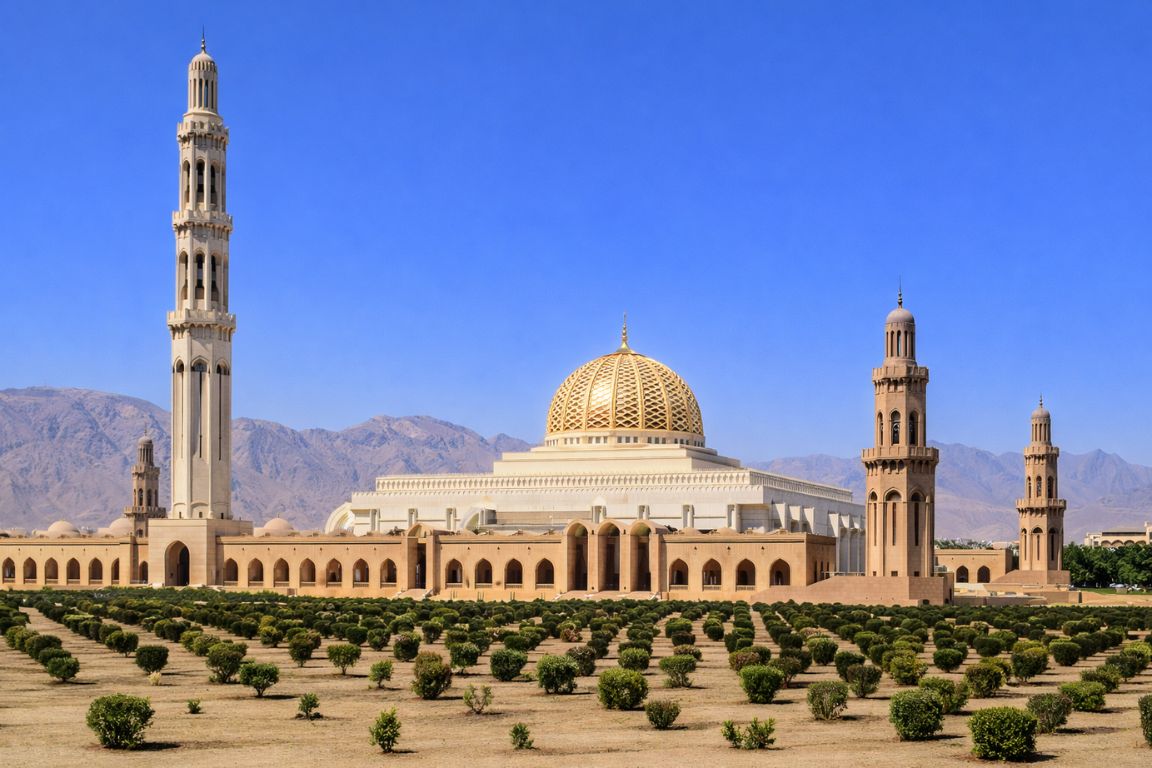 The Sultan Qaboos Grand Mosque is the largest mosque in Oman and the most visited landmark in Muscat. Built as Sultan Qaboos bin Said’s gift to the Omani people on the occasion of his 30th year of rule, it was inaugurated in May 2001. It spans 416,000 square metres, holds 20,000 worshippers, and is one of the very few mosques in the Arabian Peninsula that welcomes non-Muslim visitors inside the prayer halls.
You smell the incense before you see the dome. The entrance road opens onto white marble and manicured gardens, and most first-time visitors stop walking for a moment not from ceremony, just from the sheer scale of what they’re looking at. The 90-metre main minaret stands against the Muscat sky, and four smaller ones mark the corners like sentinels. Five minarets in total, each one representing one of the five pillars of Islam.
Sultan Qaboos commissioned the mosque in 1992 through an architectural design competition. Iraqi architect Mohammed Saleh Makiya won the commission, and construction by Carillion Alawi LLC took just over six years, using approximately 300,000 tonnes of Indian pink sandstone, local Omani granite, and white marble. The result is something that sits between ancient Islamic tradition and the care of a building that is genuinely new. The marble floors are still cool to the touch even midday in July. Nothing has been worn by centuries of use. That quality, the immaculate preservation of something this significant, is its own kind of statement about what Oman values.
In 2015, The Telegraph named it among the 25 most beautiful mosques in the world. Travelers who visit Muscat regularly tell us it was the part of the trip they thought about longest after coming home.
What Are the Opening Hours and Visitor Rules for the Grand Mosque?
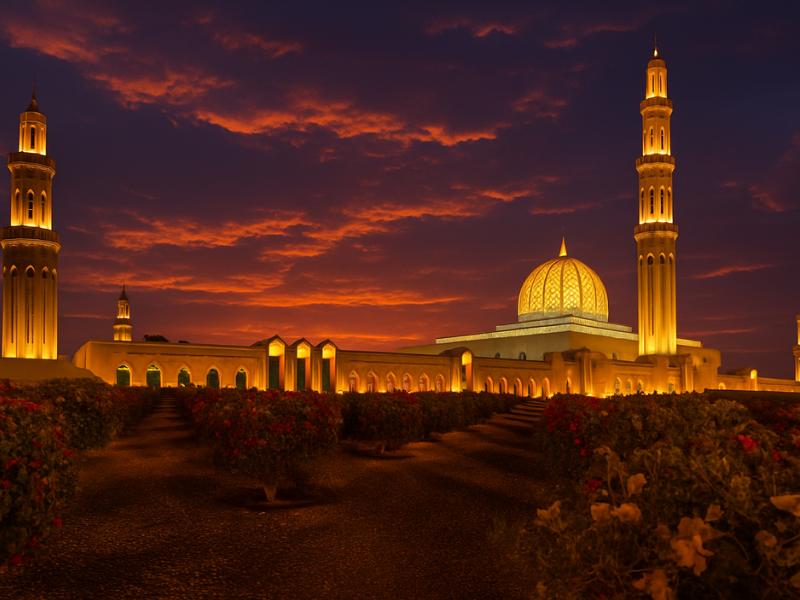
Non-Muslim visitors can enter Saturday through Thursday. The official sultanqaboosgrandmosque.com website states 8:30am to 11:00am. Many third-party sources list 8:00am as the opening time, and some visitors do enter at 8:00am without issue. To be safe, plan to arrive by 8:00am and treat 11:00am as a hard cutoff. The mosque is closed to tourists on Fridays.
A few practical rules that actually matter:
Shoes come off before the prayer halls. There are racks at the entrance and plastic bags if you want to carry your shoes. The floors are cool marble, no issues walking barefoot. No smoking anywhere on the grounds, not even outside near the gardens. No food or drink inside. Photography is allowed throughout, but no flash inside the prayer halls, and do not photograph people who are actively praying.
Large bags and backpacks can be left with security at the entrance, which makes the visit significantly more comfortable given the walking involved across 416,000 square metres of grounds. Donations are accepted but never required. The entire visit, including the Islamic Information Centre, is free of charge.
One thing worth knowing about the entry fee situation: in January 2025, the mosque introduced a short-lived 8.400 OMR charge for non-Muslim visitors that was withdrawn after roughly three weeks. Entry has been free since. We recommend checking the official website before your visit since this may change again at short notice.
Ramadan visiting hours may vary. If your trip falls during or near Ramadan, check the official site for any schedule adjustments.
What Should You Wear to the Sultan Qaboos Grand Mosque?
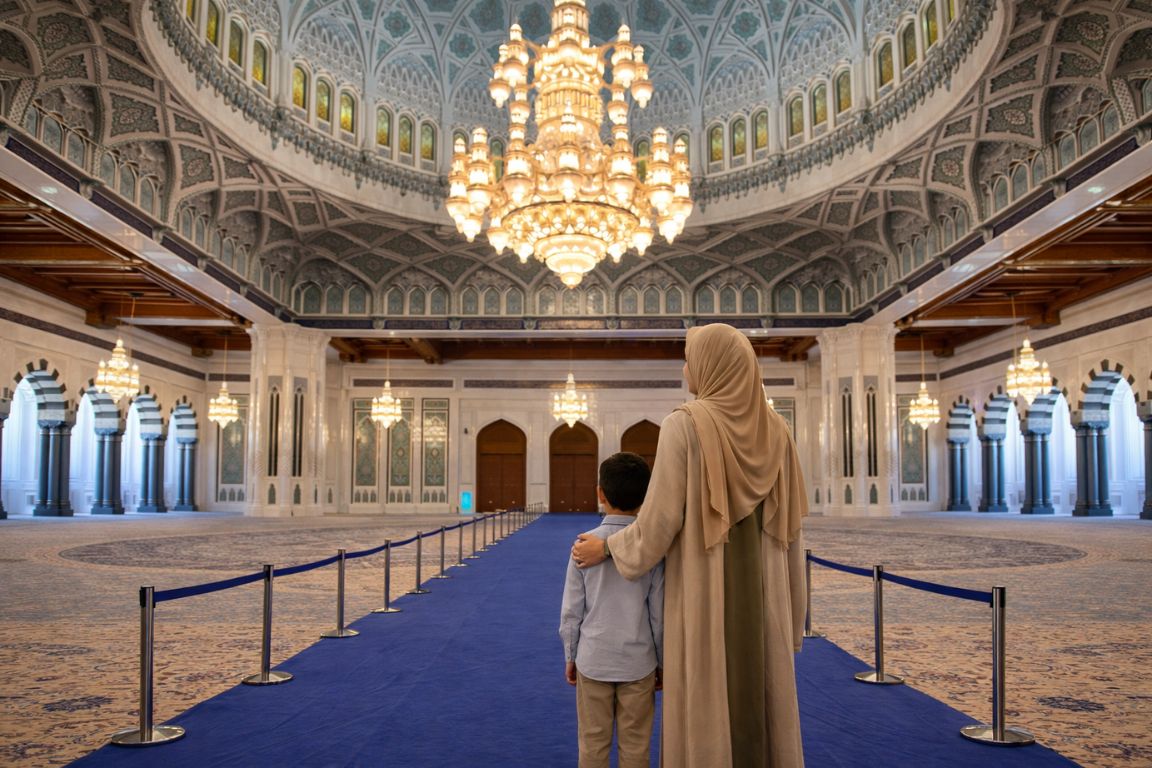 Women must wear clothing that covers arms to the wrist, legs to the ankle, and hair. Men need long trousers and a shirt with sleeves. No shorts, no sleeveless tops, no tight or transparent clothing for either. If you arrive underprepared, abayas and headscarves are available at the entrance shop for approximately 2.5 OMR.
Here is where a lot of visitors trip up. The dress code enforcement here is real, not performative. Staff at the entrance assess every visitor before entry, and women who aren’t fully covered will be redirected to the rental shop. We have seen travelers turned back for sheer fabric, short sleeves, or ankle-length skirts without a headscarf. The standards apply to all non-Muslim women regardless of the heat or how brief the visit.
The smarter move is to sort this at the hotel before leaving. For women, an abaya and lightweight headscarf takes up almost no space in a day bag and eliminates the rental queue and the 2.5 OMR cost. For men, long linen trousers and a short-sleeved collared shirt is the standard comfortable option that passes without issue even in summer temperatures.
A few nuances from our team’s experience with families: girls under seven or eight are generally not required to wear a headscarf, though modest dress still applies. Boys need long trousers regardless of age. When in doubt, cover up. The mosque staff are genuinely welcoming once visitors are properly dressed, and the experience inside is much better when the entrance inspection is a quick nod rather than a detour.
Wondering about clothing expectations? Check out our Oman dress code guide – it covers everything from mosque requirements to what you can wear at beaches and how Oman compares to stricter Gulf countries.
| Women | Long sleeves to wrist, ankle-length skirt or trousers, headscarf covering all hair | Short sleeves, bare ankles, uncovered hair, tight or sheer fabric |
| Men | Long trousers, shirt with at least short sleeves | Shorts, sleeveless shirts, tank tops |
| Children (girls 7+) | Modest dress, headscarf recommended | Shorts, bare shoulders |
| If underdressed | Abaya and headscarf rental available at entrance | Cost: approx. 2.5 OMR per person |
Dress code verified March 2026.
What Can You See Inside the Sultan Qaboos Grand Mosque?
The main prayer hall is the centerpiece: a vast square space covered by the world’s second-largest hand-woven carpet, with a Swarovski crystal chandelier overhead that is 14 metres tall and 8 metres wide. Beyond the prayer halls, the mosque complex includes a women’s prayer room, a library of over 20,000 volumes, a lecture theatre, and the Islamic Information Centre where visitors are offered Omani coffee and dates.
The carpet gets people. It covers 4,343 square metres, the whole floor of the men’s prayer hall, and was woven by 600 Iranian women over four years. It weighs 21 tonnes. Standing in the doorway of the prayer hall, you understand the scale only gradually, because the room is big enough that your brain keeps readjusting what it thinks it’s looking at. The chandelier above it is hung with over 600,000 Swarovski crystals and 1,122 light bulbs. It took a two-storey building’s worth of height to hang it.
Walk the corridors along the northern and southern edges of the complex and pay attention to the walls. Every section reflects a different Islamic architectural tradition, geometric patterns from different eras and regions, Arabic calligraphy from the Quran in Thuluth script running continuously along the top. The five minarets are visible from different angles throughout the grounds. The main one rises 90 metres, the tallest structure in Oman until 2025 when a 126-metre flagpole was unveiled in the Ministries District.
The Islamic Information Centre is on the left as you enter the complex. It often gets skipped by visitors in a hurry, which is a mistake. Staff there speak English, offer free dates, Arabic coffee and tea, and have free books about Islam available to take. For visitors who have limited exposure to Islamic culture, this is genuinely the most educational 15 minutes you can spend in Muscat. The conversation is unhurried and the welcome is real.
The library holds over 20,000 reference volumes covering Islamic culture, science, art, and philosophy. It is open Saturday to Wednesday 9:00am to 2:00pm and 4:00pm to 9:00pm, Thursdays morning session only. The lecture theatre hosts regular public events including interfaith dialogue sessions in English.
If you’d rather hand the logistics to someone who’s done this 7,700 times, the 6-hour Muscat city tour with an Omani guide starts at the Grand Mosque and includes transport, timing, and the rest of the city after the visitor window closes.
How Do You Get to the Sultan Qaboos Grand Mosque?
 The mosque is in the Bawshar district along Sultan Qaboos Road, about 12.5 km from Muscat International Airport and 15 minutes by car in normal traffic. Taxi or ride-hailing app (Otaxi, Careem) is the most practical option for most visitors. Free parking is available on site. Bus routes 1, 8, 12, and A1 pass near the mosque, with the nearest stop roughly a 10-minute walk away.
Getting there is genuinely easy. The mosque sits directly on Sultan Qaboos Road, one of the city’s main arteries, and any taxi driver in Muscat knows it. From central Muscat or Shatti Al Qurum, expect around 15 to 20 minutes in morning traffic. From Al Bustan or Bandar Jissah in the south, budget 30 to 35 minutes. From the airport, 15 minutes with no traffic.
If you’re using a taxi, agree on the fare before getting in or confirm the meter is running. The ride from Shatti Al Qurum should be around 3 to 5 OMR one way. From the airport, a metered taxi typically runs 6 to 8 OMR. For bus users, route 1 from Ruwi to Al Azaiba gets you within a 10-minute walk. The buses are air-conditioned and run on schedule, but public transport in Muscat requires some patience with timing, and morning visits to the mosque have a hard 11:00am cutoff, so most travelers with only one morning find the taxi more reliable.
Driving yourself: park in the large free lot directly adjacent to the entrance. It fills during peak hours (roughly 9:30am onward on weekends), so the early arrival advice applies here too.
We’ve created a detailed Muscat transportation guide because Muscat doesn’t have a metro system and attractions are spread out – your transport strategy affects what you can realistically see.
What Are the Best Tips for Visiting the Sultan Qaboos Grand Mosque?
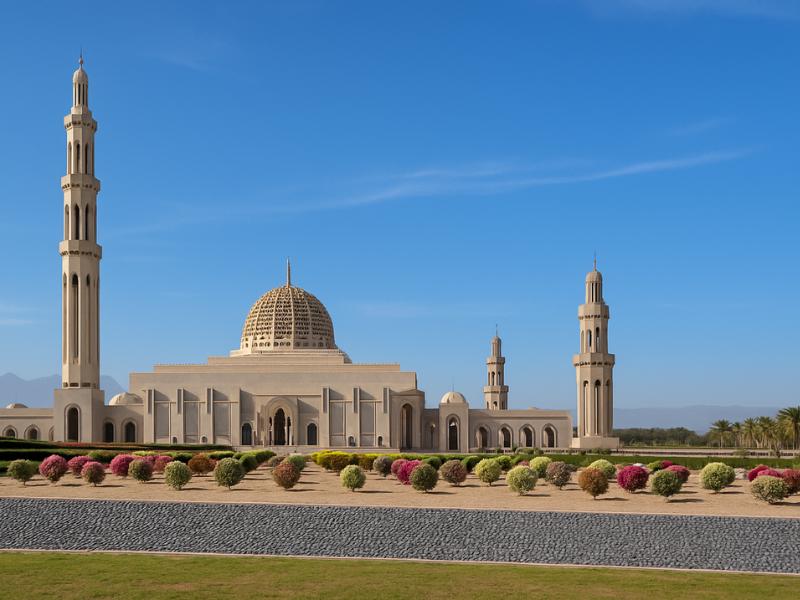
Arrive before 9:00am to get the prayer hall before tour groups arrive. Sort your clothing at the hotel, not at the entrance. Go to the Islamic Information Centre, most visitors skip it and regret it. Bring water, the grounds are larger than they look on a map. Allow 75 minutes minimum, not 45.
The timing advice is more than just crowd management. The prayer hall at 8:15am, light coming through the high windows, no large groups yet, just the carpet and the chandelier and maybe a handful of other early arrivals, is a genuinely different experience from the same space at 10:00am with twenty tour groups moving through. If you’re visiting between October and April, the morning is comfortable in modest clothing. In summer (May to September), the morning is also more bearable, but wear breathable natural fibres and carry water.
A few things travelers consistently mention they wish someone had told them before going:
The ablution room (where worshippers perform ritual washing before prayer) is open to non-Muslim visitors during non-prayer times and is architecturally impressive in its own right. Most visitors walk past it. The women’s prayer hall is smaller than the men’s and noticeably less ornate, which some visitors find unexpected given the scale of everything else. If you’re travelling with a mixed group, the women’s hall is open to female visitors during visiting hours.
Unofficial guides sometimes approach visitors near the entrance. Some are excellent; others, as one honest TripAdvisor reviewer noted, catch you near the car park, group you with strangers, give a rushed multilingual tour, and charge 5 OMR at the end. The better option is the official on-site guides arranged through the mosque’s visitor centre directly.
Want to get the planning right? This breakdown of how to plan a trip to Oman Muscat tours covers all the details most visitors only figure out after they’ve already arrived and realized the country is way more spread out than they thought.
Where Visitors Go Wrong at the Grand Mosque
The fail points here are consistent enough across years of visitor feedback that we have turned them into our standard pre-visit briefing for every group we take.
The most common: arriving under-dressed and losing 20 minutes to the abaya queue. This is fixable in five minutes at the hotel. The second most common: showing up on a Friday. This is not a mistake you can recover from. Friday closures for non-Muslim tourists are firm with no exceptions. Plan around it.
Timing is the third one. Visitors who arrive at 10:30am thinking they have enough time before the 11:00am close often find themselves rushed through the prayer hall and skipping the gardens and the Information Centre entirely. The visit requires at least 75 minutes done properly. If you have a morning transfer, boat trip, or other fixed commitment, work backward from 11:00am and arrive by 8:30am at the latest.
Finally, the heat in summer (June through August) hits harder inside the grounds than travelers expect. The marble and white sandstone reflect a lot of light and radiant heat. The gardens have shade but the route between the entrance and the prayer hall does not. Carry water, and if you are visiting with children or anyone with heat sensitivity, book for October through April.
Timing is critical in Oman. The best time to visit Oman Muscat tours depends on whether you can handle 45°C desert heat or prefer the mild winter months when everything is actually comfortable.
We’ve been running Muscat city tours since 2013. A private 4-hour landmarks tour takes the pre-visit logistics off your list.
Is a Guided Tour of the Sultan Qaboos Grand Mosque Worth It?
 Yes, for most visitors. The self-guided experience is free and gives you access to the same physical spaces, but the mosque is dense with symbolism, architectural detail, and Islamic cultural context that isn’t explained anywhere on-site without a guide. The 5 OMR on-site guide fee is one of the better value decisions you can make in Muscat.
Here is what the guide actually adds: the carpet story, the specifics of the chandelier construction, the symbolism behind each minaret, the history of the design competition and why Makiya’s concept won, the significance of the different corridor sections. You can look at the geometric patterns on the walls and appreciate that they’re beautiful. A good guide tells you where those patterns originate, what period, what school, what they’re communicating. That’s a different visit.
If you’re nervous about making cultural mistakes, here’s our Oman Muscat tours cultural etiquette guide so you understand what’s expected without overthinking every interaction.
The on-site guides, booked directly through the mosque’s visitor centre, are generally very good. They answer questions, they’re patient with groups that include children, and they know exactly which angles in the prayer hall give the best photographs. The unofficial guides who approach near the entrance are more variable and occasionally result in the rushed, multilingual experience that shows up in negative reviews. Stick with the official option.
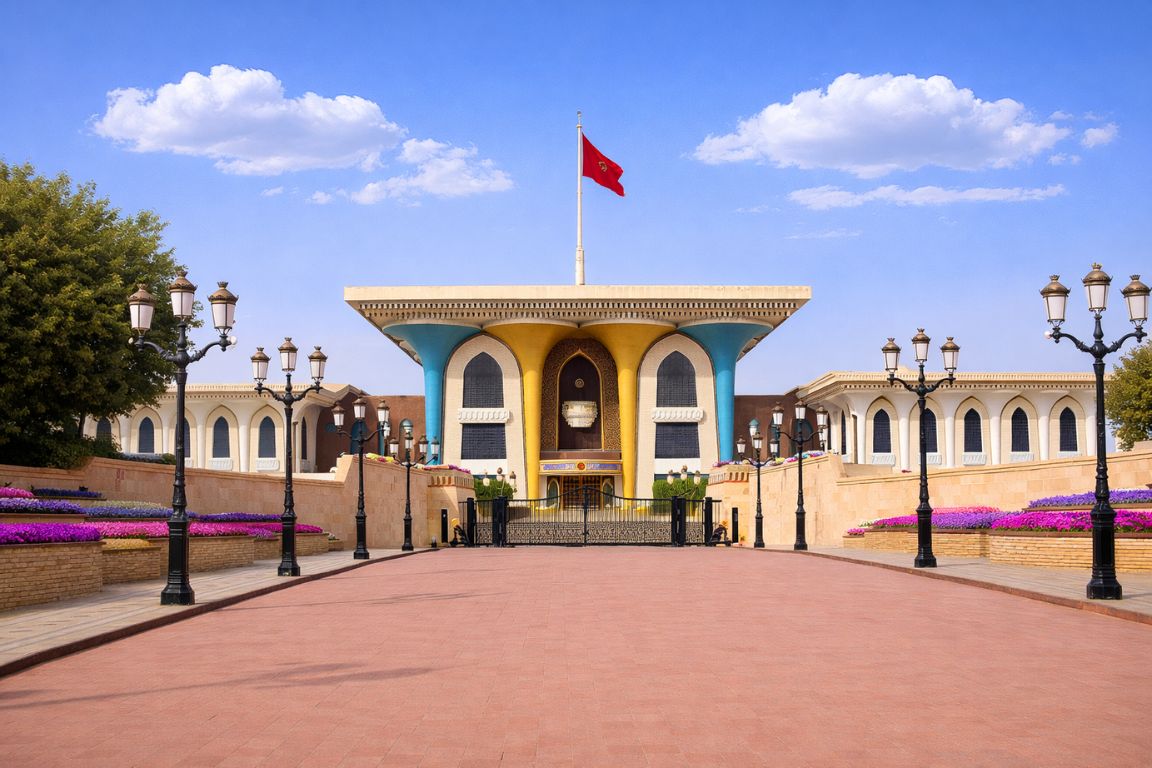
For travelers who want the mosque as part of a half-day or full-day Muscat city tour, combining it with Al Alam Palace, Mutrah Souq, and a stop at Qurum Beach or the Royal Opera House area, a private guided tour handles the transport, timing, and local context in one go. Questions before you commit? Dates and inclusions for a mosque-inclusive morning are on the budget-friendly Muscat city experience page.
| Self-guided visit | Free | Repeat visitors, architecture professionals, those comfortable with Islamic culture | Missing context; rushing through without realising significance of details |
| On-site official guide | ~5 OMR per person | First-time visitors, families, anyone wanting depth | Book through visitor centre, not with guides who approach you at the entrance |
| Private city tour including mosque | $80-130 per person (full day) | Travelers with limited time who want to cover the key Muscat sites efficiently | Confirm mosque visit is included and timed for the morning window |
| Layover visit (self-guided) | Taxi + free entry | Travelers with 3+ hours between flights, airport is 15 min away | Only viable on a non-Friday morning; dress appropriately from the airport |
Tour prices verified March 2026.
Frequently Asked Questions
Is the Sultan Qaboos Grand Mosque free to visit?
Yes, entry is currently free for all visitors. A temporary fee of 8.400 OMR was introduced briefly in January 2025 and then withdrawn. This may change again, so check the official website before visiting.
Can non-Muslims visit the Sultan Qaboos Grand Mosque?
Yes. The Grand Mosque is one of the very few mosques in the Arabian Peninsula that allows non-Muslim visitors inside the prayer halls. Access is limited to Saturday through Thursday, 8:30am (or 8:00am by many accounts) to 11:00am. Fridays are closed to tourists.
What happens if I arrive at the mosque on a Friday?
You will not be able to enter as a tourist. Friday is the Muslim day of congregational prayer and the mosque is closed to non-Muslim visitors that day. The gardens and exterior can be seen from outside, but there is no access to the prayer halls or interior.
Do I need to book a guided tour in advance?
No advance booking is needed for the on-site guided tours. You can arrange a guide at the mosque’s visitor centre on arrival for approximately 5 OMR per person. For private full-day city tours that include the mosque, advance booking with a tour operator is recommended, especially during peak season (November through March).
How long should I allow for visiting the mosque?
Minimum 45 to 60 minutes self-guided, 75 to 90 minutes with a guide. If you plan to spend time at the Islamic Information Centre, library, or gardens, allow two hours.
Is the Sultan Qaboos Grand Mosque worth visiting on a layover in Muscat?
Yes, provided your layover includes a non-Friday morning with enough time. The mosque is 15 minutes from the airport. With a layover of 3 or more hours, a taxi there and back plus a 60-minute self-guided visit is very manageable. Dress appropriately from the airport, carry cash for a taxi or use Otaxi/Careem, and plan to arrive before 10:00am.
Written by Omar Jackson Al-Kalbani
Omani tour guide since 2013 · Founder, Oman Muscat Tours
Omar has guided over 7,700 travelers through Muscat, the wadis, and the deserts of Oman since founding the agency.
Choose the outing, then check your date
Half-Day Private Muscat City Tour - Top Landmarks in Just 4 Hours
Curious how the mosque fits into a compact Muscat morning? The private four-hour itinerary starts there and continues through Qurum, Mutrah and Old Muscat.
4.0 hours · Bottled water; Omani Tour Guide English Speaking
Choose a date to view the published schedule checked 9 September 2026. Final availability and price are confirmed on Viator.
Compare options and match my plans
Wheelchair accessible; Public transportation options are available nearby; Transportation options are wheelchair accessible; Suitable for all physical fitness levels; Please be aware that every Friday, both the Sultan Qaboos Grand Mosque and the Royal Opera House are closed. As a result, we will only be able to make a photo stop outside, along with a brief explanation.; Children under 5 years old can join the tour free of charge.; The Grand Mosque is open daily from 8:00 AM to 11:00 AM, and it is closed on Fridays. If your booking is between 11:00 AM and 4:00 PM, we will only be able to make a photo stop outside, along with a brief explanation. Extras: Lunch; Gratuities; Royal Opera House Fee 3 OMR or 8 USD per person. Pickup: (we do pick up and drop off anywhere in Muscat Area) We use a signboard with the name of our clients for Port and Airport
- Experience Muscat City Tour-Omani Guide and Traditional Food-5h · 5.0 hours. Pick up and drop off (around Muscat); Car parking fees
Compare your group costs
Enter complete quotes in the same currency, including transport, tickets and extras. These are your estimates, not live prices.