Muscat to Salalah Travel Guide
Muscat to Salalah? Fly in 1h40 for $70-180, or drive 10-12 hours. It’s a completely different, subtropical Oman - here’s how to plan the trip.
Last updated: March 24, 2026
Choose the flight, bus or road journey first. For sightseeing after arrival, this eight-hour Salalah tour links Darbat and Mughsail with local hotel pickup. Explore Salalah after arrival ↗
Muscat to Salalah: Quick Reference
| Fly (Oman Air / SalamAir) | 1h 40min flight + airport time | $70-180 (book early); $180+ during Khareef | Most travelers. Fast, reliable, fits limited itineraries. |
| Bus (Mwasalat intercity) | 12-13 hours | 8 OMR (~$21 USD) one way; 12.5 OMR return | Budget travelers, overnight travel, no driving required. |
| Drive (interior highway via Haima) | 10-12 hours non-stop | $55-85 fuel (2WD adequate) | Travelers with own car or rental wanting flexibility. |
| Drive (coastal route via Duqm) | 2-3 days with stops | Fuel + accommodation along route | Road trip enthusiasts wanting the full Oman coastal experience. |
Prices verified March 2026. Khareef season (July-September): expect 20-40% higher flight prices and fully booked hotels without advance planning.
How Do You Get from Muscat to Salalah?
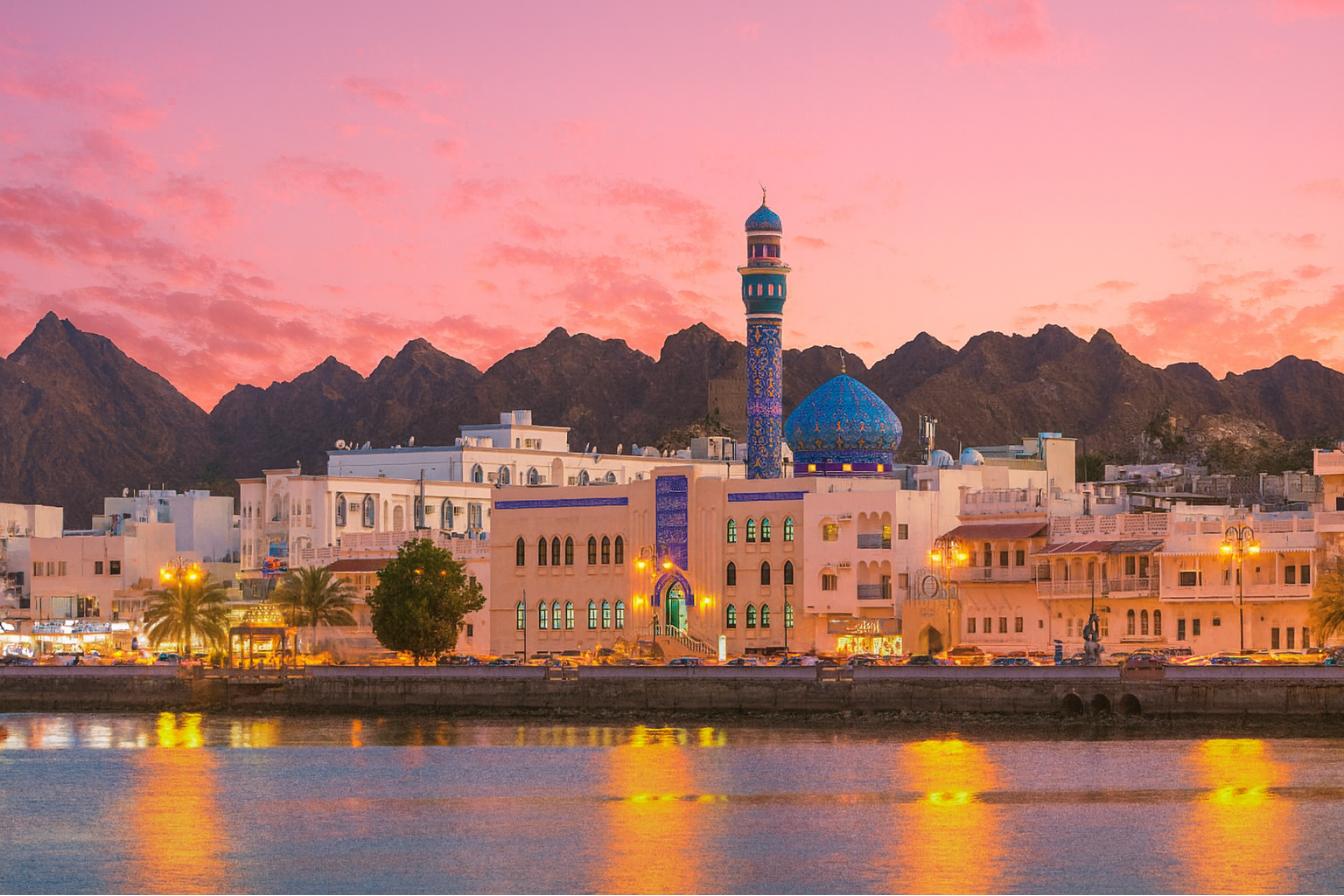 There are three real options: fly (1h 40min, $70-180), take the overnight bus (12-13 hours, 8 OMR), or drive yourself (10-12 hours on the interior highway, 2-3 days on the scenic coastal route). Flying is the right choice for most visitors. The bus makes sense for budget travelers willing to sacrifice a night. Driving makes sense if you have a week or more and want to treat the journey itself as part of the experience.
Salalah sits in Oman’s Dhofar region, 1,017 kilometres south of Muscat by road. That is not a short distance by any measure. The country between them is mostly flat, dry, and genuinely remote, with long stretches of single-lane highway where overtaking requires judgement and the landscape offers almost nothing except the occasional fuel station and an enormous sky. The drive can be done in one day if you start early and keep moving. Most people who have done it once fly the second time.
What makes Salalah worth the journey is that it is essentially a different country from Muscat in terms of climate, landscape, and culture. Muscat is arid, modern, and cosmopolitan. Salalah is subtropical, surrounded by frankincense trees, and has its own distinct Dhofari cultural identity. From late June through September, the Khareef monsoon turns the mountains green in a way that looks nothing like the rest of the Arabian Peninsula. It rains. The mountains are draped in mist. Waterfalls appear. This is the experience that draws hundreds of thousands of visitors from across the Gulf every summer, most of whom fly in from Muscat or Dubai.
We’ve created a detailed Muscat transportation guide because Muscat doesn’t have a metro system and attractions are spread out – your transport strategy affects what you can realistically see.
How Far Is Muscat from Salalah?
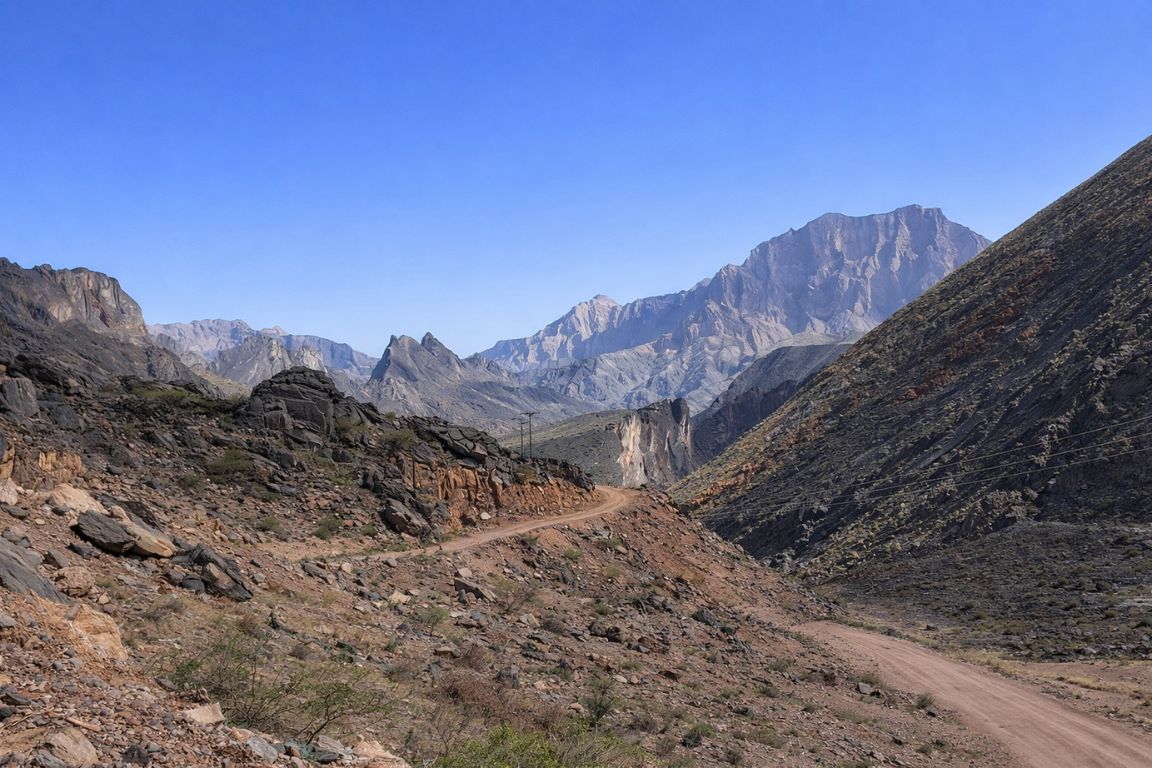 The straight-line distance from Muscat to Salalah is approximately 858 km. The road distance by the interior highway (Route 15 to Route 31) is 1,017 km. The coastal route via Duqm is approximately 1,280-1,500 km. By air it’s 872 km. At highway speeds, the interior drive takes 10-12 hours non-stop. Most people underestimate the scale of this journey until they look at it on a map.
To put it in context: Muscat to Salalah is roughly the same distance as London to Edinburgh and back, or New York to Cincinnati. On a map of Oman it looks manageable. On the road, especially on the single-lane sections of Route 31 south of Haima, the scale of the country becomes apparent in a way that doesn’t fully register until you’ve been driving through flat gravel plain for three hours and there is still nothing on the horizon.
The interior highway is the faster option. Route 15 from Muscat through the Hajar Mountains to Nizwa, then Route 31 south through Haima to Thumrait, then the final stretch to Salalah. The road is dual carriageway from Muscat to Haima, then a single lane in each direction from Haima to Thumrait. That 400-kilometre single-lane section is the part that requires attention. Trucks are common, overtaking opportunities are limited, and speeds on this road regularly exceed 120 km/h. Driving at night on this stretch is not recommended by anyone who knows it.
The coastal route is a different proposition entirely. It goes via Sur, Ras Al Hadd, Wadi Bani Khalid, the Sugar Dunes at Al Khaluf, Duqm, and eventually into Dhofar from the east. It is genuinely spectacular and covers some of the most remote coastline in the Middle East. It requires multiple days, accommodation planning (hotels are sparse along this route), and a comfort level with long solitary drives. It’s one of the great Oman road experiences. It is not a convenient way to get to Salalah.
Should You Fly or Drive from Muscat to Salalah?
Fly if you have 10 days or fewer in Oman, if you’re not specifically interested in the journey itself, or if you’re visiting during Khareef season and the destination is the point. Drive if you have 14+ days, want to see the coastal route properly, or are comfortable with very long days behind the wheel on remote roads. The bus is the right middle ground for budget-conscious travelers who can handle an overnight journey and don’t need a car in Salalah.
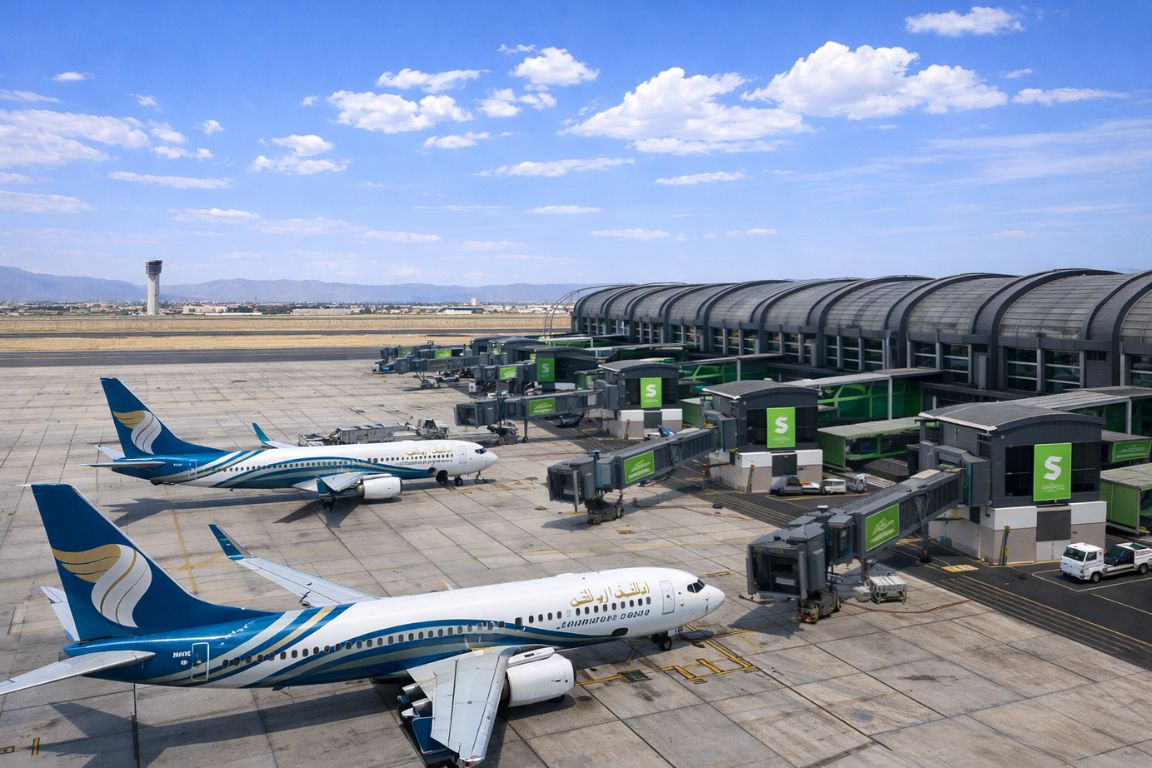
The flight case is strong. Oman Air and SalamAir between them operate around 10 flights daily on this route. The flight is 1 hour 40 minutes. At $70-120 booked well in advance, the cost is competitive with the fuel cost of driving. You arrive fresh, with daylight, and can immediately pick up a rental car in Salalah and start exploring. For a 7-10 day Oman itinerary where Muscat and Salalah both feature, flying between them is the only practical option.
The drive case is also real, just for a specific type of traveler. The interior highway through Haima is honest about what it offers: long, flat, mostly featureless driving on good roads with occasional camel warnings and dramatic cloudscapes. Some travelers love this. The emptiness and scale of central Oman has a quality that’s hard to find elsewhere. Haima, roughly the halfway point, has guest houses and petrol stations and makes the obvious overnight stop if you want to break the journey into two days. After Thumrait, as you climb into the Dhofar mountains for the final stretch to Salalah, the landscape changes dramatically and the drive becomes genuinely rewarding.
One honest warning about the single-lane section: Oman’s accident rate on Route 31 is real. The combination of long straight stretches, high speeds, overtaking on single-lane road, and occasional sand drifts creates conditions that account for a meaningful number of road incidents. Drive at the speed limit, take breaks, do not drive after dark on this section, and be especially cautious around large trucks.
| 7-10 days in Oman, both cities on itinerary | Fly | 10-12 hours driving loses a full day each way |
| Budget trip, comfortable with overnight travel | Bus | 8 OMR, saves a night’s accommodation, AC, comfortable |
| 14+ days, road trip focus, own car | Drive interior + coastal return | Best of both routes, full Oman circuit |
| Visiting during Khareef (Jul-Sep) | Fly, book 6-8 weeks ahead | Flights and hotels fill up fast during peak season |
| Arriving Salalah without own transport | Fly + rent car in Salalah | Salalah is car-dependent; taxis are expensive and limited |
Options verified March 2026.
If you want the Muscat days settled before you fly south, a half-day private tour of Muscat’s main landmarks takes 4 hours and leaves the rest of the day free. Travelers on this route often add a Nizwa and Jebel Akhdar day trip from Muscat on the northern side of the itinerary.
What Is the Bus from Muscat to Salalah Like?
 The Mwasalat intercity bus on Route 100 (and private operators like Salalah Line Express) runs Muscat to Salalah daily. The fare is 8 OMR one way (~$21 USD) or 12.5 OMR return. Journey time is 12-13 hours. Departures from Burj Sahwa Bus Station (also stops at Muscat International Airport on some services). It’s air-conditioned, makes rest stops, and is significantly more comfortable than it sounds on paper. The overnight departure works well for travelers who don’t want to lose a day to travel.
The bus is consistently better than its reputation suggests. The coaches are modern, the air conditioning works, and the regular toilet and food stops break up the journey. The overnight service, departing around 7pm and arriving in Salalah early morning, is the format that makes the most practical sense: you sleep through the empty stretches of Route 31, arrive in Salalah around 7-8am, and have a full day ahead of you.
The departure point question is worth clarifying. The main station is Burj Sahwa Bus Station in Muscat. Some Mwasalat services also stop at Muscat International Airport, which is useful for travelers arriving from abroad who want to continue south without going into the city first. Check the Mwasalat app or website (mwasalat.om) for current schedules before booking, as departure times are adjusted periodically. The Salalah arrival point is the Salalah Bus Station near the commercial centre, not at the airport or city centre hotels. From there, a taxi to your hotel runs 5-10 OMR.
What the bus doesn’t give you: flexibility to stop along the way, a car in Salalah (you’ll need to rent one there), and the ability to change your mind mid-journey. For a straightforward budget transit between the two cities, it is perfectly adequate. For anyone who wants to explore Salalah’s scattered attractions across the Dhofar region, arriving by bus and renting a car on arrival is still a valid combination.
What Is the Best Time to Visit Salalah from Muscat?
There are two distinct Salalah experiences. Khareef season (late June to early September) brings the monsoon: green mountains, waterfalls, mist, cooler temperatures (20-27°C), and the Salalah Tourism Festival. It’s the most dramatic and popular time to visit but flights and hotels book out weeks in advance. October to February gives pleasant dry weather (20-28°C), emptier beaches, easier logistics, and better conditions for archaeology and outdoor activities. Both are worth visiting for different reasons.
The Khareef is genuinely unlike anything else in the Arabian Peninsula. The word means “autumn” in Arabic, but in Salalah it refers to the Indian Ocean monsoon winds that hit the Dhofar mountains from late June and sustain a period of mist, light rain, and cooler weather through to early September. The mountains, which are brown and dry for the other nine months of the year, turn green. Waterfalls appear on cliff faces that are bare rock in winter. The air smells of frankincense and wet earth. Wadi Darbat fills with water and the boat rides on its lake become one of the season’s most-visited activities.
The practical caveat: Khareef is also peak season. Hotels in Salalah during July and August are as busy as anywhere in the Gulf, prices climb significantly, and the most popular spots like Al Mughsayl Beach and Wadi Darbat have real crowds. The fog and mist that make the mountains beautiful also make coastal driving and photography unpredictable. Book flights and accommodation 6-8 weeks ahead for a July or August visit.
October to February is the underrated window. The monsoon residue keeps some greenery through October and into November. Temperatures are ideal for outdoor activity. The beaches are excellent. The archaeological sites, particularly Al Baleed (UNESCO World Heritage) and Sumhuram near Khor Rori, are best visited in dry clear weather. There are far fewer tourists. Flights are cheaper. Hotels have availability. If you care more about the quality of the Salalah experience than the specific Khareef spectacle, this is the better window for most international travelers.
The season you pick completely determines what you can actually do. This breakdown of the best time to visit Oman Muscat tours shows you why winter is the only realistic time for most travelers unless you’re okay with extreme heat.
| Oct-Nov | 25-30°C, post-monsoon greenery | Low | Best photography, some residual green, empty beaches |
| Dec-Feb | 20-28°C, dry, sunny | Low-Moderate | Best for outdoor activity, archaeology, beaches |
| Mar-May | 28-36°C, warming up | Low | Good for avoiding crowds; heat increasing by May |
| Late Jun-Sep (Khareef) | 20-27°C, mist and light rain | Very High | Green mountains, waterfalls, unique monsoon experience |
Climate data verified March 2026 from Oman Meteorology sources.
How Many Days Do You Need in Salalah?
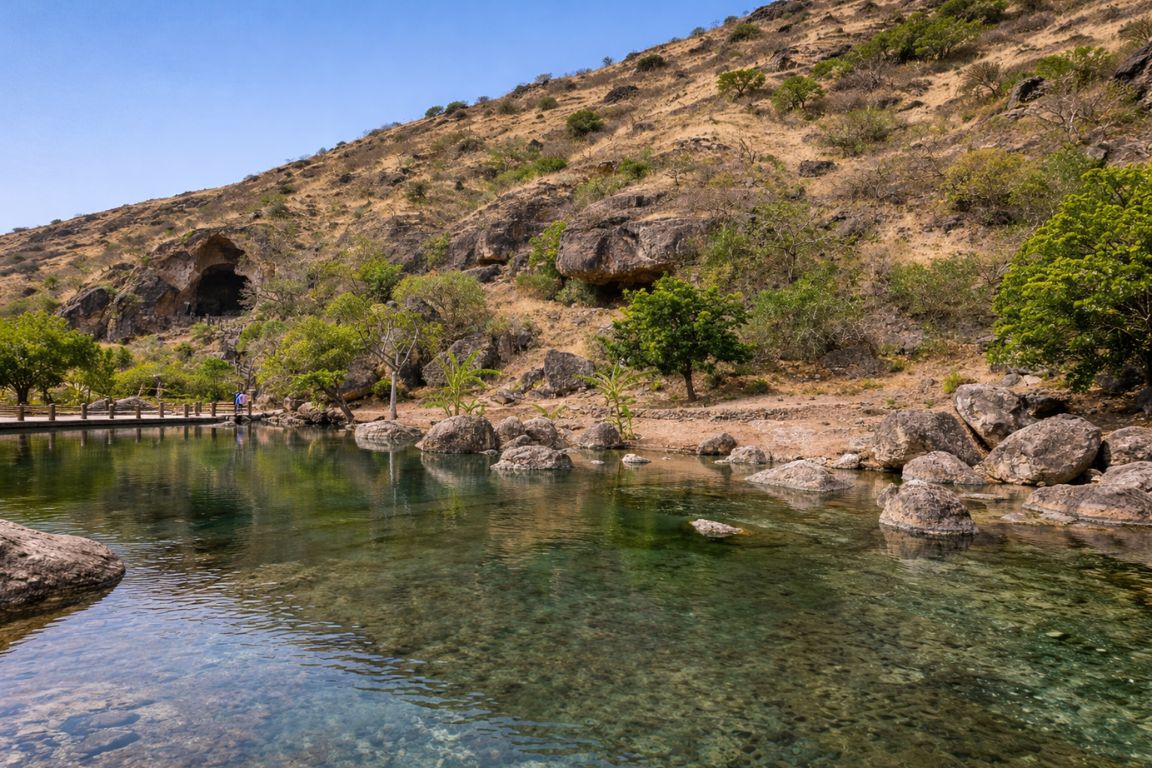 Minimum 3 days to see the main sites east and west of the city. Five days is comfortable and allows for a day trip further into Dhofar. A week lets you go deeper, including the remote western coast toward Dhalkut and the Yemen border area. Salalah itself is spread out and car-dependent; without a vehicle, your range is severely limited.
The city of Salalah itself takes maybe half a day to walk around – the Al Husn Souq for frankincense, the banana plantations, the Corniche. The real Salalah experience is the Dhofar region around it, and that requires driving.
To the east: Wadi Darbat for the lake and (in Khareef) waterfalls and boat rides. Sumhuram Archaeological Park at Khor Rori, a UNESCO World Heritage Site and once one of the great frankincense trade ports of the ancient world. Taqah Castle. Mirbat for coastal scenery and the old town. This eastern half is 40-70 km from Salalah and fills a full day comfortably.
To the west: Al Mughsayl Beach, one of the most dramatic beaches in Oman with its blowholes that shoot jets of seawater through limestone rock during rough weather. The Ittin Road climbing into the green Dhofar mountains with views back toward the Indian Ocean. Ayn Athum and Ayn Razat, the freshwater springs in the mountains. Job’s Tomb at Nabi Ayoub, a pilgrimage site set on a hilltop with views across the Dhofar plain. This western circuit fills another full day.
Day three for most visitors: wander the city, buy frankincense at Al Husn Souq, catch a sunset at Haffa Beach or the Hawana marina waterfront. If you have a fourth or fifth day, the road toward Dhalkut (about 198 km west) enters genuinely remote territory near the Yemen border, with baobab trees, rugged mountain terrain, and empty beaches. This is off-the-beaten-path Oman.
If you’re feeling overwhelmed by all the decisions, here’s how to plan a trip to Oman Muscat tours so you don’t waste time figuring out wadis, forts, and desert camps on the fly.
What Should You Do in Salalah When You Get There?
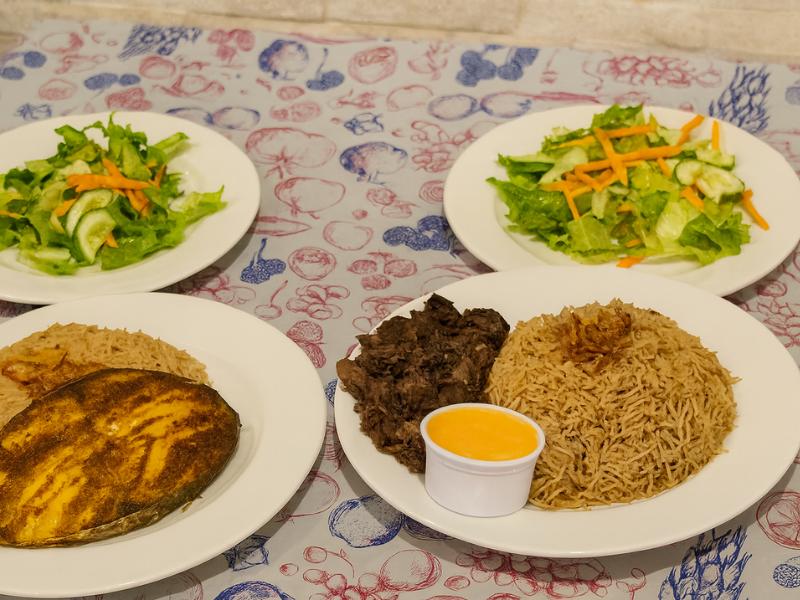
The key experiences: rent a car immediately (do not rely on taxis for regional exploration), do the eastern circuit to Wadi Darbat and Sumhuram on day one, the western circuit to Al Mughsayl and the mountain roads on day two, and spend time in the city itself on day three. Buy frankincense at Al Husn Souq. Eat Shuwa if you can find it. If visiting during Khareef, go to Wadi Darbat for the lake and the waterfall views, and drive the Ittin mountain road for the mist experience.
Renting a car at Salalah International Airport is the single most important logistics decision. Taxis exist but are expensive (7-15 OMR for airport to city) and unmetered, and the regional sites around Salalah are not accessible without your own transport. Car rental starts from $16/day for a standard 2WD. For the main tourist circuit around Salalah, a 2WD is adequate. For the remote western routes toward Dhalkut, a 4WD is recommended.
The frankincense culture deserves more attention than most travel articles give it. The Dhofar region is the world’s primary source of high-quality frankincense, and in Salalah this is not a tourist affectation but an actual part of daily life. Al Husn Souq sells frankincense in every grade and form. You will smell it burning in shops, hotels, and homes throughout the city. The frankincense trees in the mountains west of Salalah are visible from the road and genuinely interesting to see, particularly in Khareef when the landscape around them is green.
Shuwa is Oman’s most distinctive slow-cooked dish: lamb marinated in spices, wrapped in banana or palm leaves, sealed in an underground clay pot, and cooked over wood embers for 48 hours. It’s served on special occasions and at some local restaurants. If you encounter it, eat it. The texture and depth of flavour is unlike anything produced in a conventional oven.
What Our Clients Report About Muscat to Salalah Trips (2025 Data)
| Metric | Data (from our guided groups) | Notes |
|---|---|---|
| % who flew vs. drove vs. bussed | 70-85% flew / 10-20% drove / 5-10% bussed | Fly dominant (Oman Air Muscat-Salalah frequent, ~1.5 hrs, affordable; Khareef surges capacity); drive scenic but long (10-12 hrs, coastal route preferred); bus cheap but slow (12+ hrs, Mwasalat). |
| Average days spent in Salalah | 3-4 days (most common; range 2-7 days) | First-timers often 3-4 days (covers east/west circuits + city); longer for Khareef relaxation or deeper exploration; many extend from 3 to 5+ after arrival. |
| % who visited during Khareef vs. off-season | 55-65% Khareef (June-Sep) / 35-45% off-season (Oct-May) | Khareef peak (July-Aug highest: mist, waterfalls, festival, green landscapes); off-season quieter, drier, frankincense focus; high Khareef % from seasonal surge. |
| Top-rated experience in Salalah (client ranking) | Wadi Darbat (Khareef waterfalls/lake) or Al Mughsayl blowholes/beach (tied or close) | Wadi Darbat often #1 (Khareef magic: waterfalls, lake, greenery); Mughsayl dramatic (blowholes, cliffs); frankincense souq/trees strong cultural; scenic drives high. |
| % who wished they had more days in Salalah | 60-80% | Spread-out sites (east/west circuits 100+ km) + relaxation (beaches, souqs); many say “3 days too short” or “add 1-2 for Khareef.” |
| Most common logistics mistake (Salalah) | Not renting a car (relying on taxis) | Taxis expensive/unreliable for regional sites (Wadi Darbat, Mughsayl, frankincense trees 50-200 km); car rental cheap (~$16+/day 2WD); common regret (limits freedom, adds cost). |
Where Muscat to Salalah Travelers Go Wrong
The patterns are consistent across years of travelers making this trip.
Not renting a car in Salalah. This is the most consequential mistake. Travelers who fly in assuming taxis will cover the ground find that Salalah’s major attractions are spread across 200+ kilometres of Dhofar, taxi prices add up fast, and driver availability is inconsistent. Rent a car at the airport. It costs less than a day’s worth of taxis and gives complete freedom.
Visiting during Khareef without booking ahead. The Khareef is special and worth experiencing. But July and August in Salalah are peak season in the fullest sense: flights sold out, hotels at capacity, Al Mughsayl Beach packed, Wadi Darbat with queues for boat rides. Booking 6-8 weeks ahead is not overcautious, it’s necessary.
Treating the interior drive as a scenic experience. Route 31 from Haima to Thumrait has very little to see. It is a functional road that gets you there. The coastal route is scenic. If you want scenic, plan the coastal route properly over 2-3 days with accommodation sorted. Don’t expect the interior highway to deliver landscape experiences it doesn’t have.
Not checking the Khareef Festival dates. The Salalah Tourism Festival (2025: July 15-August 31) overlaps with peak Khareef season and adds live events, markets, and cultural performances at specific venues. If this interests you, time your visit to the active festival dates. If you prefer quieter streets, early June and late September bracket the Khareef without the festival crowds.
Underestimating the driving distance to Dhalkut and the far west. The remote western coast beyond Mughsayl toward the Yemen border is stunning and genuinely worth visiting for experienced travelers who want to see less-visited Oman. But Dhalkut is 198 km from Salalah city, not a quick day trip. Budget a full day, carry extra water and fuel, and confirm road conditions locally before heading out.
Frequently Asked Questions
How long is the flight from Muscat to Salalah?
The direct flight takes approximately 1 hour 40 minutes. Oman Air and SalamAir both operate this route with around 10 flights daily. Budget 3-3.5 hours total including airport check-in and arrival transfers.
Is the Muscat to Salalah bus comfortable?
Yes, by regional standards. Mwasalat intercity coaches are modern and air-conditioned. The overnight service (departing around 7pm) arrives in Salalah early morning, meaning you travel while you sleep. Rest stops are made every 3-4 hours. The fare is 8 OMR one way. Book through mwasalat.om or at Burj Sahwa Bus Station.
Do you need a 4WD to drive Muscat to Salalah?
No, for the interior highway route. Route 31 from Haima to Salalah is paved and manageable in a standard 2WD. Sand drifts occasionally cross the road in windy conditions but are generally clearable. For the coastal route via Duqm, some sections require a 4WD. For exploring Dhofar once in Salalah, a 2WD handles the main tourist sites; remote routes toward Dhalkut benefit from a 4WD.
What is Khareef season in Salalah?
Khareef is the Indian Ocean monsoon that hits the Dhofar mountains from late June through early September. It brings mist, light rain, and cooler temperatures (20-27°C) that turn the mountains green, fill wadis, and create waterfalls. It’s the only monsoon season on the Arabian Peninsula and the main reason Salalah draws hundreds of thousands of Gulf visitors every summer. Peak Khareef is July and August. The Salalah Tourism Festival runs concurrently, typically mid-July through end of August.
How many days do you need in Salalah?
Three days minimum to cover the eastern circuit (Wadi Darbat, Sumhuram, Mirbat) and western circuit (Al Mughsayl, Ittin Road, frankincense sites) plus the city itself. Five days is comfortable. A week allows for the remote western coast toward Dhalkut. Salalah is not walkable: a rental car is essential for anything beyond the city centre.
Can you do Muscat and Salalah in one trip?
Yes. The standard combination is 3-4 days in Muscat and the north, then fly to Salalah for 3-5 days, then fly back to Muscat for departure. This works well within a 10-day itinerary. Flying between them (1h 40min) is almost always the right choice over driving when time is limited.
Written by Omar Jackson Al-Kalbani
Omani tour guide since 2013 · Founder, Oman Muscat Tours
Omar has guided over 7,700 travelers through Muscat, the wadis, and the deserts of Oman since founding the agency.
Choose the outing, then check your date
East & West Salalah Combination Tour - Darbat Waterfall, Mughsail
Check the date for your Salalah sightseeing day once your arrival is settled. Darbat and Mughsail share one eight-hour route with hotel pickup.
8.0 hours · Bottled water; Air-conditioned vehicle
Choose a date to view the published schedule checked 9 September 2026. Final availability and price are confirmed on Viator.
Compare options and match my plans
Specialized infant seats are available; Infants and small children can ride in a pram or stroller; All areas and surfaces are wheelchair accessible; Wheelchair accessible; Suitable for all physical fitness levels Extras: Boating at Wadi Darbat; entrance to Taqa Castle. Pickup: Pick and Drop from all Hotels in Salalah
Compare your group costs
Enter complete quotes in the same currency, including transport, tickets and extras. These are your estimates, not live prices.