Oman Cultural Etiquette
Oman travel etiquette: dress modestly, ask before photos, avoid military sites, and respect Ramadan rules - simple steps make a big difference.
Last updated: April 12, 2026
The etiquette rules below are enough to travel independently. For a deeper cultural encounter, the three-hour Omani home dinner offers conversation with a host family and a meal; its listing is in Arabic and English. See The Omani Home Dinner ↗
Oman Cultural Etiquette Quick Reference
| Dress in public | Shoulders and knees covered | Social disapproval; potential fines under dress code regulations |
| Photographing people | Always ask permission first | Offense taken; possible confrontation |
| Military / gov’t buildings | Never photograph | Arrest; confiscation of equipment |
| Drones | Permit required; apply via Serb platform before travel | Confiscation at airport; fines 200 to 600 OMR; up to 3 years imprisonment |
| Public affection | No kissing or embracing in public | Police attention; fines |
| Ramadan (public) | No eating, drinking, or smoking in public during daylight | Up to 3 months imprisonment (Article 277, Omani Penal Code) |
| Gestures and voice | No rude gestures; no raised voices | Punishable under Omani law even while driving |
| Criticism of the Sultan | Never | Criminal offense; prosecution possible |
Rules verified against Oman Foreign Ministry and official government sources, March 2026.
What Are the Basic Etiquette Rules for Visiting Oman?
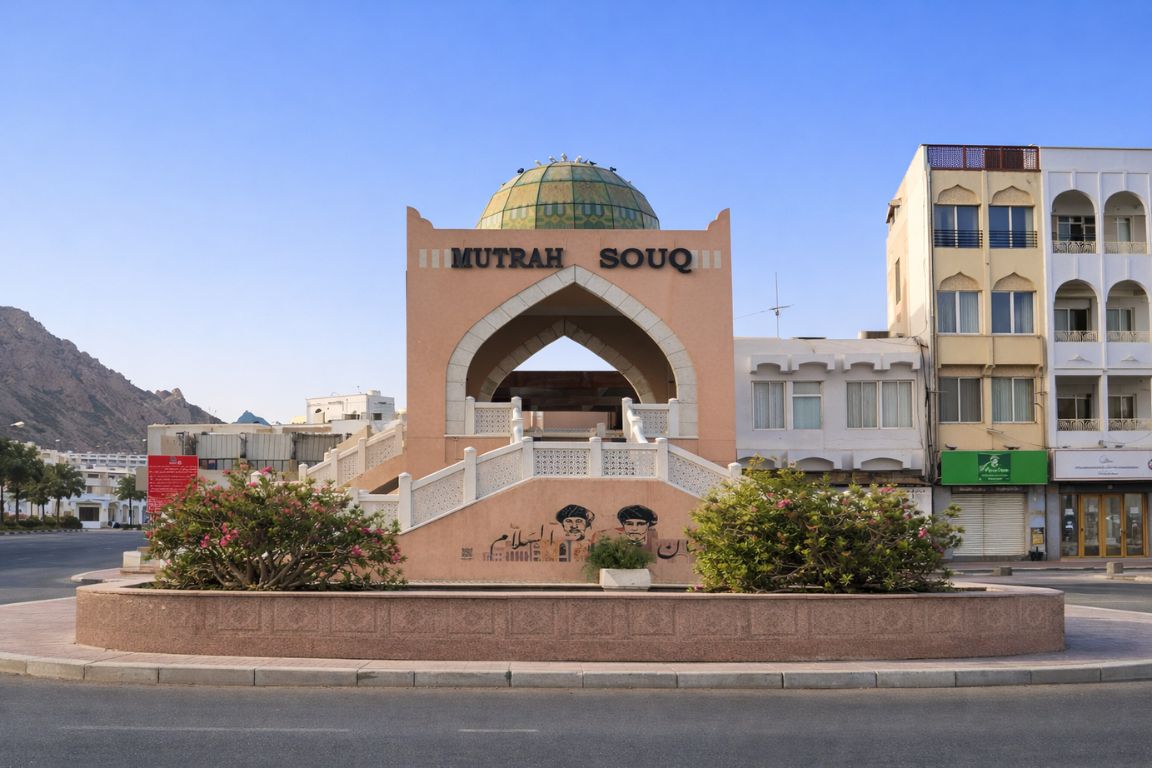 Oman runs on courtesy, patience, and respect for elders and religion. The core principles are: dress modestly, greet people properly, accept hospitality when offered, keep your voice low and your gestures neutral, never criticize Islam or the Sultan, and avoid public displays of affection. Most cultural friction in Oman comes from ignorance, not malice, and Omanis are genuinely forgiving of honest mistakes from visitors who are clearly trying.
There is a real warmth to Oman that most visitors feel immediately. People will invite you for coffee before you finish asking for directions. Your taxi driver may ask if you want to stop for a photo at the viewpoint he thinks you will miss. A shopkeeper at Mutrah Souq will spend twenty minutes showing you frankincense varieties with no pressure to buy anything. This generosity is not performance. It is the actual operating system of Omani social life.
What Omanis ask in return is not complicated. They want visitors to behave like respectful guests in a country that takes its religion, its leadership, and its traditions seriously. The gap between “things that are culturally awkward” and “things that are actually illegal” is smaller here than in many destinations, and worth understanding before arrival.
A few general principles that apply across all situations:
Use your right hand for all interactions involving food, drink, money, or physical contact. The left hand is considered unclean in Islamic custom. Passing something with your left hand is a subtle but real insult. Always receive coffee, dates, or any hospitality with the right hand, even if left-handed.
Show the soles of your feet to no one. Sitting cross-legged is fine. Stretching your legs so a foot sole points at someone is an insult. This applies in homes, at social gatherings, and when sitting on the floor at a wadi picnic spot.
Never raise your voice in frustration, and never make what might be interpreted as a rude gesture, including in traffic. Omani law treats offensive gestures as a punishable offense. The instinct to react to an aggressive driver by throwing up your hands is one to suppress here.
How Should You Dress in Oman?
 In public spaces, both men and women should cover shoulders and knees as a baseline. Women do not need to wear a headscarf outside of mosques. Men should avoid shorts in non-beach contexts. At beaches, hotel pools, and resort areas, normal swimwear is acceptable. The stricter the location (mosque, traditional village, government building), the more conservative the expectation.
The honest framing on dress in Oman: it is not Saudi Arabia. There is no religious police, no enforcement agent standing at a shopping mall entrance checking hemlines. What exists is a society where people notice and where the gap between visitor behavior and local expectations can range from mildly jarring to genuinely offensive depending on the context.
For women, the practical baseline is loose trousers or a long skirt, a top that covers the shoulders, and something to wrap around when entering mosques or more conservative areas. A light scarf or pashmina weighs nothing in a bag and solves a dozen situations. Tight clothing, low necklines, and anything that reveals the midriff are not appropriate outside of resort and hotel pool areas. Bikinis at Muscat’s public beaches like Qurum attract more attention than at hotel beaches; modest swimwear or a cover-up when entering and leaving the water is the better call at public spots.
For men, long trousers or below-the-knee shorts outside of beach and pool areas. Sleeveless vests are beach attire; wear a shirt in public. At traditional sites, forts, mosques, and souqs, the more covered the better. No one is going to arrest a foreign man in board shorts walking near Mutrah Corniche, but people will stare, and entry to certain buildings may be refused.
At mosques specifically: full-length coverage for everyone, shoes removed at the entrance, and women should have their hair covered. The Sultan Qaboos Grand Mosque keeps abayas available for women who arrive underdressed, rental is around 2.5 OMR, but arriving appropriately already dressed avoids the fuss at the entrance queue.
Wondering about clothing expectations? Check out our Oman dress code guide – it covers everything from mosque requirements to what you can wear at beaches and how Oman compares to stricter Gulf countries.
What to Wear by Location in Oman
| Hotel pool / beach | Swimwear acceptable | Swimwear acceptable |
| Public beach | Modest swimwear; cover when walking to/from | Shorts fine; shirt when not in water |
| City streets / souq / mall | Shoulders and knees covered; loose fit | Long trousers, shirt with sleeves |
| Wadis and nature sites | Modest; swimwear only at water, cover otherwise | Shorts acceptable; shirt recommended |
| Mosque visit | Full-length, hair covered, no tight fabrics | Long trousers, long sleeves preferred |
| Traditional village | Most conservative option; cover fully | Long trousers, no sleeveless tops |
Guidelines current as of March 2026.
Our guides brief every traveler on cultural context before each site visit. If you’d rather arrive already knowing what to expect, the 6-hour Muscat tour with an Omani guide builds that briefing into the day.
How Do Greetings Work in Oman?
The standard greeting is “As-salamu alaykum” (peace be upon you), to which the response is “Wa alaykum as-salam” (and peace be upon you). Men typically shake hands with men; handshakes with women follow the woman’s lead. Do not initiate physical contact with someone of the opposite sex. When someone older or more senior is present, greet them first. Greetings in Oman are not a formality to rush.
This is one of the things that actually surprises first-time visitors to Oman in a good way. Greetings here are genuinely elaborate. When two Omani men meet, particularly in any situation involving hospitality, the exchange of “As-salamu alaykum” and its response can extend into a whole conversation about family, health, and wellbeing before any other topic comes up. Even a driver stopping to ask a stranger for directions will begin with a proper greeting sequence.
For visitors, the expectation is lighter but the spirit matters. Learning the basic phrase goes a long way. Omanis respond warmly to foreign visitors who attempt even a few words of Arabic, particularly the greeting. “As-salamu alaykum” opens more doors in Oman than a perfect phrase in any other language.
The handshake norm between men is gentle and often prolonged, with the right hand placed over the heart afterward as a sign of genuine respect. A firm Western-style power handshake reads as aggressive here. Between men and women, the general rule is to wait for the other person to offer their hand. Many Omani women will extend a hand to male visitors, particularly in tourism and business contexts. Many will not. Watch for the signal and follow. Never assume.
In an Omani home, greet the eldest person in the room first. When coffee and dates arrive, they always arrive. Accept them. The traditional small cup of Omani qahwa (coffee, usually cardamom-spiced and bitter) is not just a drink; it is a social gesture that formally acknowledges a guest. Refusing it without a clear reason reads as coldness or disapproval of the host. Holding the cup with the right hand, drinking a small amount, and giving a slight nod covers the social obligation perfectly.
What Are the Rules Around Photography in Oman?
Always ask before photographing people, particularly women. Never photograph military facilities, government buildings, airports, police operations, or road accidents. Drones require an advance permit through Oman’s Serb Tourist Plan platform operated by the Civil Aviation Authority; flying without one risks confiscation, fines of 200 to 600 OMR, and up to three years imprisonment under Article 144 of the Omani Penal Code.
Photography in Oman is genuinely rewarding: dramatic desert light, ancient forts, frankincense markets, fishing dhows at dawn in Mutrah harbor. The country photographs beautifully and most people you encounter will not mind being in a shot. But the rules here are specific and some carry real consequences.
People first. Omani women, in particular, may feel strongly about being photographed by strangers, especially male strangers with cameras. The protocol is simple: eye contact, a gesture toward the camera, a questioning expression. Most people will signal clearly whether they are comfortable. Children usually wave and grin for cameras everywhere. Older men in traditional dress in the souq are often happy to pose. The default assumption should never be that pointing a lens at someone is acceptable without some signal that it is.
We’ve covered Oman Muscat tours with kids in detail so you know which wadis work for different ages, how to manage heat and sun exposure, and what desert experiences are genuinely kid-friendly versus adult-focused.
The hard no-photograph list is serious. Military installations and government ministry buildings are off-limits. Airport perimeters are off-limits. Police operations and road accidents are off-limits under Omani law. The UK Foreign Office specifically notes that activities like plane-spotting near airports may be misunderstood and can attract unwanted official attention. This is not theoretical. People have had equipment confiscated and faced questioning for photography near sensitive sites.
Drones are their own category entirely. Until recently, tourist drone flights were essentially impossible in Oman without connections to commercial operators. As of 2025, the Civil Aviation Authority launched the Serb Tourist Plan, a dedicated permit system allowing visitors to apply online before arriving for a one-month recreational license. The platform covers over 127 approved flight zones across the country. Without the permit, the risk is real: Article 144 of the Omani Penal Code specifies imprisonment of six months to three years for unauthorized drone flights, and confiscation at the airport is the first likely outcome for travelers who bring one in without clearance.
We’ve been running tours past Oman’s most photogenic locations since 2013. A Nizwa day trip from Muscat includes context on where photography is welcomed and where it isn’t.
How Should You Behave at Religious Sites in Oman?
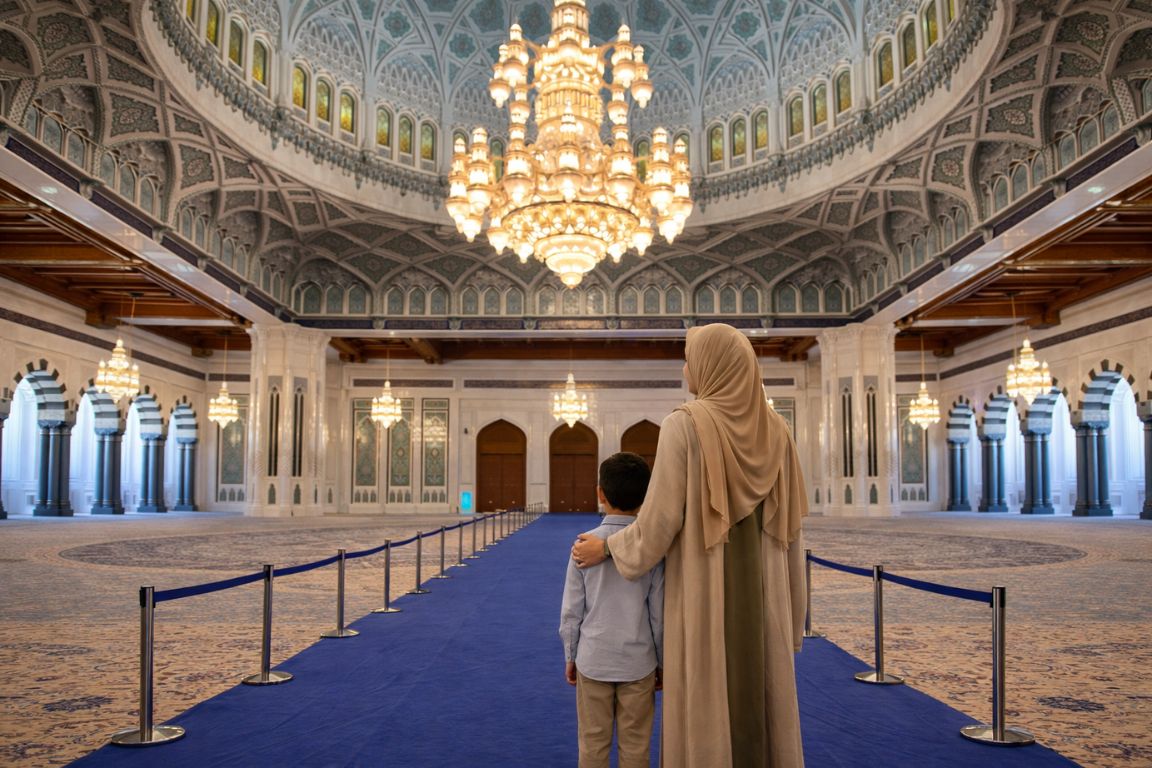 Remove shoes before entering mosques and any Omani home. Dress fully covered: for women this means full-length clothing and hair covered; for men, long trousers and sleeves. Do not enter a mosque during prayer times. Speak quietly, do not point, and never interrupt someone mid-prayer. At the Sultan Qaboos Grand Mosque, the visitor window for non-Muslims is 8am to 11am Saturday through Thursday only.
The Sultan Qaboos Grand Mosque is the most visited religious site in Muscat and the experience it offers non-Muslim visitors is genuinely remarkable, but only if you enter with the right preparation. The dress code there is strict and enforced at the entrance. Women who arrive in anything other than full-length, non-sheer coverage will be asked to rent or buy an abaya at the gate. Men in shorts will be turned away. The guard at the entrance is not flexible on this; the queue is long in peak season; arriving dressed correctly saves a real headache.
The general rule at any religious site in Oman: quiet, slow, observant. Watch where others walk, what they touch, how they behave. Mosques are active houses of worship, not museums. When prayers begin, the space belongs to the worshippers entirely. Most sites have a clear boundary for visitors during prayer times. Respect it without being asked.
The same shoe removal applies to any Omani home. Shoes come off at the door without exception. If you arrive somewhere and shoes are lined up outside, that is your signal. No one will usually ask you; they will notice if you do not.
Not sure about visiting logistics? Check out our Sultan Qaboos Grand Mosque guide – it covers everything from proper attire to when non-Muslims can actually enter.
What Are the Rules Around Food, Drink, and Ramadan?
Alcohol is available only at licensed venues (four and five-star hotels, select licensed restaurants). Drinking in public is illegal. During Ramadan, non-Muslims are legally required to refrain from eating, drinking, and smoking in public during daylight hours under Article 277 of the Omani Penal Code. Violation carries a sentence of ten days to three months. Ramadan 2026 runs approximately February 17 to March 18.
Oman’s alcohol rules are stricter than most visitors from Western countries expect, but more permissive than many assume for an Islamic country. The licensed hotel system means that a beer with dinner at a four-star hotel is entirely possible. What is not possible, and is actually illegal, is taking that beer outside, drinking at a public beach, carrying a bottle through a shopping mall, or consuming anything alcoholic at a non-licensed venue. Public intoxication is also an offense. The line between “drinking at a hotel bar” and “illegal activity” is the hotel itself.
Ramadan changes the entire city. When the fast begins, restaurants that are not in hotels may close during daylight hours, or operate behind screens. Food and drink in public spaces disappears. The city becomes quieter through the day and then transforms at sunset (Iftar) into something genuinely beautiful: streets fill with families, the smell of cooking comes from everywhere, and the communal warmth of a shared daily ritual is visible in every interaction. If you happen to be in Muscat during Ramadan, it is worth staying for an Iftar experience. The change is profound.
The legal situation for non-Muslims during Ramadan is clear and worth stating plainly: Article 277 of the Omani Penal Code applies to everyone. Eating a sandwich while walking down a Muscat street in daylight during Ramadan is not a cultural faux pas; it is a crime under Omani law. This includes smoking and drinking water. Hotels and their interiors are exempt. The street, the car, and any public space are not.
Not sure how Ramadan affects your trip? Here’s our complete breakdown of Ramadan travel in Oman Muscat tours – what closes, what stays open, and how to be respectful while still getting around.
What Cultural Mistakes Do Tourists Most Often Make in Oman?
 The most common mistakes are: photographing people without asking, eating or drinking publicly during Ramadan, bringing a drone without a permit, making physical contact across genders without invitation, and criticizing the Sultan, the government, or Islam in any public or semi-public setting. Swearing in public, including on social media posts made while in Oman, is also illegal.
After guiding thousands of travelers through Muscat and Oman, the same friction points repeat. Most of them are easily avoided once you know they exist.
The camera pointed too quickly. Visitors with good intentions pull out a camera at Mutrah Souq and start photographing the incense sellers, the women in abayas, the old men playing backgammon. No one says anything hostile. But the discomfort is real and visible. Ask first. The interaction that follows when you ask is usually better than the photo.
The drone brought without paperwork. This one happens repeatedly. A traveler brings a DJI packed in their carry-on, planning to film the desert and forts. They get to customs and the drone is held. Or they fly it at Wadi Shab without a permit and are confronted by police. The Serb Tourist Plan now makes getting a legitimate permit possible before arrival, but the process requires advance planning. Arriving without it is a gamble with a bad expected outcome.
Overfamiliarity with opposite-gender locals. A handshake initiated toward an Omani woman, an arm around the shoulder in a group photo with a male guide, a hand on someone’s arm during conversation. These are normal in many Western social contexts and read very differently here. Wait for signals. Let the other person set the physical distance.
Loud or impatient behavior in queues, traffic, or service situations. Oman runs at a pace that can frustrate visitors used to more efficient systems. A restaurant takes longer than expected. A government office runs slow. Traffic is bad near Mutrah. The cultural response to this is patience, not escalation. Raising your voice, expressing loud frustration, or making aggressive gestures in any of these contexts is not just rude; it can become a legal matter in Oman where public disorder is treated seriously.
Posting without thinking. Oman treats social media content under the same laws as physical behavior. Sharing a photo that includes someone in a compromising or disrespectful context, posting images of restricted areas or accidents, or publishing anything critical of the Sultan or the government can result in charges under Omani cybercrime and public order laws. The offense does not need to be made in person to carry legal consequences.
What Our Travelers Say About Cultural Adjustment in Oman
After 7,700+ travelers guided through Muscat and Oman since 2013, the patterns around cultural adjustment are consistent. The table below reflects what our recent client groups reported.
| Home invitation / hospitality | 75-90% | “More warm than anywhere I’ve been” |
| Greeting formality | 60-80% | “Didn’t expect the elaborateness” |
| Dress code at mosque | 65-85% | “Glad I knew about it beforehand” |
| Ramadan public restrictions | 70-85% | “Stricter than I realized” |
| Photography etiquette | 55-75% | “Wish someone had told me to ask first” |
Frequently Asked Questions
Do women need to wear a headscarf in Oman?
Not outside of mosques. In the street, at markets, in restaurants, and at most tourist sites, women are not required to cover their hair. At mosques, including the Sultan Qaboos Grand Mosque, hair covering is required for entry. Carrying a light scarf is the simplest solution since it takes up no space and handles the mosque situation without needing to plan around it.
Can I shake hands with Omani women?
The correct approach is to wait. Many Omani women in tourist and business contexts will extend a hand to foreign men; when they do, shake it normally. When they do not extend a hand, a slight nod or a hand on the heart is a respectful acknowledgment. Never initiate physical contact with someone of the opposite sex before they signal they are comfortable with it.
Is it rude to decline food or coffee in an Omani home?
It can be interpreted as disapproval or dissatisfaction with the host. The strong cultural expectation in Oman is that guests accept what is offered, particularly the initial offering of coffee and dates. You do not need to drink a full cup. A small sip and a genuine expression of appreciation covers the social obligation. If you cannot eat something for dietary reasons, explain briefly; this is understood. Refusing without explanation is the thing to avoid.
Can I bring a drone to Oman?
Yes, but only with a permit obtained in advance. The Oman Civil Aviation Authority’s Serb Tourist Plan now allows visitors to apply for a one-month recreational license before arrival. Flying without a permit risks confiscation at the airport, fines of 200 to 600 OMR, and imprisonment of six months to three years under Article 144 of the Omani Penal Code. Apply well ahead of your travel date.
What happens if I eat in public during Ramadan?
It is a criminal offense under Article 277 of the Omani Penal Code, which carries a sentence of ten days to three months for eating, drinking, or smoking in public during Ramadan daylight hours. This applies to non-Muslims. Hotel interiors are exempt. Public streets, cars, parks, and outdoor spaces are not. Ramadan 2026 runs approximately February 17 to March 18.
Is it safe to criticize the Omani government or Sultan?
No. Criticism of Sultan Haitham, the late Sultan Qaboos, or the Omani government in any public or semi-public setting (including social media) is a criminal offense. The same applies to negative statements about Islam. These are not topics where the line between cultural sensitivity and legal risk is blurry; the risk is real and the advice is clear: do not go there.
Questions about navigating cultural situations on your specific trip? An Omani home dining sitting in Muscat is a practical place to use the greeting and hospitality customs in this guide.
Written by Omar Jackson Al-Kalbani
Omani tour guide since 2013 · Founder, Oman Muscat Tours
Omar has guided over 7,700 travelers through Muscat, the wadis, and the deserts of Oman since founding the agency.
Choose the outing, then check your date
Authentic Omani Home Dining
The etiquette rules below are enough to travel independently.
3.0 hours · Experienced guide
Choose a date to view the published schedule checked 9 September 2026. Final availability and price are confirmed on Viator.
Compare options and match my plans
Wheelchair accessible; Infants and small children can ride in a pram or stroller; Suitable for all physical fitness levels Extras: Confirm option-specific extras. Pickup: We offer pick from any hotels in (Al Seeb, Bawshar, Muttrah, Al Amrat), otherwise we can meet at the starting point.
- Experience Muscat City Tour-Omani Guide and Traditional Food-5h · 5.0 hours. Pick up and drop off (around Muscat); Car parking fees
- Half-Day Private Muscat City Tour - Top Landmarks in Just 4 Hours · 4.0 hours. Bottled water; Omani Tour Guide English Speaking
- Evening Muscat Group Tour · 3.0 hours. Bottled water; Air-conditioned vehicle
Compare your group costs
Enter complete quotes in the same currency, including transport, tickets and extras. These are your estimates, not live prices.