Oman Dress Code Guide
Oman dress code? Cover shoulders and knees, with stricter rules in mosques. It’s moderate but enforced - here’s how to dress respectfully.
Last updated: June 2, 2026
The guide gives the complete clothing answer. If the Grand Mosque is on your list, the private four-hour city route makes it the first stop and states the coverage rules in its listing. See The Mosque-First City Route ↗
Oman Dress Code: Quick Reference by Setting
| Muscat city streets and souqs | Shoulders covered, below-knee length. Loose-fitting preferred. No headscarf required. | Long trousers, shirt with sleeves. No shorts or sleeveless tops. |
| Malls and shopping centres | Same as streets. Shoulders and knees covered. | Long trousers required. Some malls display signage reminding visitors. |
| Sultan Qaboos Grand Mosque | Full coverage: sleeves to wrist, ankle-length, headscarf covering all hair. Rental available (~2.5 OMR). | Long trousers, sleeved shirt. No shorts or sleeveless tops. |
| Other mosques | Same as Grand Mosque. Most mosques in Oman are not open to non-Muslim visitors. | Long trousers, sleeved shirt. |
| Hotel pools and private resort beaches | Standard swimwear acceptable. Cover up when leaving pool/beach area. | Swim shorts fine. Cover up when leaving pool/beach area. |
| Public beaches | Modest swimwear: rash guard and shorts, or one-piece with cover-up. Bikinis not appropriate. | Swim shorts acceptable. T-shirt when not actively swimming is courteous. |
| Wadis (natural swimming holes) | T-shirt and shorts/leggings over swimwear recommended. Tourist police present at popular wadis. | Swim shorts. T-shirt outside the water in popular spots. |
| Mountains and hiking | Lightweight long trousers or mid-thigh shorts acceptable during activity. Add warm layer for evenings above 2,000m. | Hiking shorts acceptable during activity. Long trousers for village areas en route. |
| Desert (Wahiba Sands) | Loose long trousers, long-sleeved top. Warm layer for evenings. Scarf for wind and sun protection. | Long trousers, light long-sleeved shirt. Warm layer for desert nights. |
| Rural villages and small towns | More conservative than Muscat. Long sleeves and ankle-length clothing appropriate. Scarf useful. | Long trousers essential. Shirt sleeves at minimum. |
| Fine dining restaurants | Smart casual. Knee-length dresses acceptable at international hotel restaurants. | Smart casual. Long trousers and collared shirt appropriate. |
Guidelines verified March 2026 against Omani Ministry of Tourism and Heritage recommendations and Penal Code (Royal Decree 7/2018).
What Is the Dress Code in Oman?
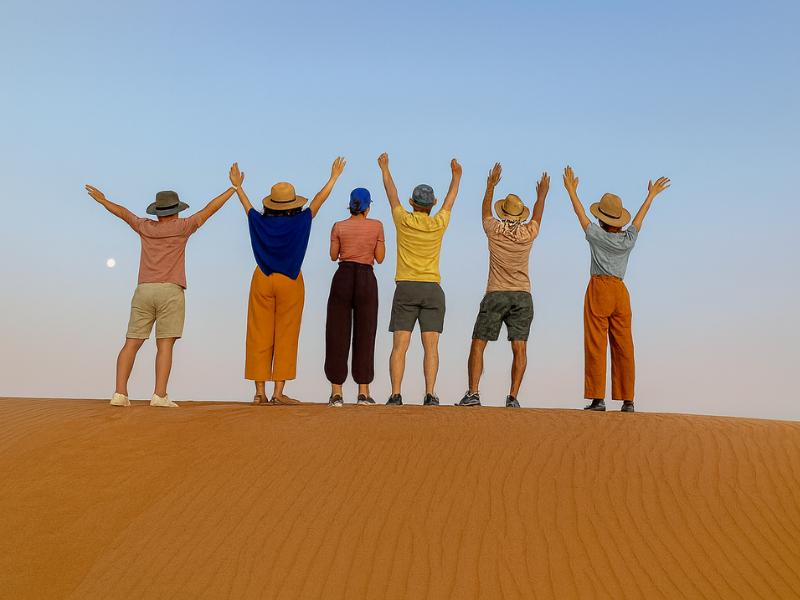
Oman’s dress code for tourists requires covering shoulders and knees in all public spaces – streets, souqs, malls, cultural sites, and beaches. Book Muscat city tour here. This applies to both men and women. It is backed by law: Article 294 of the Omani Penal Code prohibits wearing sleeveless tops and shorts in public places and carries fines of 100-300 OMR with possible imprisonment of one to three months. In practice, enforcement is uneven, but the Ministry of Tourism and Heritage issued fresh guidelines in April 2025 specifically calling out tourists and noting that the Royal Oman Police monitors compliance.
The dress code here is one of the more misunderstood aspects of visiting Oman. Some visitors arrive expecting the strictness of Saudi Arabia and are surprised to find Omani women in colourful embroidered dresses rather than uniform black abayas. Others arrive having read that Oman is “relaxed” and push the limits in ways that cause genuine offence. The reality sits in the middle: Oman is a Muslim country with real modesty expectations that are backed by actual law, but it is also one of the most welcoming and tolerant countries in the region for visitors who show basic respect.
The Ministry of Tourism and Heritage stated in April 2025 that “clothes that cover the knees and shoulders are required for both men and women” and that the Royal Oman Police continues to monitor public places – including beaches, parks, and streets – to ensure compliance. This is not aggressive enforcement against tourists wearing T-shirts, but it is a clear institutional message that the dress code applies to everyone in public space.
The practical framing that works for us as guides: dress the way you would for a formal occasion in a conservative family home. Not a beach holiday. Not a nightclub. Not a city office. A home where you want to show respect and make a good impression. That standard, applied consistently, will take you through every part of Oman without a second glance.
If you’re nervous about making cultural mistakes, here’s our Oman Muscat tours cultural etiquette guide so you understand what’s expected without overthinking every interaction.
What Should Women Wear in Oman?
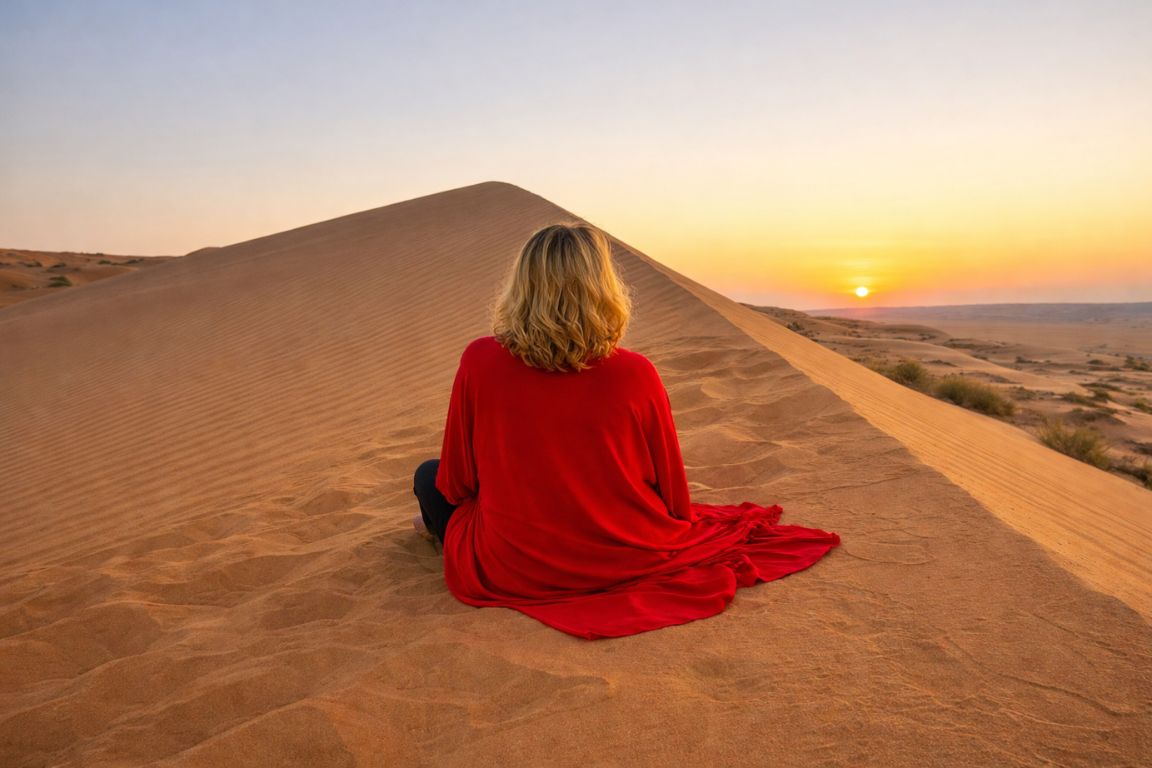 In public: cover shoulders and knees at minimum. Loose-fitting clothing is better than tight. Long trousers or maxi skirts work well. Short-sleeved tops are generally fine in Muscat; three-quarter or full sleeves are better in rural areas. No headscarf is required outside mosques. Carry a lightweight scarf for versatility – it handles mosque visits, desert wind, mountain cold, and occasional need to cover up in conservative areas without adding weight to your bag.
Women get more scrutiny from the dress code question than men, which is partly why this section exists as its own rather than a combined one. The honest picture: Oman does not expect foreign women to dress like Omani women. Omani women wear dark abayas and headscarves in public as an expression of their own cultural identity. Foreign women are not expected to replicate this. What they are expected to do is dress modestly by their own cultural standards – which for most visitors from Western countries means making a few specific adjustments.
What actually works, from years of guiding women travelers through Oman: lightweight linen or cotton midi skirts or wide-leg trousers (not tight), breathable long-sleeved tops or short-sleeved tops with a scarf draped over the shoulders, comfortable walking sandals or trainers for city days, and a proper headscarf kept in the day bag for mosque visits. This combination works for souq browsing, fort visits, wadi day trips, and restaurant dinners without any changes. It is also genuinely practical in the heat because loose natural fabrics are cooler than tight synthetic ones.
Specific situations women ask about most:
Shorts: Technically prohibited in public under the Penal Code. In practice, very short shorts in tourist areas of Muscat will mostly draw looks rather than legal action but they will draw looks, and in smaller towns and rural areas the reaction is noticeably less tolerant. Mid-thigh shorts during a wadi hike when actively climbing is a different context from wearing shorts through Mutrah Souq. Use judgement by context.
Sleeveless tops: Technically prohibited in public. In Muscat, especially in the more cosmopolitan areas near international hotels, you will see tourists wearing them without incident. In Nizwa, Bahla, or any small town, the same outfit would be more conspicuous and would attract more obvious disapproval. The scarf-over-the-shoulders solution handles this in all contexts.
Tight clothing: The law specifies that tight clothing is inappropriate in public regardless of how much skin it covers. Tight jeans and a fitted long-sleeved top technically falls into this category, though enforcement is very low compared to sleeveless/shorts issues.
Not sure about Oman as a solo female traveler? Our breakdown of is Muscat safe for women helps you understand the cultural context, realistic safety considerations, and what’s different from Western countries.
What Should Men Wear in Oman?
 Long trousers and a shirt with at least short sleeves is the standard requirement for men in all public spaces. Shorts are prohibited in public under Article 294 of the Penal Code, though enforcement is uneven in tourist areas. Sleeveless tops are not acceptable in public. At hotel pools and private resort beaches, standard swimwear is fine. Men are not required to cover their heads anywhere in Oman outside of active prayer (which tourists don’t participate in). Book Muscat city tour here.
Men tend to get less detailed advice about Oman dress codes, which creates its own issues. The assumption that “men just need long trousers” is mostly right but incomplete. The Penal Code prohibition covers shorts and sleeveless tops for men as explicitly as it covers them for women. A man walking through Mutrah Souq in shorts and a vest top is breaking the same law as a woman doing the same, even if he draws less attention for it.
What actually works: lightweight chino-style trousers or linen trousers, short-sleeved collared shirts or plain T-shirts (not sleeveless), comfortable flat shoes or sandals for city sightseeing. The Omani dishdasha, the traditional white ankle-length robe worn by Omani men, is not expected of tourists though buying one at Mutrah Souq is a genuinely memorable cultural experience and provides a practical, comfortable, and culturally appropriate option for men who want it.
The activity-specific exception: during physical activities (hiking in wadis, desert camping, boat trips), shorts are more contextually understandable. Tourist police at Wadi Shab and similar popular sites are primarily focused on swimwear violations, not on shorts-wearing hikers. The baseline standard for moving through towns, villages, forts, and markets is always long trousers.
Shoes off at mosques, historic religious buildings, and some traditional houses when invited. Slip-on shoes or sandals that come off easily are practical for sightseeing days that include mosque visits.
What Should You Wear at Oman’s Beaches and Pools?
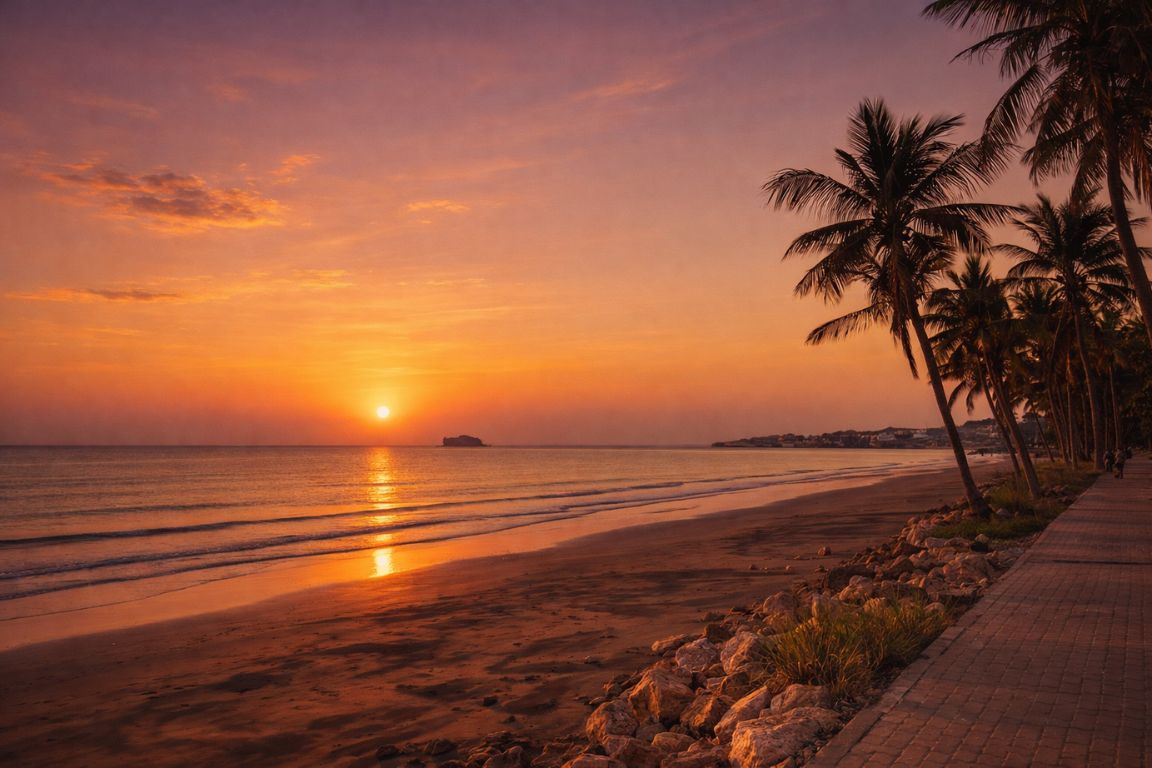 Hotel pools and private resort beaches: standard Western swimwear is fine – bikinis, one-pieces, swim shorts, board shorts. Public beaches: modest swimwear is expected. Women should cover up with a T-shirt and shorts or wear a one-piece with a cover-up; bikinis are not appropriate. Wadis: the same standard as public beaches applies, with some popular wadis having signposted dress codes and tourist police present to enforce them. Cover up when leaving the water area entirely. Book most popular Wadi tour here.
The beach and pool question is where the most confusion happens because the rules genuinely differ by location. This is not ambiguity for its own sake – it is a direct reflection of who is likely to be present. At the pool of the Chedi Muscat or the W Hotel, the guests are international tourists and the space operates under hotel norms. At Qurum Beach, Muscat’s main public beach, Omani families are present and the space operates under public norms.
The wadi situation is more nuanced than either. Popular tourist wadis like Wadi Shab and Wadi Bani Khalid have become regular destinations for international visitors, and the dress code expectations have been codified through signage and tourist police presence at the most popular swimming spots. Reports from travelers at Wadi Shab in 2024 and 2025 describe tourist police asking women in bikinis to cover up. The practical standard that works without issue: shorts and a rash guard or T-shirt over swimwear when swimming in any wadi, removing the cover-up only when actually in the water if preferred, and re-covering when out of the water to walk the trail.
On boat trips to the Daymaniyat Islands (book here): swimwear is more accepted on the boat itself since it is a tourist activity, but a cover-up for the journey to and from the marina is courteous. Rash guards have the dual benefit of sun protection and cultural appropriateness and are a genuinely good packing item for Oman regardless of the dress code consideration.
What Should You Wear When Visiting Mosques in Oman?
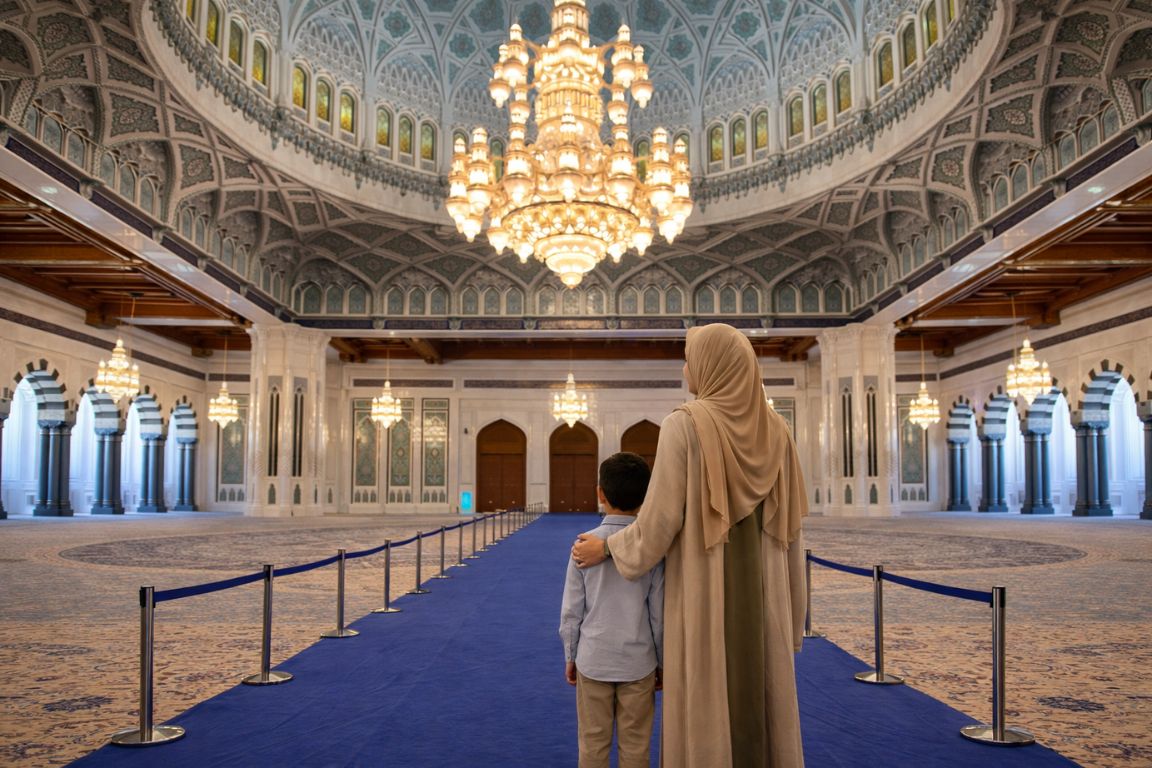 The Sultan Qaboos Grand Mosque is the only mosque in Oman that admits non-Muslim visitors, and its dress code is the strictest you will encounter in the country. Women: full-length sleeves to the wrist, ankle-length trousers or skirt, headscarf covering all hair from hairline to collarbone. Men: long trousers, sleeved shirt (short sleeves acceptable). Shoes off before entering prayer halls. Abaya and headscarf rental available at the entrance for approximately 2.5 OMR. Entrance staff enforce the code and will redirect underdressed visitors to the rental counter.
The mosque dress code is not an interpretation of general modesty norms. It is a specific standard with specific requirements that the Grand Mosque staff apply to every visitor entering. Women who arrive in a long-sleeved top and ankle-length trousers but with their hair uncovered will be redirected to the rental counter. Women who arrive in a below-knee skirt but with arms covered will be redirected. The standard is explicit: wrists, ankles, and all hair.
The practical preparation that avoids the rental counter and saves both time and 2.5 OMR: sort the outfit at the hotel before leaving. A lightweight linen trouser, long-sleeved top with wrist coverage, and a large scarf that can be wrapped as a headcovering is the complete setup. The scarf doubles as the headcovering and can be removed after leaving the mosque for the rest of the day. Many female travelers carry this combination as their standard Oman day outfit and never need to visit the rental counter.
For men at the mosque: the inspection is less rigorous. Long trousers and a short-sleeved shirt pass without comment. Shorts will not be admitted and tank tops will not be admitted. The standard day outfit for men (long trousers, short-sleeved shirt) is sufficient without any modification.
Shoes come off before the prayer halls. There are racks at the entrance and plastic bags available to carry shoes through. The marble floors are cool and walking barefoot is completely normal. Slip-on shoes or sandals that come off in two seconds are more practical than laced trainers for a mosque visit.
Planning to visit Muscat’s most iconic landmark? I’ve put together a complete Sultan Qaboos Grand Mosque guide covering dress code, timing restrictions, and what non-Muslims need to know before showing up.
Does the Dress Code Change in Different Parts of Oman?
 Yes, significantly. Muscat is the most cosmopolitan and tolerant of casual dress – visitors see more variation here and the enforcement gap between law and practice is wider. Rural towns like Nizwa, Bahla, and the fishing villages along the eastern coast are noticeably more conservative and the same outfit that draws only looks in Muscat would draw more explicit disapproval in these settings. The Wahiba Sands and mountain areas add a practical layer: temperature and terrain require different clothing regardless of cultural expectations.
The Muscat-versus-rest-of-Oman gradient is real and worth knowing. Muscat has a large expat community (around 40% of residents are foreign nationals), significant tourist infrastructure, and daily exposure to international visitors from cruise ships and direct international flights. The dress code enforcement here is softer in practice than the law suggests. You will see tourists in shorts and sleeveless tops in Shatti Al Qurum and the tourist areas of central Muscat without incident most days.
Nizwa, an hour and a half from Muscat, operates differently. It is a significant religious and cultural centre, the historic capital of Oman’s interior, and maintains more traditional norms than the coast. The souq and fort are heavily visited by Omani families and domestic tourists who dress conservatively. Foreign visitors who dress casually for Nizwa stand out more obviously and attract more visible reaction. The same is true for Sur, Bahla, and most coastal fishing towns.
The mountains add a specific practical dimension: Jebel Akhdar and Jebel Shams sit at 2,000-3,009 metres. In December and January, temperatures at these altitudes can drop to 5-8°C at night and have occasionally touched 0°C. The culturally appropriate long trousers and light long-sleeved top that works for Muscat sightseeing is genuinely inadequate at these elevations after dark. A fleece or mid-layer is not a luxury for mountain evenings in Oman – it is a practical requirement.
Salalah in the south is broadly similar to Muscat in its cosmopolitan tolerance but with its own character. During Khareef season (July-September), it fills with Gulf tourists and families and the dress code expectations in the public spaces reflect that domestic audience rather than just international tourism norms.
What Should You Pack for Oman?
Pack for three different environments simultaneously: warm coastal days, cool mountain nights, and everything in between. The core capsule that handles all of Oman’s main activities while respecting the dress code: two to three pairs of lightweight long trousers, two to three long-sleeved or short-sleeved loose tops plus scarves to cover as needed, one outfit for mosque visits (women: full coverage plus headscarf), swimwear plus cover-ups for beaches and wadis, a warm fleece or jacket for mountains and desert nights, and three types of footwear: city sandals, hiking shoes, water shoes.
The temperature range across a single Oman itinerary can be wider than most visitors expect. Muscat in January: 25°C in the afternoon. Jebel Akhdar the same evening: 8°C. Wahiba Sands at midnight in December: 12°C with wind. The cultural requirement for modest dress and the practical requirement for warmth in the mountains actually align well – long trousers and long-sleeved tops serve both purposes simultaneously. The place where they diverge is swimwear, which needs to be specifically planned for beaches, wadis, and boat trips.
The scarf is the single most useful item in an Oman packing list regardless of gender. For women it handles: mosque headcovering, shoulder cover when needed in souqs or conservative areas, sun protection on the face and neck, dust and wind protection in the desert, and warmth on cool evenings. For men it handles: sun protection in the desert and on boat trips, warmth at mountain elevations, and a practical neck cover during wadi hikes. Buy one at Mutrah Souq for around 3-5 OMR and it will be among the most-used items of the trip.
Footwear deserves its own mention because the range of Oman’s terrain requires more than one pair. City days work with sandals or comfortable flat shoes. Wadi hikes require closed-toe shoes that can get wet – water shoes or trail trainers, not flip-flops on rocky trails. Mountain hiking requires proper grip soles, particularly for the Balcony Walk at Jebel Shams. Mosque visits require shoes that come off quickly. Bringing only one pair is a mistake that costs comfort and sometimes safety.
Curious about Oman’s desert experiences? Here’s our complete Oman desert tours guide covering Wahiba Sands camps, what activities work best, and how to access the dunes safely.
What Our Travelers Report About the Oman Dress Code (2025 Data)
| Metric | Data (from our guided groups) | Notes |
|---|---|---|
| Most common pre-trip question about dress code | “What do I need to wear for the Grand Mosque?” (or variations on headscarf, coverage, rentals) | Mosque visits prompt the vast majority of dress inquiries (strict coverage: full arms/legs/shoulders/head for women, long pants/shirt for men); clients ask about rentals, heat-friendly options, and what is “acceptable” in souqs/public. |
| % of female visitors who needed mosque headscarf rental | 55-70% | Many women arrive without a scarf or in insufficient coverage; rental at mosque entrance is common (2.5 OMR + deposit, easy); those who pack a scarf/light shawl avoid this step. |
| Most common packing mistake (clothing) | Not packing enough warm layers (fleece/jacket for mountains/desert nights) | Travelers often pack for “hot desert” and underpack for Jebel Akhdar/Shams (8-15°C nights), Wahiba Sands (cold wind after sunset), or winter evenings; most frequent regret. |
| % who said they wished they’d packed warmer layers for mountains | 65-80% | Jebel Akhdar/Jebel Shams nights drop significantly (8-15°C even in winter); many report “freezing” evenings/hikes without fleece/jacket; high regret among mountain visitors. |
| Most useful single item travelers reported bringing | Scarf / shawl (for women) or light fleece layer (overall) | Scarf tops list for women (mosque coverage, sun/dust protection, warmth); fleece/jacket for all (mountain/desert nights); versatile, multi-use item praised most. |
| % who experienced a dress code issue at a specific site | 25-40% | Most issues at Grand Mosque (entry denied or rental required for uncovered hair/arms/shoulders); occasional souq/mosque stares or gentle redirection; easily fixed with preparation. |
The Most Common Dress Code Mistakes in Oman
After guiding 7,700+ travelers through Oman, the same preparation gaps show up consistently.
Packing only summer resort clothing. Travelers who pack entirely for the heat – shorts, vest tops, light dresses – arrive underprepared for mosques, souqs, conservative towns, and mountain temperatures. The adjustment isn’t significant but it requires having the right items to begin with. Five minutes at the hotel before leaving sorted this problem would have taken before departure.
Not having a scarf accessible. The scarf or lightweight wrap is the single most versatile item for managing Oman’s dress code on the go. It converts a short-sleeved top into an appropriate shoulder-covered outfit, converts appropriate daywear into mosque-ready headcovering, and protects against desert wind and mountain cold. Travelers who pack it in the bottom of checked luggage rather than in their day bag find themselves needing it at the worst moments.
Assuming the mosque dress code is the same as the street dress code. It is not. Long sleeves and a below-knee skirt that passes perfectly well for souq browsing does not pass the mosque inspection if the hair is uncovered or the sleeves are three-quarter length. This is the most common reason travelers end up at the rental counter paying 2.5 OMR when they thought they were dressed appropriately. The mosque standard is wrists, ankles, and all hair – not shoulders-and-knees.
Forgetting mountain temperatures. The Jebel Akhdar resort sits at 2,000 metres. In December and January, nights at this altitude routinely drop to 6-8°C. The same traveler who is sweating in Muscat at 25°C at noon will be genuinely cold at the Anantara Al Jabal Al Akhdar terrace at 9pm. Lightweight linen trousers and a T-shirt are inadequate. A fleece, a warm cardigan, or a light down jacket is not optional for mountain visits in the cooler months.
Wearing only sandals. Oman’s terrain range – city pavements, wadi rocks and water crossings, sand dunes, mountain trails – requires different footwear for different days. Travelers who bring only sandals find themselves struggling on rocky wadi trails (where closed toes prevent the cuts that come from slipping on underwater rocks) and genuinely uncomfortable on Jebel Shams hiking paths where grip matters. The three-shoe solution (city sandals, hiking trainers, water shoes) adds a kilogram to a suitcase and solves a disproportionate number of footwear problems.
Frequently Asked Questions
Do women have to wear a headscarf in Oman?
No, outside mosques. A headscarf is required to enter the Sultan Qaboos Grand Mosque and any other mosque you visit. In all other public spaces – streets, markets, beaches, forts, restaurants – foreign women are not required to cover their hair. Carrying a lightweight scarf is recommended as a versatile travel item, but wearing it as a headcovering in public is a personal choice, not a legal or social requirement.
Can I wear shorts in Oman?
Technically no – Article 294 of the Omani Penal Code prohibits shorts in public places for both men and women, with fines of 100-300 OMR. In practice, enforcement in tourist areas of Muscat is soft. In rural towns, cultural sites, and conservative areas the reaction to shorts is more visible. For activity contexts (active wadi hiking, desert camping), mid-thigh shorts are more contextually understandable than in a market or town street. Long trousers are the safest and most respectful default.
What is the dress code at Oman’s wadis?
At popular tourist wadis like Wadi Shab and Wadi Bani Khalid, the standard is shorts and a T-shirt or rash guard over swimwear. Tourist police are present at major wadi swimming spots and have been reported asking women in bikinis to cover up. The practical rule: wear a T-shirt and shorts when walking the trail and entering the water, remove the cover-up only if actively swimming, and re-cover when out of the water. This approach works at all Omani wadis without issue.
What is the dress code at Oman’s Grand Mosque?
Strictly enforced. Women: full-length sleeves reaching the wrist, ankle-length trousers or skirt, headscarf covering all hair from hairline to collarbone. No three-quarter sleeves, no uncovered hair, no sheer or tight fabric. Men: long trousers, sleeved shirt (short sleeves acceptable). Shoes removed before the prayer halls. Abaya and headscarf rental available at the entrance for approximately 2.5 OMR if needed. Sort clothing at the hotel before leaving – the inspection at the entrance is genuine and redirects under-dressed visitors.
Is Oman’s dress code stricter than Dubai?
Yes, moderately. Dubai, particularly in tourist districts and malls, has a more relaxed attitude to tourist dress in practice. Oman’s dress code expectations are more consistently applied and the legal framework (Article 294 of the Penal Code) applies to all public spaces including beaches. Oman is however significantly less strict than Saudi Arabia, where enforcement and social pressure are considerably stronger. Think of Oman as sitting between Dubai’s tourist-area relaxedness and Saudi Arabia’s strict public standards.
What should I wear for the Wahiba Sands desert?
For daytime: loose light-coloured long trousers and a lightweight long-sleeved top. Light colours reflect heat better than dark. Natural fabrics (cotton, linen) stay cooler than synthetic. A wide-brim hat and sunglasses are essential. For evenings and night: a proper warm layer – the desert drops to 10-15°C in December and January with wind. A lightweight scarf for dust and wind protection is practical. Sandals are fine for camp but closed hiking shoes are better for climbing dunes.
Written by Omar Jackson Al-Kalbani
Omani tour guide since 2013 · Founder, Oman Muscat Tours
Omar has guided over 7,700 travelers through Muscat, the wadis, and the deserts of Oman since founding the agency.
Choose the outing, then check your date
Half-Day Private Muscat City Tour - Top Landmarks in Just 4 Hours
Visiting the Grand Mosque on a non-Friday morning? Check scheduled dates now and confirm the start time, because the product says later bookings may receive only an exterior photo stop.
4.0 hours · Bottled water; Omani Tour Guide English Speaking
Choose a date to view the published schedule checked 9 September 2026. Final availability and price are confirmed on Viator.
Compare options and match my plans
Wheelchair accessible; Public transportation options are available nearby; Transportation options are wheelchair accessible; Suitable for all physical fitness levels; Please be aware that every Friday, both the Sultan Qaboos Grand Mosque and the Royal Opera House are closed. As a result, we will only be able to make a photo stop outside, along with a brief explanation.; Children under 5 years old can join the tour free of charge.; The Grand Mosque is open daily from 8:00 AM to 11:00 AM, and it is closed on Fridays. If your booking is between 11:00 AM and 4:00 PM, we will only be able to make a photo stop outside, along with a brief explanation. Extras: Lunch; Gratuities; Royal Opera House Fee 3 OMR or 8 USD per person. Pickup: (we do pick up and drop off anywhere in Muscat Area) We use a signboard with the name of our clients for Port and Airport
- Full-Day Private Wahiba Sands Desert and Wadi Bani Khalid Tour · 9.0 hours. Omani Guide English Speaking; Fuel and Parking Fees
- Experience Muscat City Tour-Omani Guide and Traditional Food-5h · 5.0 hours. Pick up and drop off (around Muscat); Car parking fees
Compare your group costs
Enter complete quotes in the same currency, including transport, tickets and extras. These are your estimates, not live prices.