Best Day Trips from Muscat
Best day trips from Muscat? Wadis, desert dunes, forts, and turtle-filled islands - all within 3 hours. Here’s how to plan them right.
Last updated: April 12, 2026
The strongest first outing combines Wadi Shab’s canyon hike and swim with Bimmah Sinkhole; travelers who prefer culture, desert or marine wildlife can compare equally specific alternatives at the end. Explore Muscat Day Trips ↗
Best Day Trips from Muscat: At a Glance
| Wadi Shab + Bimmah Sinkhole | 140 km / 1.5 hrs | Hiking, swimming, cave waterfall | No |
| Nizwa Fort + Jebel Akhdar | 160-180 km / 2-2.5 hrs | History, culture, mountain scenery | Yes (Jebel Akhdar checkpoint) |
| Wahiba Sands + Wadi Bani Khalid | 220-250 km / 2.5-3 hrs | Desert dunes, swimming, Bedouin culture | Yes (inside dunes) |
| Daymaniyat Islands | 15 km to marina + 35 min boat | Snorkelling, sea turtles, reef diving | Boat tour required |
| Nakhal Fort + Hot Springs | 85 km / 1 hr | Forts, history, natural hot springs | No |
| Dolphin watching cruise | Departs Muscat harbour | Wildlife, marine activity, snorkelling | Boat tour required |
| Jebel Shams | 240 km / 3-3.5 hrs | Grand Canyon views, Balcony Walk hike | Yes |
All distances from Muscat city centre. Prices verified March 2026
What Are the Best Day Trips from Muscat?
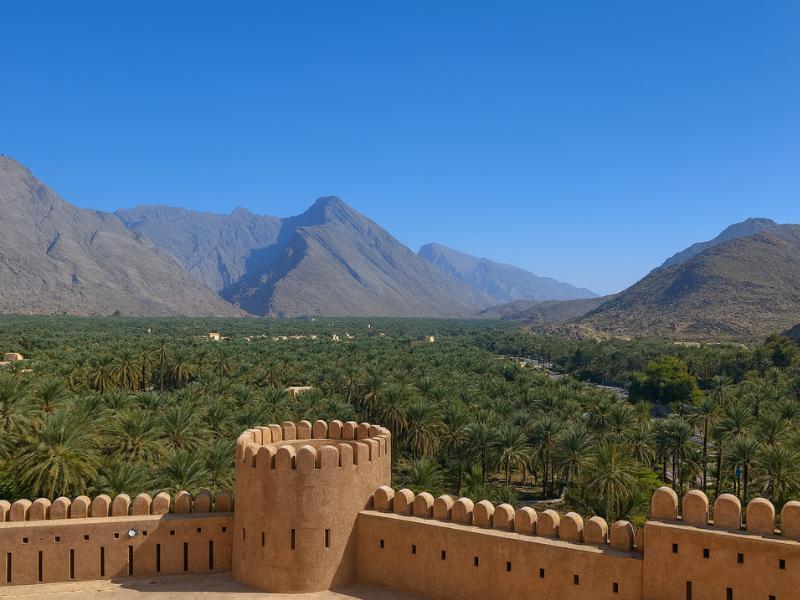
Muscat’s location gives it access to five distinct landscapes within a single day’s drive: wadis, desert, mountains, coast, and open ocean. The top five day trips are Wadi Shab paired with Bimmah Sinkhole for the most dramatic natural experience in Oman, Nizwa and Jebel Akhdar for culture and mountain scenery, Wahiba Sands with Wadi Bani Khalid for the classic desert day, the Daymaniyat Islands for snorkelling, and Nakhal Fort with Rustaq for a shorter fort-and-hot-springs loop that works even on limited time.
The thing Muscat gives you that most Middle Eastern capitals don’t is genuine variety. Within 90 minutes east you have canyon wadis with cave waterfalls. Within two hours inland you have a fort built in the 17th century that once held an empire and a mountain that smells of Damask roses in March. Within three hours east you are standing in a desert larger than some countries, watching dunes shift colour from gold to amber as the sun drops. These are not manufactured experiences. They exist because Oman’s geography is exceptional and the infrastructure to reach them has been steadily improving for years.
A few things shape every day trip from Muscat. Start times matter – all the wadis, forts, and mountains are best done in the first half of the day when temperatures are manageable and the light is good. The city spreads across 70 kilometres of coastline and most hotels are 30-40 minutes from the highway in either direction, so factor transit time from your accommodation into your early-start planning. And for anything involving dunes or mountain checkpoints, a 4WD is not optional – it’s the access condition.
Our guides at Oman Muscat Tours have been running these routes since 2013. We know every early-morning timing trick, every back entrance, and exactly when to leave each destination to catch the best of the next one.
Wondering how to pull it all together? Our guide on how to plan a trip to Oman Muscat tours walks you through everything from Muscat to the desert without any guesswork.
What Is the Best Day Trip from Muscat for Nature and Swimming?
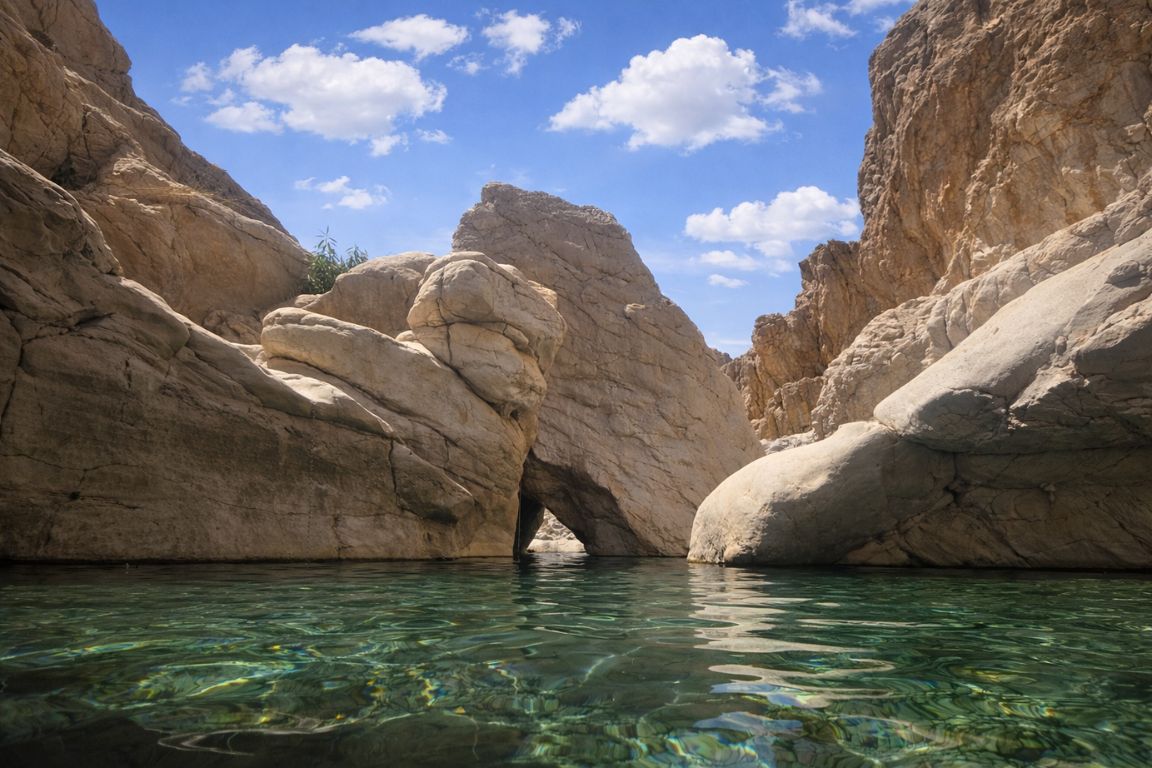 Wadi Shab combined with Bimmah Sinkhole is the best single day trip from Muscat for anyone who wants dramatic scenery, active hiking, and swimming. It covers 140 kilometres south along the coastal road, takes a full day, and ends with two of the most photographed natural sites in the country. The cave waterfall at the end of the Wadi Shab hike is genuinely one of those experiences that doesn’t photograph well enough.
Wadi Shab opens with a two-minute boat crossing across a narrow inlet – a short wooden boat ferried by a local, 500 baisa each way. From there, a 40-minute hike follows the canyon floor past towering orange walls, through pools that deepen as you progress, past date palms growing out of cracks in the rock. At the far end of the accessible section, you reach the final pools. Getting to the cave waterfall requires swimming a 50-metre stretch through a narrow passage, dark and cold, until the tunnel opens into a chamber where daylight filters through cracks in the ceiling above a hidden waterfall. This is the part that appears in every photograph and genuinely surprises every traveller who does it. Arrive by 8am to beat the crowds. Bring water shoes – the rocks at the pool edge are sharp.
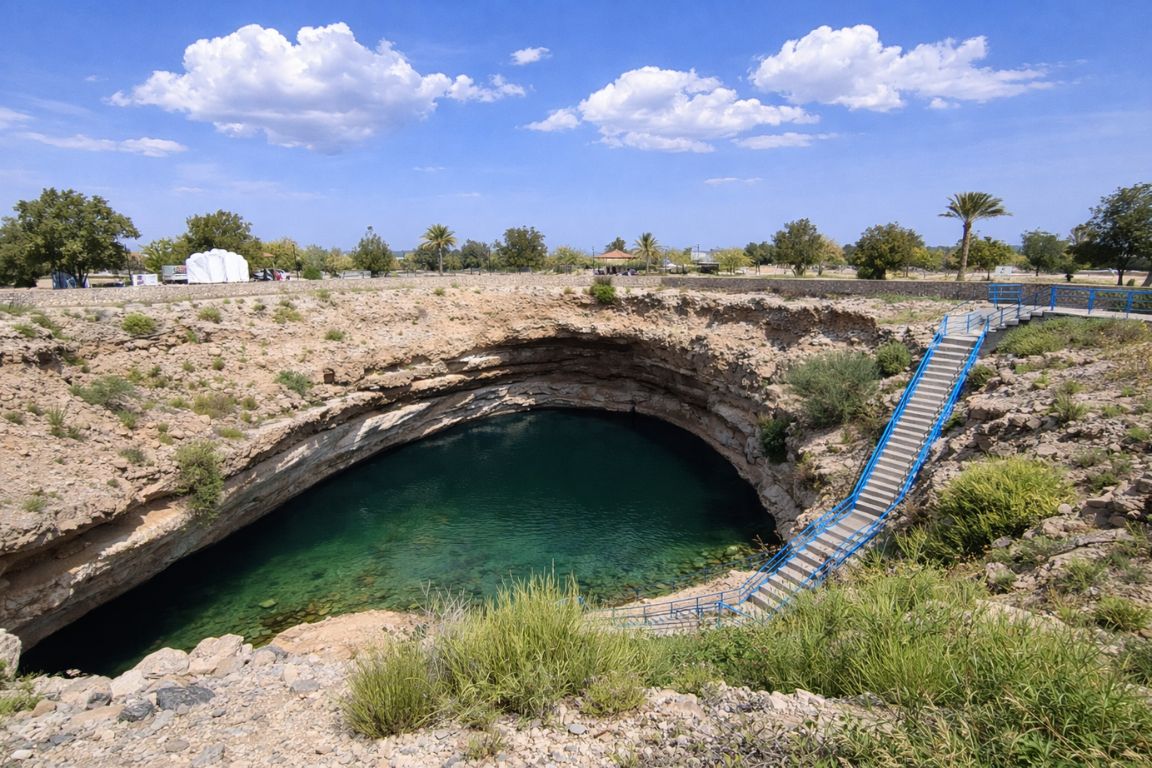
Bimmah Sinkhole sits 32 kilometres north of Wadi Shab on the return journey and takes about an hour to visit properly. The limestone collapsed somewhere between millennia and centuries ago to create a 20-metre-deep pool of turquoise water at the bottom of a natural bowl. It’s free to enter, open 8am to 8pm daily, and despite the drama of the legend (locals once believed it was a meteorite crater), it’s actually the geological process of saltwater mixing with freshwater through underground channels that gives it the distinctive colour. A 30-minute stop is fine for photos and a quick swim. Staying longer means competing with afternoon family picnic crowds who arrive after 4pm.
For the most efficient day: depart Muscat by 7am, arrive Wadi Shab by 8:30am, hike and cave waterfall by noon, lunch at a local restaurant near the parking area, then Bimmah Sinkhole by 2pm, return to Muscat by 4:30-5pm. The road is entirely paved, a regular sedan handles it comfortably, and no guide is strictly necessary for the hike itself. That said, a guided Wadi Shab and Bimmah Sinkhole day trip is the straightforward way to get the timing and the swim through to the cave. Most guided day tours for this route run $60-$90 per person including hotel pickup and lunch.
What Is the Best Day Trip from Muscat for Culture and History?
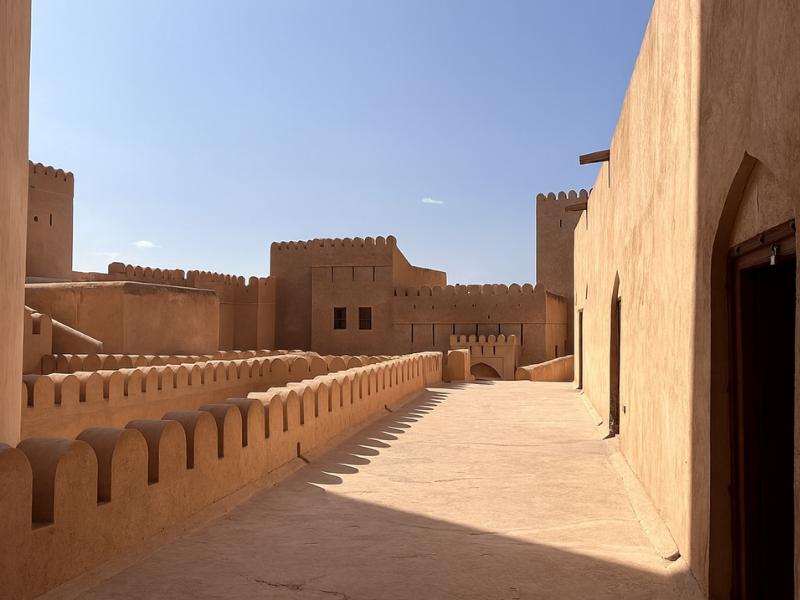
Nizwa Fort combined with Jebel Akhdar is the best cultural day trip from Muscat. Nizwa was Oman’s capital for centuries before Muscat and still carries that weight – the fort is one of the most impressive in the entire Arab world, the souq is the best traditional market outside Mutrah, and the combination with Jebel Akhdar’s mountain villages gives the day a layered depth that the coast can’t match.
Nizwa sits 160 kilometres southwest of Muscat, roughly 1.75 hours on a straightforward highway that cuts through the Hajar Mountains. The drive alone is worth the trip – the road passes through the Sumail Gap, a dramatic mountain pass that was the main route connecting coastal Oman to the interior for centuries. By the time you descend toward Nizwa with its date palm oasis spread below, you understand why this city was worth defending.
The fort is extraordinary. Built in the 17th century on a pre-Islamic site, the main tower is 37 metres in diameter and 34 metres high – a cylinder of such mass that it took decades to construct. Inside, a series of rooms and passages trace the fort’s history as a seat of power, a prison, and a symbol of Omani sovereignty that withstood Portuguese attempts to capture it. The view from the top takes in the entire oasis and the mountains beyond. Come early, before the heat climbs.
The Nizwa souq adjacent to the fort is the best in Oman for silver jewellery, clay pottery, and the khanjar daggers that are the formal symbol of Omani national identity. Friday mornings add the cattle market – goats and camels changing hands in the same souq yard where weapons and dates are sold – which is chaotic, fascinating, and worth timing a visit around if your schedule allows.
Jebel Akhdar follows in the afternoon. The mountain requires a 4WD – there is a police checkpoint at the base that turns back standard vehicles, though you can sometimes hire one at the checkpoint. The road climbs to the Saiq Plateau at around 2,000 metres, 15°C cooler than the valley floor, past terraced orchards of rose, pomegranate, walnut, and peach. In late March and early April, the Damask rose fields are in bloom and the distilleries are running. The air genuinely smells different. Even outside rose season, the canyon views from the plateau edge – straight down into a wadi a thousand metres below – are among the most dramatic vistas Oman offers.
Need guidance on respectful behavior? Our Oman Muscat tours cultural etiquette guide covers what tourists should know about greetings, dress, photography, religious sites, and social norms.
Muscat Day Trips for Culture and History: Options Compared
| Nizwa + Jebel Akhdar | 1.75-2.5 hrs | Nizwa Fort, souq, rose farms, canyon views | Oct-May (roses: Mar-Apr) |
| Nakhal Fort + Rustaq | 1-1.5 hrs | Pre-Islamic fort, 17th C. Rustaq Fort, hot springs | Oct-Apr |
| Bahla Fort + Jabrin Castle | 2.5 hrs | UNESCO fort, painted-ceiling castle (Jabrin) | Oct-Apr |
| Jebel Shams (Grand Canyon) | 3-3.5 hrs | Balcony Walk, abandoned village, canyon views | Nov-Mar (cool, clear) |
Drive times from central Muscat. Prices verified March 2026
What Is the Best Desert Day Trip from Muscat?
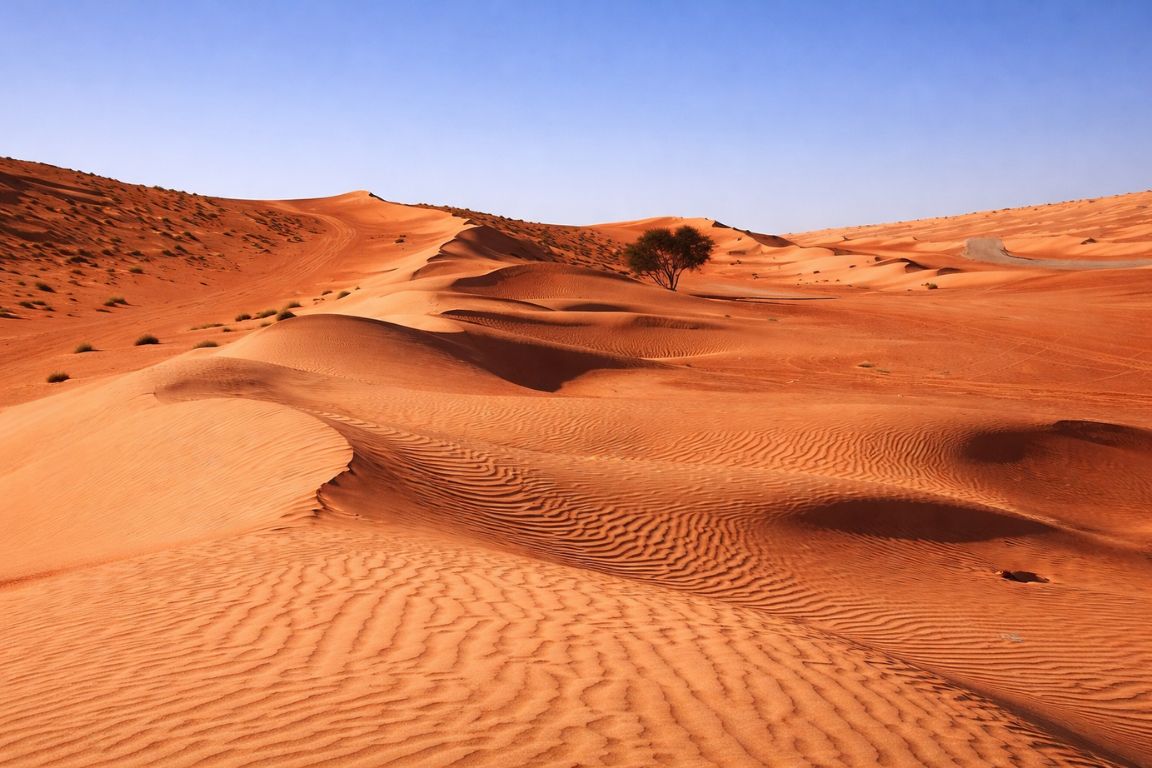 Wahiba Sands combined with Wadi Bani Khalid is Oman’s most spectacular desert day trip from Muscat. It pairs a morning swim in the emerald pools of Wadi Bani Khalid with an afternoon in the golden dunes of Wahiba as the sun drops – two completely different landscapes, one long day, an itinerary that nobody comes back from unchanged.
Wadi Bani Khalid is not as famous as Wadi Shab but is in some ways a better introduction to Oman’s wadi culture. It has year-round water (rare), accessible pools that don’t require a hike or a swim through a cave, and the oasis of date palms and mountain walls framing the scene gives it a quality that photographs never quite capture. Arrive before 9am. The emerald pools are cool, crystal clear, and deep enough to dive into. A short hike further up the canyon leads to a cave that the afternoon tour groups rarely reach. A later arrival means sharing the main pools with crowds.
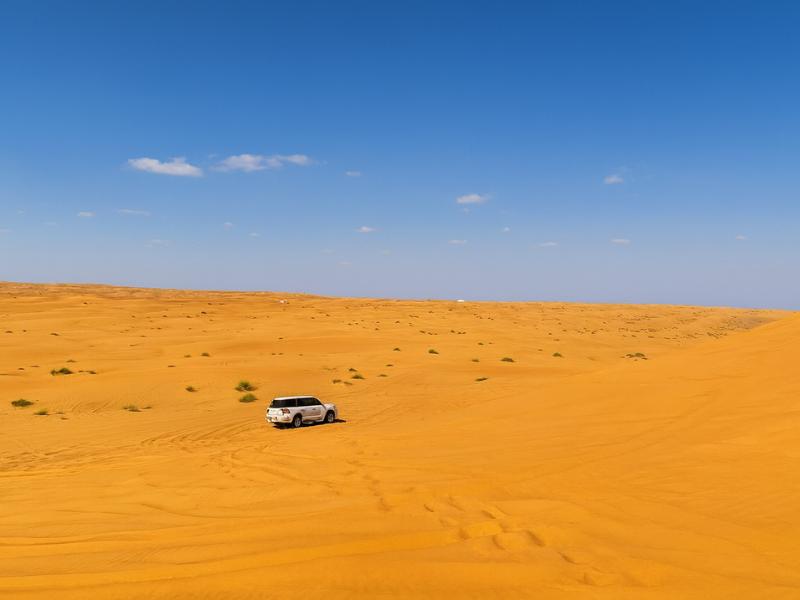
Wahiba Sands – also called Sharqiya Sands – is about an hour from Wadi Bani Khalid, reached through the town of Bidiyah where the sand begins. The dunes reach 70-100 metres and change texture throughout the day, from firm and cross-ribbed at dawn to soft and yielding by afternoon when the heat pulls moisture from the surface. A 4WD is required and dune bashing is part of the experience for anyone who wants it, though the real reason to come is to stand at a dune crest at sunset and understand how vast and quiet the desert actually is. Several Bedouin desert camps operate in this area for overnight stays, and the day trip version that arrives for sunset captures the light at its best before the drive back to Muscat.
This combination covers roughly 500 kilometres of driving in a day, all highway quality except the dune sections. It’s long but the quality of the scenery on Oman’s coastal highway and through the Hajar foothills keeps the transit engaging. Depart Muscat by 6:30am. A competent guide makes the desert section meaningful rather than merely dramatic – the stories of Bedouin life, the seasonal migration patterns, the way these communities have navigated the desert for centuries add the layer that turns dune bashing into genuine cultural experience. Private guided tours for this route run $90-$130 per person with hotel pickup, lunch, and a 4WD throughout the day.
We’ve been running these desert routes for travelers since 2013. A guided Wahiba Sands and Wadi Bani Khalid day trip covers the 4WD, the timing, and a driver who already knows the dune routes.
Need the desert breakdown? Our Oman desert tours guide walks you through camp options, dune bashing logistics, and whether you need a guide or can navigate the sand yourself.
What Are the Best Short Day Trips from Muscat (Under 2 Hours)?
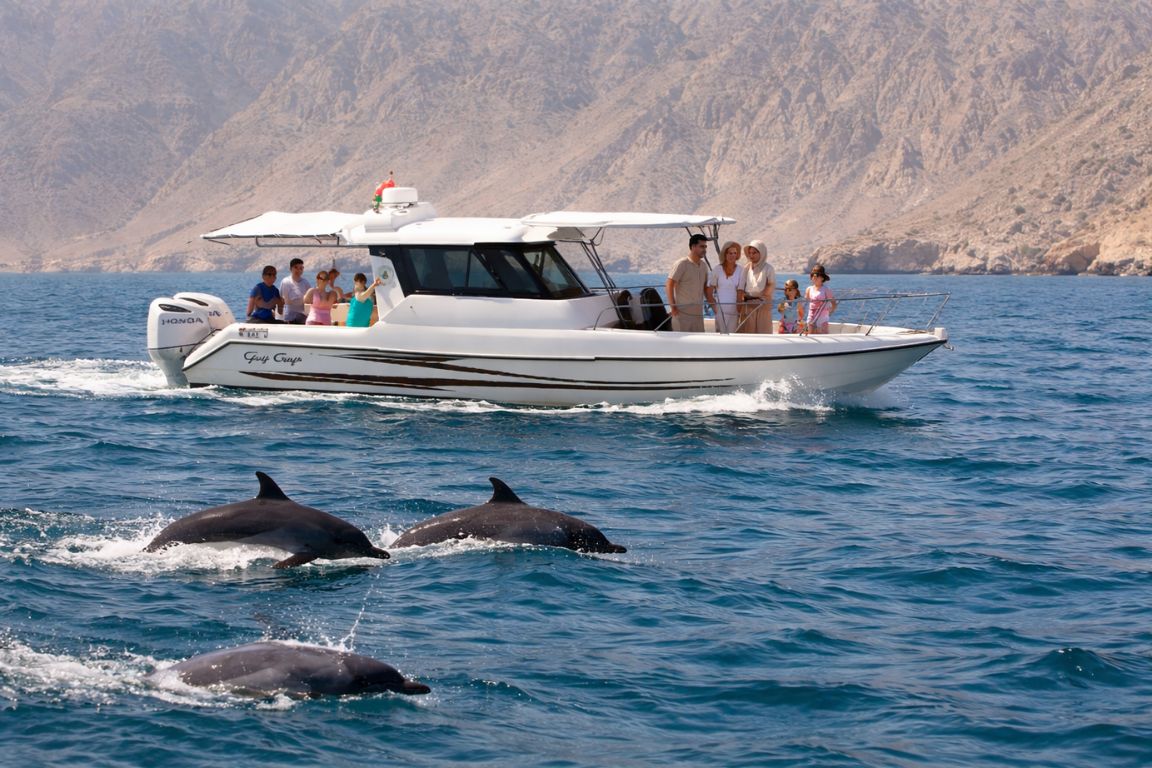 Three excellent day trips from Muscat sit within 90 minutes: the Daymaniyat Islands by boat from Al Mouj Marina, Nakhal Fort and the Ain Thowarah hot springs, and the dolphin watching cruise from Muscat harbour. All three work as half-day options and are strong choices for travellers with limited time or who want to combine two experiences in a single day.
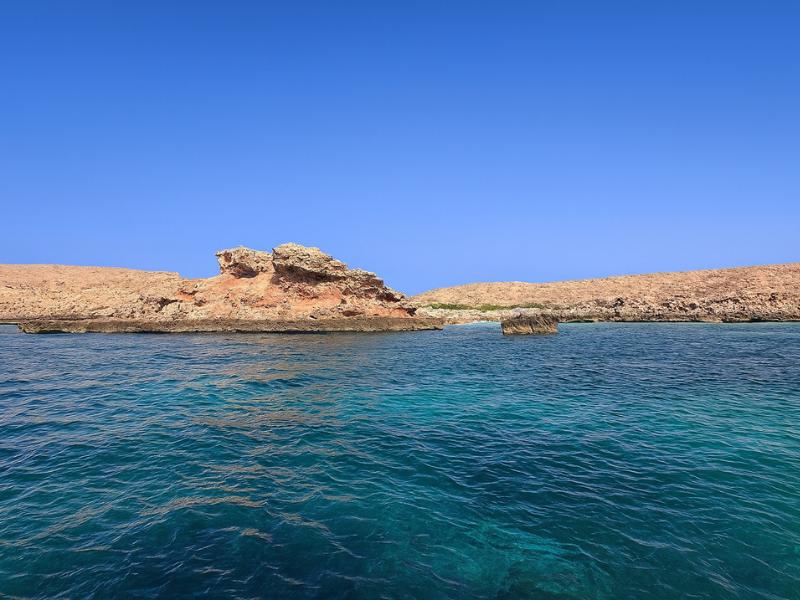
The Daymaniyat Islands are Oman’s most accessible marine experience. Nine protected islands sit 18 kilometres offshore, reachable from Al Mouj Marina in about 35 minutes by boat. The coral reef system here is genuinely world-class – over 1,100 species identified in this single reserve – and the density of marine life, particularly sea turtles and leopard sharks, is something most snorkellers don’t see in years of diving elsewhere. One consistent finding from travellers: they almost always see more turtles than expected, often dozens in a single snorkelling session. Tours typically run 4-5 hours total including transit. Note that landing on the islands is restricted from May through October to protect nesting turtles, but snorkelling from the boat continues year-round. Tours cost $65-$90 per person including gear and snacks.
Nakhal Fort sits 85 kilometres northwest of Muscat along the Al Batinah coast, about an hour’s drive. The fort predates Islam – the earliest construction dates to the 7th century – and its position on a rocky outcrop at the foot of the Hajar Mountains with a date palm oasis spreading below it is one of the most photogenic scenes in northern Oman. The tour typically continues 40 minutes further to Ain Thowarah, where hot springs emerge from the mountain in a series of natural channels running through the palm trees, and then to Rustaq Fort – the most imposing fort in the Al Batinah region, three levels of towers and rooms that take a full hour to explore properly. The circuit runs 6 hours. No 4WD required.
Dolphin watching from Muscat harbour is the easiest half-day in the list. The Gulf of Oman maintains resident spinner dolphin populations year-round, and most morning boat tours encounter them. Sightings are not guaranteed – the honest operators say so upfront – but the hit rate is high and the additional snorkelling stop along the coast adds value even if the dolphins are coy. Tours run 3-4 hours and cost $40-$65 per person. The quality variation here is significant: the best tours have captains who know the pod locations and add commentary about the marine environment; the worst are transport and nothing else. Read recent reviews before booking and look for operators who mention specific crew members with positive feedback.
Best Short Day Trips from Muscat (Under 2 Hours Each Way)
| Daymaniyat Islands (snorkel) | 15 km + 35 min boat | 4-5 hours total | $65-$90 pp | Oct-May (year-round from boat) |
| Nakhal Fort + Hot Springs | 85 km / 1 hr | 5-6 hours | $50-$80 pp | Oct-Apr |
| Dolphin watching cruise | Muscat harbour | 3-4 hours | $40-$65 pp | Year-round |
| Bimmah Sinkhole only | 130 km / 1.5 hrs | 1 hour at site | Free (own transport) | Year-round (best early morning) |
| Wakan Village | 90 km / 1.5 hrs | 3-4 hours | Private driver ~$70 | Oct-Apr |
All prices approximate for 2 adults private or shared. Prices verified March 2026
Should You Book a Guided Day Trip or Drive Yourself?
For Wadi Shab, Nizwa, and Nakhal – self-driving works well if you’re comfortable with independent travel and have done basic route research. For Wahiba Sands, Jebel Akhdar, and Jebel Shams – a guide with the right vehicle is strongly recommended. For the Daymaniyat Islands – a boat tour is required regardless. The decision comes down less to convenience than to what experience you want from each destination.
The practical case for self-driving: roads in Oman are genuinely excellent, Google Maps works reliably on a local SIM, and most tourist sites are well-signed in English. A rental car for a day costs $40-$70 for a standard sedan, which is often cheaper per person than a guided group tour for two or more travelers. Wadi Shab is an easy self-drive – the road is fully paved to the parking area, the trail is clear, and you can linger as long as you like without a group schedule. Nizwa is similarly manageable. Nakhal Fort and the hot springs involve straightforward highway driving with no off-road sections.
The case for a guide is strongest where the destination’s value depends on context or technical access. Inside Wahiba Sands, self-driving means either staying on the sand track at the edge of the dunes (a very different experience from properly entering them) or risking getting stuck without knowing how to recover. A 4WD with a guide who has done dune-driving hundreds of times is categorically safer and more rewarding. Jebel Akhdar’s mountain villages are reachable by road, but knowing which small track leads to the rose terrace that isn’t on any map, which café has been run by the same family for three generations, and which viewpoint the tourists never find – this is what a local guide adds to a landscape that can otherwise feel like a scenic drive.
The deeper argument for guiding, which doesn’t appear in practical comparisons: the best day trips from Muscat produce different memories depending on who you’re with. Fifteen years after visiting Wadi Shab alone you remember the cave waterfall. Fifteen years after visiting it with a knowledgeable Omani guide, you remember the cave waterfall and the conversation you had hiking back about what Oman looked like before the roads.
How Do You Choose the Right Day Trip from Muscat?
 Match the day trip to what you’ve already done, how much walking you’re willing to commit to, and what you’ll regret not seeing if you only have one day outside the city. For first-time visitors with one day trip available: Wadi Shab and Bimmah Sinkhole. For culture-focused travelers: Nizwa and Jebel Akhdar. For anyone who has been to the wadis already: the desert – Wahiba Sands – is the experience that people who return to Oman always say they wish they’d done first.
A few specific matchings that work well based on traveller type. Families with young children who can’t manage the Wadi Shab hike: Nakhal Fort plus the Ain Thowarah hot springs is a gentler circuit with forts children can explore, natural warm pools they can splash in, and a drive through working palm oasis that shows traditional Omani agriculture. The Daymaniyat Islands also work well for families – snorkelling is not age-restricted and the turtles and fish are visible without any strenuous swimming. Wadi Dayqah Dam, about 90 minutes from Muscat, is an underrated family option with paddle boats and a peaceful reservoir canyon that requires no hiking.
For travelers interested specifically in outdoor photography: Jebel Shams is the answer. Oman’s highest mountain at 3,009 metres, its Grand Canyon-scale views are the most dramatic landscapes in the country. The Balcony Walk trail (W6 route) runs along the canyon rim to an abandoned village – a three to four hour return hike with exposure that puts you on a ledge above a kilometre of empty air. The light in winter mornings is exceptional. The drive from Muscat takes 3-3.5 hours and requires a 4WD.
For travelers who’ve already seen the wadis and are returning to Muscat for a second time: Jebel Akhdar during rose season is the trip that most first-time visitors regret not timing correctly. Late March to mid-April, the Damask rose farms on the Saiq Plateau are in full harvest. The rosewater distilleries are operating. The air above 2,000 metres is fragrant in a way that no photograph captures. It’s also cold enough to need a jacket at altitude while the desert below is approaching its summer. This contrast alone – jacket at Jebel Akhdar, 35°C at the base – is worth experiencing once.
Which Day Trips Our Travelers Choose from Muscat: 2025 Data
| Most booked day trip overall | Wadi Shab + Bimmah Sinkhole |
| Most booked cultural day trip | Nizwa Fort + Jebel Akhdar |
| % of 3-night Muscat stays that include at least one day trip | 78% |
| Top day trip regret from our traveler feedback | Not visiting Wahiba Sands (underestimated the desert experience) |
| % who added a second day trip after booking the first | 44% |
| Best-rated day trip by post-trip feedback score | Wahiba Sands + Wadi Bani Khalid combined (highest average score) |
| Average earliest departure time for guided day trips | 7:15 AM |
Based on Oman Muscat Tours client groups from 2025. Omar Al-Kalbani and team have guided 7,700+ travelers since founding in 2013.
What Goes Wrong on Day Trips from Muscat (and How to Avoid It)
Twelve years of guiding travelers on Oman’s best day trips has produced a clear set of patterns around what goes wrong. Almost none of it is unavoidable with basic advance thinking.
Arriving late at Wadi Shab is the most common complaint. The cave waterfall requires swimming a 50-metre passage – achievable in less than a minute but requiring confidence in the water. Arrivals after 11am find the final pools crowded, the narrow passage backed up with swimmers, and the cave itself full of noise and other bodies. The experience loses most of its magic. Arrive at the parking area by 8:30am. This is not a guideline, it’s the condition that makes the trip worth the three-hour round drive.
Taking a regular car into Wahiba Sands. The sand at the desert edge looks passable until it isn’t. A sedan that enters the loose sand even 50 metres beyond the tarmac edge can be stuck within minutes, and recovery requires equipment and technique that casual drivers don’t have. The tow charge from a passing Bedouin to pull you out typically costs more than the guided 4WD tour would have. Book a guided trip with desert-experienced drivers or, if self-driving, stay strictly on the vehicle track at the dune perimeter.
Trying to combine too many destinations in one day. The Wadi Shab plus Bimmah Sinkhole combination is a full day. Adding Sur or Ras Al Jinz onto that itinerary means arriving at one destination exhausted, rushing another, and not doing justice to either. The standard online itineraries that pack five destinations into eight hours are written by people who haven’t driven Oman’s roads in summer heat after a canyon hike. Two destinations done properly is almost always a better day than four done quickly.
Need a solid recommendation? Here are the best Oman Muscat city tours that consistently get it right – from souq walks to fort visits to cultural insights.
Frequently Asked Questions
What is the most popular day trip from Muscat?
Wadi Shab combined with Bimmah Sinkhole is consistently the most booked day trip from Muscat, both for guided tours and self-drivers. The combination covers two of Oman’s most dramatically photogenic natural sites in a single 1.5-hour drive south of the city, can be done without a 4WD, and the cave waterfall at the end of the Wadi Shab hike is genuinely one of the most memorable natural experiences in the region.
Do you need a 4WD for day trips from Muscat?
Not for all of them. Wadi Shab, Bimmah Sinkhole, Nizwa Fort, and Nakhal Fort are all accessible in a standard sedan on fully paved roads. Jebel Akhdar requires a 4WD at the police checkpoint base (you can sometimes hire one at the checkpoint). Wahiba Sands requires a 4WD to actually enter the dunes safely. Jebel Shams strongly recommends one for the mountain roads.
How early should you leave Muscat for a day trip?
For wadi trips (Wadi Shab especially): 7am departure, no later than 7:30am. For desert trips (Wahiba Sands + Wadi Bani Khalid): 6:30am. For cultural trips (Nizwa): 7:30-8am is workable as the fort opens at 8am and travel time is 1.75 hours. The general principle: arrive at your first destination before 9am. After that, heat and crowds both increase.
What day trips from Muscat don’t require a car?
The Daymaniyat Islands (boat tour from Al Mouj Marina), dolphin watching cruises, and the Daymaniyat snorkelling tours all depart from Muscat with hotel pickup included. Most guided day trips to wadis, forts, and the desert also include hotel pickup. Guided tours are the practical alternative to a rental car for all the major day trip destinations.
When is the best time of year for day trips from Muscat?
November through April for all land-based day trips. October and March are the sweet-spot months combining good weather with lower crowds and prices than peak December-February. The Daymaniyat Islands and dolphin watching work year-round. Jebel Akhdar’s rose season runs late March to mid-April. Turtle nesting at Ras Al Jinz runs April through August – one of the few summer reasons to make a longer day trip.
Is Wahiba Sands a good day trip or should you stay overnight?
Both work, but overnight is the superior experience. A day trip gets you the sunset and dune drive. An overnight desert camp under Oman’s stars – which are exceptional without light pollution at this distance from the city – adds a dimension that no day trip captures. Several camps in the Bidiyah area offer comfortable accommodation for $60-$200 per person including dinner, stargazing, and sunrise on the dunes. For those with limited time, the day trip version pairing with Wadi Bani Khalid in the morning and desert sunset in the evening is still very strong.
Written by Omar Jackson Al-Kalbani
Omani tour guide since 2013 · Founder, Oman Muscat Tours
Omar has guided over 7,700 travelers through Muscat, the wadis, and the deserts of Oman since founding the agency.
Choose the outing, then check your date
Wadi Shab and Bimmah Sinkhole Group Full Day Tour
The strongest first outing combines Wadi Shab’s canyon hike and swim with Bimmah Sinkhole; travelers who prefer culture, desert or marine wildlife can compare equally specific alternatives at the end..
9.0 hours · Lunch (except during the month of Ramadan); Meeting point or pick up from hotel (Depending on the selected option)
Choose a date to view the published schedule checked 9 September 2026. Final availability and price are confirmed on Viator.
Compare options and match my plans
Public transportation options are available nearby; Not recommended for travelers with spinal injuries; Not recommended for pregnant travelers; Not recommended for travelers with poor cardiovascular health; Travelers should have at least a moderate level of physical fitness; Children below 7 years old are not allowed to participate in this tour due to the physical activities and safety requirements involved. Extras: tour guide tips:); WiFi on board; For the "Wadi Shab only" option, pick-up from Muscat is NOT included.; Note: areas in Seeb are not included for pick-up. Pickup: Option 1: Hotel Pick-Up (Group and Private Tours) For group tours, pick-up will occur 30 to 60 minutes before the tour starts. Please be ready in your hotel lobby during this window. For private tours, pick-up will be at the exact time chosen for the tour. Look for a vehicle with our company logo and a friendly driver who will confirm your booking details. We will send a reminder and confirm your pick-up time via WhatsApp. Ensure the phone number you provided during booking is correct and active. For any concerns or special instructions, feel free to contact us in advance. Option 2:Meeting Point Pick-Up starts 30 to 60 minutes before the tour starts Travelers choosing the meeting point option must arrive at Al Fair (الفير) near Shell Gas Station Sarooj , just a 5-7 minute walk from the Sarooj Bridge_2 bus station, 10- 15 minutes before the tour starts. Or Travellers can arrive to Mc'Donalds near City Center Mall, near Shell Gas station Parking is available at the meeting point for this tour. Contact us via WhatsApp to receive the exact meeting location link. Option 3: Wadi Shab only (Meet at Wadi Shab parking area) This option is for those who reach Wadi Shab independently (car,taxi). Meet at Wadi Shab parking. Visit to Bimmah Sinkhole and lunch are not included in the tour price.
- Full Day Private Nizwa/Jebel Akhdar · 8.0 hours. bottled water during the tour; Omani Tour Guide English Speaking
- Full-Day Wahiba Desert and Wadi Bani Khalid Group Tour · 9.0 hours. Bottled water; During high-demand periods, transfer from Muscat may be provided by a bus instead of a 4x4 vehicle. Dune bashing in the desert still be conducted in 4x4 vehicles, ensuring a full desert experience.
- Private Full Day Tour To Nakhal Rustaq And Hot Springs · 8.0 hours. Private transportation; Snacks
- Snorkeling at Dimaniyat Islands and Dolphin Watching (Half-Day) · 5.0 hours. Soda/Pop; Bottled water
Compare your group costs
Enter complete quotes in the same currency, including transport, tickets and extras. These are your estimates, not live prices.