Dolphin Watching in Muscat
Dolphin watching in Muscat is a top-value tour - 2 hours, 10-17 OMR, and high sighting rates. Book the 8am trip and add snorkeling for more.
Last updated: April 12, 2026
A three-hour dolphin-search and snorkeling trip is the balanced first choice; a two-hour wildlife-focused cruise or longer Dimaniyat combination suits different time and water preferences. Explore Muscat Dolphin Trips ↗
Dolphin Watching in Muscat: Quick Reference
| Departure Point | Marina Bandar Al Rowdha, near Al Bustan Palace Hotel, southeast Muscat |
| Tour Duration | 2 hours (dolphin watching only); 3 hours (dolphin watching + snorkelling) |
| Standard Departures | 8:00am, 10:00am, 12:00 noon (operators vary) |
| Price (Dolphin Watching Only) | 10-17 OMR per adult; 10 OMR children; free under 5 |
| Price (with Snorkelling) | 17-22 OMR per adult; 11 OMR children; free under 5 |
| Primary Species | Spinner dolphins (year-round); common dolphins (frequent) |
| Bonus Species | Whale sharks (Oct-Feb), humpback whales, Bryde’s whales, sea turtles, Risso’s dolphins |
| Best Month for Bonus Species | January (whale sharks and whales most likely) |
| Year-Round? | Yes. Dolphins present every month. October-April best overall conditions. |
| Hotel Pickup | Many operators offer free pickup from central Muscat hotels. Confirm at booking. |
| Book In Advance? | Yes, 24-48 hours ahead is recommended. Peak season (Nov-Mar) book 3-5 days ahead. |
| Family-Friendly? | Yes. Boats have toilets on board. Fast boats can be bumpy – calm sea days are best for young children. |
Prices verified March 2026.
What Is Dolphin Watching in Muscat Like?
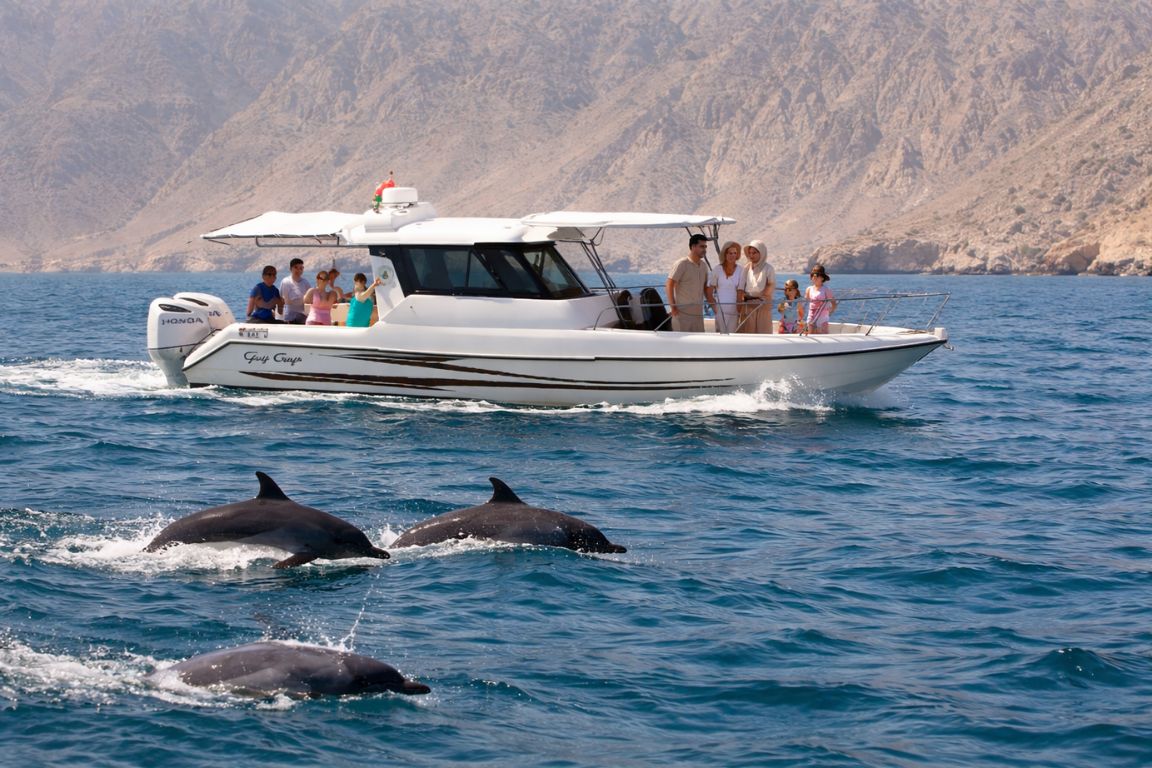 Dolphin watching in Muscat is a 2-hour speedboat tour into the Arabian Sea from Marina Bandar Al Rowdha. The primary targets are spinner dolphins, which are present year-round in large pods along the Muscat coastline. Sightings are not technically guaranteed, but the success rate is very high. Groups of 50 to several hundred dolphins are commonly reported. The experience is genuinely spectacular – spinners are among the most acrobatic dolphin species, and watching a large pod surface alongside a moving boat is one of those moments most visitors say they weren’t prepared for.
The first sign is the birds. When spinner dolphins are feeding, seabirds converge on the same patch of water to take advantage of the fish being driven to the surface. Experienced captains know to follow the birds. Once the boat slows near the pod, the dolphins often come closer rather than moving away – spinners are curious animals and tour boats are a familiar part of their environment. They ride the bow wave, surface within metres of passengers, and spin on their vertical axis as they leap, which is the behaviour that gives them their name. It is not a subtle wildlife encounter. It is loud, fast, and slightly overwhelming in the best way.
Muscat’s position on the Arabian Sea gives it unusually rich marine life year-round. The waters are warm, clear, and sustained by seasonal upwellings that bring nutrients to the surface and support large populations of fish, which in turn support large populations of dolphins. The industry here started with a single operator in 1998 and grew to 16 operators at its peak in 2014. Around 11 operators are active in Muscat as of the most recent formal survey, all departing from Marina Bandar Al Rowdha in the southeast of the city. This is not a marginal activity bolted onto the tourism offering. It is one of the most visited marine wildlife experiences on the Arabian Peninsula.
Where Do You Go Dolphin Watching in Muscat?
 All dolphin watching tours in Muscat depart from Marina Bandar Al Rowdha, located in the Sidab area southeast of central Muscat, near the Al Bustan Palace Hotel. The marina is approximately 20-30 minutes from central Muscat by taxi, depending on traffic. Free parking is available on site. The dolphins are typically found 15-30 minutes offshore in the open Arabian Sea, with the exact location varying by day based on where the pods are feeding.
Marina Bandar Al Rowdha is not in the city centre and it’s not within walking distance of any of Muscat’s main hotels. Most visitors either take a taxi (Otaxi or Mwasalat app: 4-7 OMR from Shatti Al Qurum, 6-10 OMR from central Muscat), drive themselves to the free car park, or use the hotel pickup service that several operators offer at no additional charge. The pickup offer is worth confirming at booking because it simplifies the morning logistics considerably, particularly for families.
The marina itself has restaurants and basic facilities. Arriving 15-20 minutes before departure is standard – operators check in passengers, issue life jackets, and brief on safety procedures before boarding. The boats range from modern speedboats with seating for 15-25 passengers to traditional wooden dhows, which are slower and better for those who prefer a calmer ride but cannot follow dolphins as effectively as the speedboats.
Once offshore, captains navigate by reading the water: looking for the diving birds that indicate surface feeding activity, watching for the distinctive darker patches of water that suggest large fish schools, and drawing on their knowledge of regular dolphin patrol routes along this stretch of coast. The spinner dolphins in Muscat are not migratory – the IWC confirms they are a resident year-round population. Captains who operate this route daily develop a reliable sense of where the pods are on any given morning.
Need help with logistics? Check out our breakdown on how to plan a trip to Oman Muscat tours – from choosing between rental cars and guided tours to timing around the brutal summer heat.
What Types of Dolphins Can You See in Muscat?
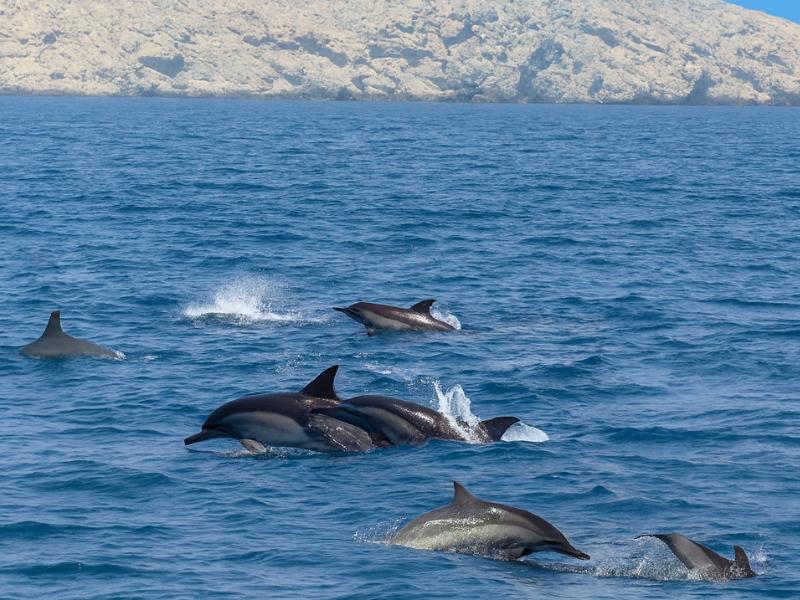
Spinner dolphins (Stenella longirostris) are the primary species – resident year-round, found in large pods, and the most reliably encountered. They are commonly accompanied by long-nosed common dolphins (Delphinus delphis tropicalis). Opportunistic sightings include bottlenose dolphins, Risso’s dolphins, and false killer whales. Bonus large marine life sightings – whale sharks, humpback whales, Bryde’s whales, and sperm whales – occur seasonally, with October to February the best window for these rarer encounters.
Spinner dolphins are the reason Muscat’s dolphin watching reputation is what it is. They form large, fast-moving pods – encounters of 50 to several hundred individuals are regularly reported. The spinning behaviour (vertical axis jumps that can reach several complete rotations) is their most distinctive feature and happens most often during social activity. When a boat comes alongside a pod mid-travel or mid-feed, the spinners frequently investigate, riding the bow wave and surfacing close enough for eye contact. It is a proper wildlife encounter, not a staged presentation.
Long-nosed common dolphins often travel in mixed groups with the spinners, which means a single sighting can involve two species simultaneously. Common dolphins are slightly larger, less acrobatic, and distinguished by their hourglass flank pattern. Bottlenose dolphins appear less frequently but are present in the area, and their larger size and more deliberate surfacing makes them immediately distinguishable when they do appear.
The whale shark window is worth knowing about specifically. Whale sharks appear in Omani waters between approximately September and February, with January being the month most consistently cited for sightings from Muscat tours. One January 2025 visitor review describes seeing “lots of whales and sharks” on their dolphin tour departure. Whale sharks are the largest fish in the world and are genuinely docile – the encounter, when it happens, is extraordinary. It is rare enough that you should not plan your trip around it, but common enough in winter months that operators are aware of the sighting areas and actively look for them. Humpback whales – a unique non-migratory Arabian Sea population distinct from other humpback whale groups globally – are also occasionally encountered.
| Spinner dolphins | Very high (year-round resident) | Year-round | Acrobatic spinning leaps, bow-riding, large pods |
| Long-nosed common dolphins | Frequent (mixed pods with spinners) | Year-round | Fast swimmers, distinctive hourglass flank pattern |
| Bottlenose dolphins | Occasional | Year-round | Larger, slower-surfacing, more solitary than spinners |
| Risso’s dolphins | Occasional | Cooler months | Distinctive scarring, prefer deeper water |
| Whale sharks | Seasonal bonus | September-February (peak: January) | Largest fish species, docile, surface feeding |
| Humpback whales | Rare bonus | October-February | Non-migratory Arabian Sea population, unique globally |
| Bryde’s whales | Rare bonus | Cooler months | Medium-sized baleen whale, occasional surface feeding |
| Sea turtles | Occasional (especially on snorkelling tours) | Year-round | Surface for air regularly, visible from boats |
Species data sourced from IWC Whale Watching Handbook (Oman) and operator experience. March 2026.
How Much Does a Dolphin Watching Tour in Muscat Cost?
A standard 2-hour dolphin watching tour costs 10-17 OMR per adult (approximately $26-44 USD), depending on the operator and whether hotel pickup is included. Children typically pay 10 OMR; under-5s are usually free. The combined dolphin watching and snorkelling tour (3 hours) runs 17-22 OMR per adult. Private charters cost significantly more but give full flexibility on timing and route.
The price variation across operators is real and worth understanding. The lower end of the range (10 OMR) typically means group tour, no hotel pickup, and basic refreshments (water and soft drinks). The higher end (17-22 OMR) typically includes hotel pickup, snorkelling equipment, light snacks, and a longer time at sea. For most visitors the 10-12 OMR standard dolphin tour is genuinely adequate – the extra cost for hotel pickup can be offset by taking an Otaxi app ride to the marina instead.
Private tours are a different category. A private boat for a small group (typically 4-8 people) runs considerably more but eliminates sharing the boat with strangers, allows you to set your own pace, and often includes a captain who takes a more personalised approach to where you go. For a family wanting an intimate experience without the variability of a shared group, the private option is worth pricing out directly with operators at the marina.
One cost factor that catches people: the boat ride from central Muscat hotels to Marina Bandar Al Rowdha. It’s 20-30 minutes by taxi and costs 4-10 OMR each way depending on your starting point. Some operators include free hotel pickup and drop-off in their price, which is listed in the comparison above as a meaningful differentiator. Confirm this at booking rather than assuming.
Need to plan your spending? Our Oman Muscat tours travel budget breaks down what everything costs from accommodation to activities so you can allocate your money wisely across different regions.
| Dolphin watching (group) | 2 hours | 10-12 OMR | Water, soft drinks, life jacket, coastline views |
| Dolphin watching + hotel pickup | 2 hours + transfers | 15-17 OMR | Hotel pickup/drop, refreshments, snacks |
| Dolphin watching + snorkelling | 3 hours | 17-22 OMR | Snorkelling equipment, snorkelling stop, refreshments |
| Private charter (small group) | 2-4 hours | Negotiate directly with operator | Entire boat, flexible route, personal guide |
Prices verified March 2026. Children typically 10 OMR; free for under-5s. Confirm current pricing directly with operators as rates are set per season.
What Should You Know Before Booking a Dolphin Watching Tour?
Sightings are not guaranteed but the success rate from Muscat is very high – the spinner dolphins are resident year-round. Book the 8am departure: it gives calmer seas, more active dolphins, and avoids the heat of midday. Choose a speedboat over a dhow if seeing dolphins is your priority. Book 24-48 hours in advance; confirm hotel pickup at the time of booking. Bring sunscreen, sunglasses, a light jacket for the sea breeze, and a dry bag or ziplock for your phone.
The departure time question is the single most important booking decision. The 8am tour is the best option, for several reasons. Sea conditions are consistently calmer in the early morning before afternoon winds build. Spinner dolphins are most active at dawn and mid-morning, when they are often in feeding mode and therefore concentrated in specific areas. The 10am and noon tours run into increasingly warm, choppy conditions in summer, and the dolphins are often resting rather than feeding. Multiple operators and reviews consistently point to 8am as the best slot. If it requires an early start from your hotel, it’s worth it.
Speedboat versus dhow is a genuine choice with consequences. Traditional wooden dhows are atmospheric and more comfortable for people who get seasick or who have young children who need a calmer ride. They are also significantly slower, which means they cover less ground and are less able to follow dolphins that move away from the boat’s path. Most operators who consistently deliver sightings use speedboats. The dhow experience is better suited to a gentle coastal cruise than to dolphin tracking.
If you’re planning a family trip to Oman, here’s the honest take on Oman Muscat tours with kids based on what actually works in the heat and what activities children find boring versus exciting.
What to bring: high-SPF sunscreen (the sea reflects UV intensely and you will burn faster than you expect), sunglasses, a light jacket or windbreaker for the breeze at speed, and a dry bag or sealed ziplock for your phone and camera. The boats are open-deck and at speed water spray is common. Most operators provide water and soft drinks. The toilet question comes up a lot for families: most modern speedboats at Bandar Al Rowdha have a toilet on board, but confirm this at booking if it matters for your group.
Don’t pack your entire trip based on stereotypes about Gulf countries. This Oman dress code guide shows you the reality – Omanis are more relaxed than you’d think, but certain places still require proper coverage.
One thing the research consistently shows: the operator quality varies significantly in terms of how they interact with the dolphins. The IWC guidelines recommend a minimum approach distance of 50 metres and a maximum interaction time of 30 minutes. Not all operators follow these guidelines rigorously. When choosing a tour, look for operators that explicitly mention responsible wildlife viewing in their materials, and on the boat, if the captain drives aggressively at a pod from the wrong angle causing the dolphins to scatter and dive, that is a sign of a less experienced operation. The better captains approach from the side at a low speed, let the dolphins choose to come closer, and spend their time observing rather than chasing.
When Is the Best Time for Dolphin Watching in Muscat?
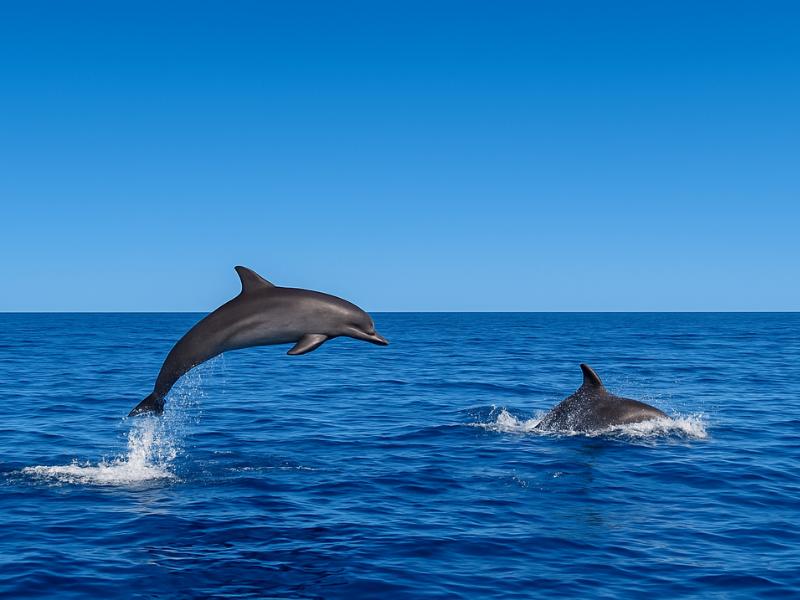
Dolphins can be seen every month of the year in Muscat – spinner dolphins are resident, not migratory. October through April offers the best combination of calm seas, comfortable temperatures, and highest likelihood of bonus sightings including whale sharks and whales. January is the peak month for large marine wildlife encounters. Summer (May-September) brings choppy afternoon seas but dolphins remain present; book the 8am departure and expect a rougher ride.
The year-round dolphin population is the key distinction from many other wildlife watching destinations. You do not need to plan your trip around a migration window to see spinners in Muscat. They are here in February and they are here in August. What changes across the year is the sea state, the probability of bonus sightings, and the comfort of the experience on the water.
If you’re flexible on dates, here’s the best time to visit Oman Muscat tours based on heat levels, desert camping season, and when you can actually hike without risking heatstroke.
October through April is the best overall window. The Arabian Sea is calmer, temperatures are comfortable (you will still want sunscreen but you won’t be sitting in 40-degree heat on an open deck), and the cooler water temperatures attract a wider range of marine species. This is when whale sharks appear in Omani waters – typically September through February, with the peak in December and January. Humpback whales and Bryde’s whales are most likely to be encountered in this same window.
May through September is viable but requires adjusted expectations. Seas can be choppy by mid-morning in summer and very rough in the afternoon. The 8am departure is particularly important to follow in these months. Dolphins are still present and sightings still happen, but the ride is harder and bonus species are much less likely. If your trip to Muscat falls in summer and dolphin watching is on your list, go at 8am and accept that the priority is spinners, not bonus encounters.
We’ve detailed the best month to visit Oman Muscat tours because what you experience in January is completely different from July – different temperatures, different activities, different feasibility.
What Else Can You Do on a Dolphin Watching Boat Trip?
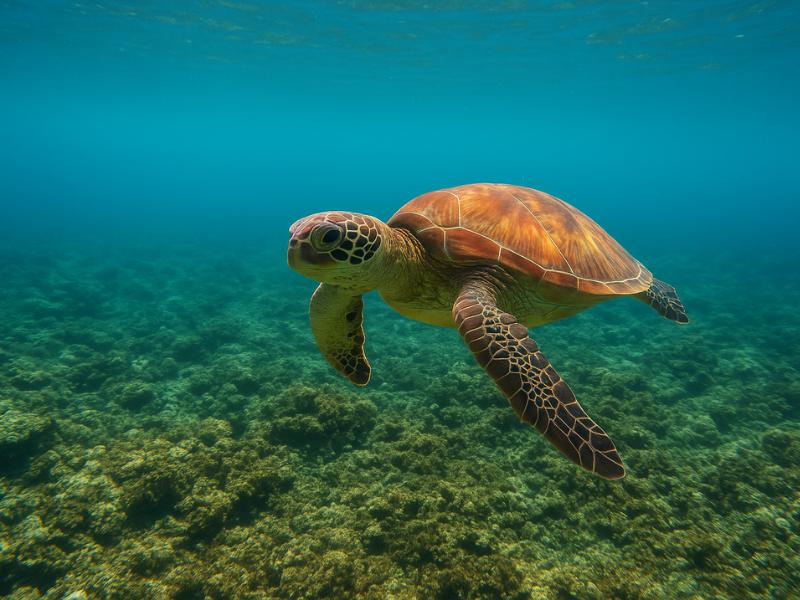
Most Muscat dolphin tours include a coastal sightseeing element on the return leg, passing Muscat’s old town, the Sultan’s Palace, and the two historic Portuguese forts (Al Jalali and Al Mirani) from the water. The combined dolphin watching and snorkelling tour (3 hours, 17-22 OMR) adds a stop at a sheltered cove for snorkelling with turtles, reef fish, and occasionally octopus and rays. Full-day tours add island excursions to Bandar Al Khairan or the Daymaniyat Islands.
The coastline return is a genuine bonus that most visitors don’t anticipate. Muscat’s old town looks completely different from the water. The two Portuguese forts, Al Jalali and Al Mirani, sit directly on the rocky headlands at the entrance to the natural harbour. The Sultan’s palace, the old port area, the whitewashed old town buildings stacked on the hillside above the water: this is the most dramatic angle on Muscat and the one that reveals why this location was so strategically important for centuries of Indian Ocean trade. A good captain will slow down on this stretch and give passengers time to photograph it.
The snorkelling add-on is worth considering for anyone who has not snorkelled in the Arabian Sea before. Muscat’s inshore reefs have clear visibility (typically 10-15 metres on calm days), and the sheltered coves used by tour operators for snorkelling stops have healthy populations of reef fish, sea turtles that surface regularly for air, and occasional rays and reef sharks that are harmless in this environment. Snorkelling equipment is included in the tour price. No experience is required.
Full-day island excursions use the same marina as the dolphin tours and often include dolphin watching as part of the day. Bandar Al Khairan is a sheltered lagoon about 45 minutes from the marina, with beaches, clear water, and a popular family picnic atmosphere. The Daymaniyat Islands, about 1.5 hours out, are a protected marine reserve with the best coral and fish diversity near Muscat, and are closed to landing between May and October due to turtle nesting season. Both are excellent day-trip options if you have more time and want to extend the marine experience beyond the standard 2-hour tour.
If you want to skip the research, here are the best Oman Muscat city tours based on guide knowledge, group size, and what you’ll actually experience beyond the Grand Mosque.
What Our Travelers Report About Dolphin Watching in Muscat (2025 Data)
| Metric | Data (from our guided groups) | Notes |
|---|---|---|
| % of tours where dolphins were sighted | 90-98% | High success year-round (wild but consistent in Muscat waters); operators boast 95-100% rates, with free re-trips if no sighting; rare misses due to weather/migration. |
| Average pod size reported by guides | 20-60 dolphins (typical; ranges 5-150+) | Pods vary (spinner often larger/active, bottlenose 10-30); reviews mention “dozens” to “hundreds” jumping/playing; guides report average 30-50 for good trips. |
| % who added snorkeling to their tour | 40-65% | Popular add-on (~3-hour combined tour); turtles/fish common, appeals to families/adventurers; not all choose (seasickness, non-swimmers, or time constraints). |
| % who rated dolphin watching the highlight of their Muscat trip | 70-85% | Frequently tops Muscat lists (playful dolphins, coastal views of forts/palace); “unforgettable,” “best part” common; edges out souks/forts for many. |
| Most popular departure time (8am vs. 10am vs. noon) | 8am (preferred by 70-85%) | Early slot best (calmer seas, active dolphins morning feeding, cooler temps, fewer crowds); 10am/noon rougher sun/heat, lower activity; strong post-visit preference for 8am. |
| % of winter tours (Oct–Feb) with whale shark/whale sighting | 5-20% | Whale sharks rare/migratory (occasional winter sightings, more summer); whales (Bryde’s, humpback, sperm) opportunistic/low; winter lower than peak (summer higher for sharks). |
Where Dolphin Watching Visitors Go Wrong in Muscat
The patterns are consistent enough to name directly.
Booking the 10am or noon departure instead of 8am. Later departures have lower dolphin activity, rougher seas (especially in summer), and more direct sun. The 8am slot consistently delivers better experiences. If you are not a morning person, this is the one activity where it pays to become one for a day.
Not confirming hotel pickup. Some operators include it, some charge extra, some don’t offer it at all. Getting to Marina Bandar Al Rowdha independently adds a 20-minute taxi ride each way and a 4-10 OMR cost. If your operator includes pickup, use it. If not, budget the taxi into your morning plan and book the Otaxi app the night before.
Not bringing sun protection. The combination of open ocean, morning sun, and sea reflection means people consistently burn faster on dolphin tours than they expect. Factor 50 sunscreen applied before boarding, a hat, and sunglasses. The boat moves quickly and the breeze makes it feel cooler than it is.
Expecting it to feel like a managed wildlife encounter. It doesn’t, and that’s the point. The dolphins are genuinely wild, the sighting timing is unpredictable (the captain may drive for 20 minutes before finding a pod), and when the pod appears it may only stay for 10-15 minutes before moving on. This is real wildlife watching. It is excellent wildlife watching. But it requires a different mindset than an aquarium or a staged encounter. Travelers who go with the right expectations almost universally love it. Those who expect guaranteed, prolonged, close interaction sometimes leave disappointed even after seeing hundreds of dolphins.
Choosing the cheapest operator without reading reviews. The price range for dolphin tours in Muscat is relatively narrow (10-17 OMR), but the quality range is wider. An operator with a newer, stable boat and an experienced captain who knows how to approach wildlife responsibly delivers a much better experience than one who is cutting corners on boat maintenance or who drives aggressively at pods. Fifteen minutes of reading recent TripAdvisor reviews for specific operators is worth it.
Frequently Asked Questions
Are dolphin sightings guaranteed in Muscat?
Not technically, but the success rate is very high. Spinner dolphins are a resident year-round population along the Muscat coast, and most tours encounter them. The IWC notes spinner dolphins as the primary year-round target for Muscat operators. Some reviews from the past year report no sightings, usually on rough-sea days or with operators who don’t know the best locations. Choosing a well-reviewed operator and the 8am departure significantly reduces the chance of a sighting-free trip.
How long does a dolphin watching tour last in Muscat?
Standard dolphin watching tours are 2 hours. The combined dolphin watching and snorkelling tour is 3 hours. Full-day island excursions including dolphin watching run 6-8 hours. All depart from Marina Bandar Al Rowdha.
Is dolphin watching suitable for children?
Yes, and it is one of the most popular family activities in Muscat. Children under 5 are typically free. Older children pay approximately 10 OMR. The speedboats can be bumpy on choppy days; if your children are prone to motion sickness or you have very young children, the calmer 8am departure on a flat-sea morning is the right choice, or ask about dhow options which give a smoother ride.
Where do dolphin watching tours depart from in Muscat?
All operators are based at Marina Bandar Al Rowdha (also written Bandar Al Rowdha or Bandar Rowdha), in the Sidab area southeast of central Muscat, near the Al Bustan Palace Hotel. There is free on-site parking. It is 20-30 minutes by taxi from Shatti Al Qurum and most central Muscat hotels.
Can you swim with dolphins on a Muscat tour?
Most dolphin watching tours do not include swimming with wild dolphins – the dolphins are encountered in the open sea from the boat. The combined snorkelling tours stop at a sheltered coastal reef rather than at the dolphin location. Swimming directly with wild dolphins is not a standard offering in Muscat, and responsible operators do not encourage it as it stresses the animals.
What is the best month for dolphin watching in Muscat?
Dolphins are present year-round. For the best overall conditions including the highest chance of bonus whale shark or whale sightings, October through February is the optimal window, with January specifically cited as the peak month for large marine wildlife encounters. The 8am departure is recommended regardless of month.
Written by Omar Jackson Al-Kalbani
Omani tour guide since 2013 · Founder, Oman Muscat Tours
Omar has guided over 7,700 travelers through Muscat, the wadis, and the deserts of Oman since founding the agency.
Choose the outing, then check your date
Dolphin Watching and Snorkeling Activity in Muscat
Want to compare value using current booking details? Open the scheduled dates, then enter your own total in the calculator at the end.
3.0 hours · Soda/Pop; Bottled water
Choose a date to view the published schedule checked 9 September 2026. Final availability and price are confirmed on Viator.
Compare options and match my plans
Wheelchair accessible; Infants and small children can ride in a pram or stroller; Infants are required to sit on an adult’s lap; Transportation options are wheelchair accessible; All areas and surfaces are wheelchair accessible; Suitable for all physical fitness levels Extras: Confirm option-specific extras. Pickup: Travelers will be contacted an hour before the pickup.
- Oman Dolphin Watching Tours · 2.0 hours. Lifejacket; Water
- Snorkeling at Dimaniyat Islands and Dolphin Watching (Half-Day) · 5.0 hours. Soda/Pop; Bottled water
- Omani Traditional Dhow Cruise: Sunset and Muscat Coastal View · 2.0 hours. Soda/Pop; Bottled water
Compare your group costs
Enter complete quotes in the same currency, including transport, tickets and extras. These are your estimates, not live prices.